

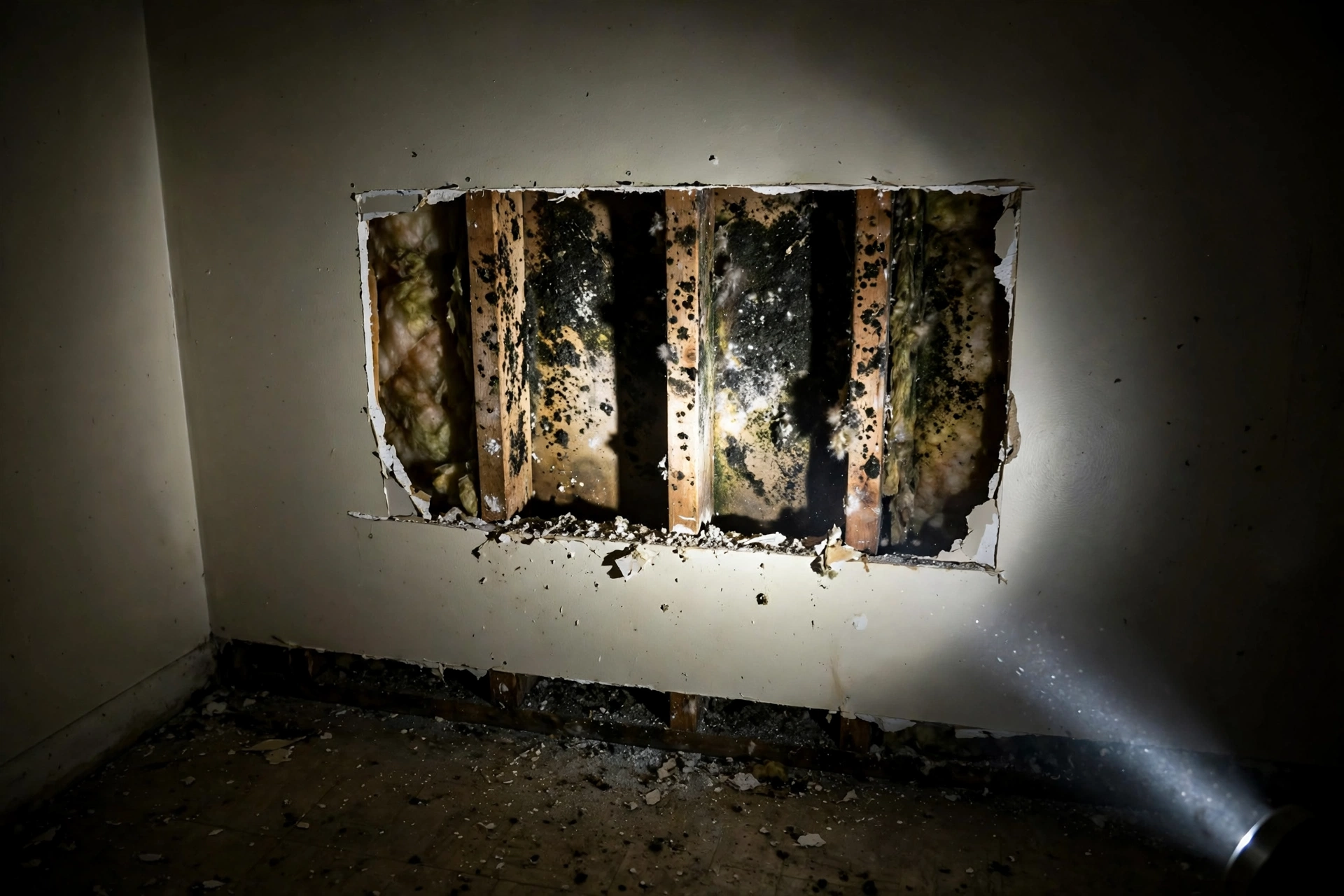
The most frustrating mold problems are the ones you cannot see. A wall can look fine from the couch while the back of the drywall is covered in growth, feeding on the paper facing and the dust inside the cavity. By the time it shows itself, the colony is usually well established.
Drywall is a mold buffet: the gypsum core holds moisture, the paper facing is food, and the dark cavity stays warm. Add a slow plumbing leak, a past flood that was never fully dried, or months of high humidity, and conditions are ideal. This guide covers the seven most reliable signs of mold behind drywall, how pros confirm it without gutting your house, and what proper cleanup involves.
Why drywall hides mold so well
Mold needs moisture, food, and time. A wall cavity supplies all three out of sight. The paper backing is cellulose, which common indoor molds digest easily. Once water gets in through a leak, condensation, or wicking from a wet floor, the inside of the wall can stay damp for weeks after the room side feels dry.
Paint makes the cover-up better. Latex paint slows evaporation from the surface, so the room side can look normal while the cavity side stays wet. That is why a small stain you painted over last year can hide a much bigger problem today. Mold needs no light, so the dark cavity is no obstacle.
Timeline matters more than most homeowners realize. Mold can start growing on damp drywall within 24 to 48 hours of water exposure, a window the EPA highlights in its mold guidance for homeowners. A wall that got wet and was never opened up and dried may have started growing long before you noticed anything.
The 7 signs of mold behind drywall
No single sign proves hidden mold, but two or three together mean it is time to investigate. Work through them in order.
1. A persistent musty or earthy odor
The classic giveaway. Growing mold releases gases our noses detect at low concentrations. If a room smells damp or earthy, especially when the HVAC kicks on or on humid days, and you cannot find the source, the growth is often inside the wall. The smell runs strongest near baseboards, outlets, and return-air vents on the affected wall.
2. Discoloration, bubbling, or warping on the wall surface
Yellow or brown staining, blistering paint, and drywall that bows outward are moisture symptoms first, but trapped moisture in drywall usually brings mold with it. Check the bottom 12 inches of walls, where water wicks upward, and areas below windows and around plumbing penetrations.
3. Paint or wallpaper that keeps failing
If you repainted the same patch twice and it blisters again, or wallpaper seams keep lifting in one spot, stop treating it as a paint problem. Recurring finish failures almost always mean moisture is moving through the wall from behind. Each new coat just seals it in longer.
4. Allergy-like symptoms that flare up at home
Sneezing, itchy eyes, congestion, or a scratchy throat that eases when you leave and returns when you come back is a pattern worth taking seriously. Hidden mold is a common culprit when symptoms have no visible source. It proves nothing alone, but it belongs on the list.
5. A history of water trouble in that area
Think back: a leak from the bathroom above, a dishwasher overflow, a roof leak, a flood that soaked the baseboards? Walls dried only from the room side are prime suspects. Even a water-damaged subfloor nearby should raise suspicion, since water rarely affects one material only.
6. Soft, crumbly, or swollen drywall
Press gently with a fingertip on suspect areas near floors, windows, and plumbing walls. Drywall that gives, crumbles, or feels spongy has lost integrity to moisture, and mold is very likely growing in it. Do not poke holes yet: disturbing a colony without containment spreads spores through the house.
7. Cold spots or condensation on interior walls
On a cold morning, run your hand along exterior walls. Noticeably cold patches or light condensation point to missing insulation or thermal bridging, which lets moisture condense inside the cavity. A cheap infrared thermometer from a hardware store maps these spots easily.
How professionals confirm hidden mold
No need to start cutting holes on a hunch. Inspectors follow a sequence that narrows things down before any drywall comes off.
- Moisture mapping. A pin or pinless meter reads wall moisture at multiple points. Readings above roughly 17 percent in drywall are a red flag, and mapping the wettest spots shows the inspector where to look.
- Infrared scanning. A thermal camera reveals damp areas behind the surface through temperature differences, showing the full moisture pattern without opening anything.
- Borescope inspection. A tiny camera fed through a dime-sized hole, often drilled behind a baseboard or inside a closet, gives a direct look inside the cavity. This is when suspicion becomes confirmation.
- Air and surface sampling. Used selectively, not as a first step. Elevated indoor spore counts versus an outdoor baseline can support the case, but sampling alone never tells the whole story.
When hiring, look for an inspector who starts with moisture mapping rather than leading with expensive lab tests. And if the musty smell is your main symptom, our guide on tracking down a musty smell with no visible mold walks through the room-by-room search.
What proper cleanup looks like
Once hidden mold is confirmed, the fix is not stain-blocking primer. Moldy drywall generally has to come out, because growth reaches into the paper facing and sometimes the gypsum, where no surface cleaner can reach. The standard professional sequence:
- Containment. The work area is sealed with plastic sheeting, and negative air pressure keeps spores out of the rest of the house.
- Removal. Affected drywall is cut out with a margin of clean material, usually at least 12 inches past visible growth. Insulation behind it is typically discarded too.
- Cleaning the cavity. Studs and remaining structure are HEPA-vacuumed and wiped. Porous materials that cannot be fully cleaned are removed.
- Drying. The open cavity is dried with air movers and dehumidifiers until readings return to normal. Skipping this step is the most common reason mold comes back.
- Repair. Only after everything tests dry does new drywall go up, followed by proper priming and paint.
For small areas (roughly under 10 square feet), a careful homeowner can sometimes handle it following the EPA’s mold cleanup recommendations and the CDC’s tips for safe mold cleanup, with an N95 respirator, gloves, and eye protection. Anything larger, or anything involving HVAC contamination or sewage, belongs to a professional. Our black mold cleanup guide covers DIY safety basics in depth.
What not to do
Common mistakes that make hidden mold worse: painting over staining with regular paint, which seals moisture in; spraying bleach into a wall cavity, which does not reliably kill mold roots in porous drywall and adds moisture; tearing out drywall without containment, which can spread spores through the whole house in an afternoon. And never ignore the moisture source. If the leak or condensation is not fixed first, new drywall just becomes the next colony.
Mold can begin growing on damp building materials within 24 to 48 hours, which is why fast, thorough drying matters more than any cleaning product. (EPA)
That timeline is also why understanding the 24 to 48 hour mold growth rule helps you judge how urgent a past water event was.
Frequently Asked Questions
Can mold grow behind drywall without a visible leak?
Yes. Condensation from poor insulation, high indoor humidity, and slow seepage around windows or pipes can wet a wall cavity with no dramatic leak. Humidity control matters as much as leak repair.
Does homeowners insurance cover mold behind drywall?
It depends on the cause. Mold from a sudden, covered water event like a burst pipe is often covered, while mold from long-term neglect usually is not. Document everything with photos and moisture readings before repairs.
Can I just cut out a small section myself?
For a contained area under about 10 square feet, yes, with proper precautions: N95 respirator, gloves, goggles, plastic containment, and HEPA vacuuming. Bag the removed material before carrying it through the house. Larger areas warrant a professional.
How do I know the wall is dry enough to close up?
Use a moisture meter. Drywall should read close to a known-dry wall in your home, generally under 12 to 15 percent. When in doubt, give it another day with a dehumidifier running rather than closing early.
Will an air purifier fix mold behind drywall?
No. A purifier can reduce airborne spores in the room, but the colony inside the wall keeps growing and releasing spores. Source removal is the only real fix.
Bottom line
Mold behind drywall is common, sneaky, and fixable once confirmed. Trust the combination of signs: the smell, the wall damage, the water history. Get moisture readings before cutting, contain the work area, remove what is affected, dry thoroughly, and fix the moisture source. If you are still hunting for the source of that smell, our guide to finding hidden mold when nothing is visible is the place to start. Small colonies are cheap to fix; wall-to-wall ones are not.