
A burst supply line and a backed-up sewer line both leave you with “water damage,” but they are completely different emergencies. The restoration industry sorts water intrusion into three categories based on contamination level: clean, gray, and black water. The category determines what is safe to touch, what can be dried versus what must be thrown away, whether you can DIY, and how your insurer treats the claim.
This guide explains each category with real examples, why categories escalate over time, and what the category means for your cleanup plan.
Why the category matters
The categories come from the IICRC S500 standard, the industry’s rulebook for water damage restoration. They exist because contamination changes everything about the response. Clean water from a supply line is mainly a drying problem. Black water from a sewer backup is a biohazard problem that happens to involve water.
The category affects four things directly:
- Safety: what protective equipment is needed and who should stay away
- Scope: which materials can be dried and saved versus removed and discarded
- Cost: higher categories mean more removal, more PPE, and more labor
- Insurance: sudden clean-water events are usually covered; long-term seepage and unendorsed sewer backups often are not
Category 1: Clean water
Clean water comes from a sanitary source and does not pose a substantial health risk on contact. Common sources include broken water supply lines, melting ice or snow, rainwater (before it touches contaminated surfaces), and toilet tanks (not bowls) without additives.
Do not let the word “clean” make you complacent. Category 1 is about contamination, not about damage. Clean water still ruins drywall, warps wood, and grows mold if it sits. The EPA’s guidance on mold and moisture notes that mold can start growing within 24 to 48 hours on wet materials, which is why fast extraction and drying matter even when the water itself is clean.
What it means for you: shut off the source, extract standing water, and dry thoroughly with air movement and dehumidification. Many Category 1 situations are manageable for a diligent homeowner if caught fast, though large volumes still warrant professional equipment. Follow the steps in our first-hour water damage checklist to make sure nothing gets missed in the rush.
Category 2: Gray water
Gray water contains significant contamination and can cause discomfort or illness on contact or ingestion. Typical sources: washing machine or dishwasher discharge, toilet bowl overflow containing urine (no feces), sump pump failures, and water that has passed through building materials picking up contaminants.
The practical difference from Category 1 is removal. Porous materials touched by gray water, like carpet pad, upholstered items, and the lower sections of drywall, generally cannot just be dried; they need to go. Hard surfaces can be cleaned and disinfected. Anyone doing the work should wear gloves, boots, and eye protection at minimum, and keep children and pets away from the area.
Gray water is also where most DIYers get into trouble by underestimating it. Dishwasher discharge looks like clean water but carries food waste and detergents that feed microbial growth. When in doubt, treat it as gray and remove porous materials rather than hoping drying alone will do. The EPA’s mold resources make the same point: materials that stay wet get removed, not just dried.
Category 3: Black water
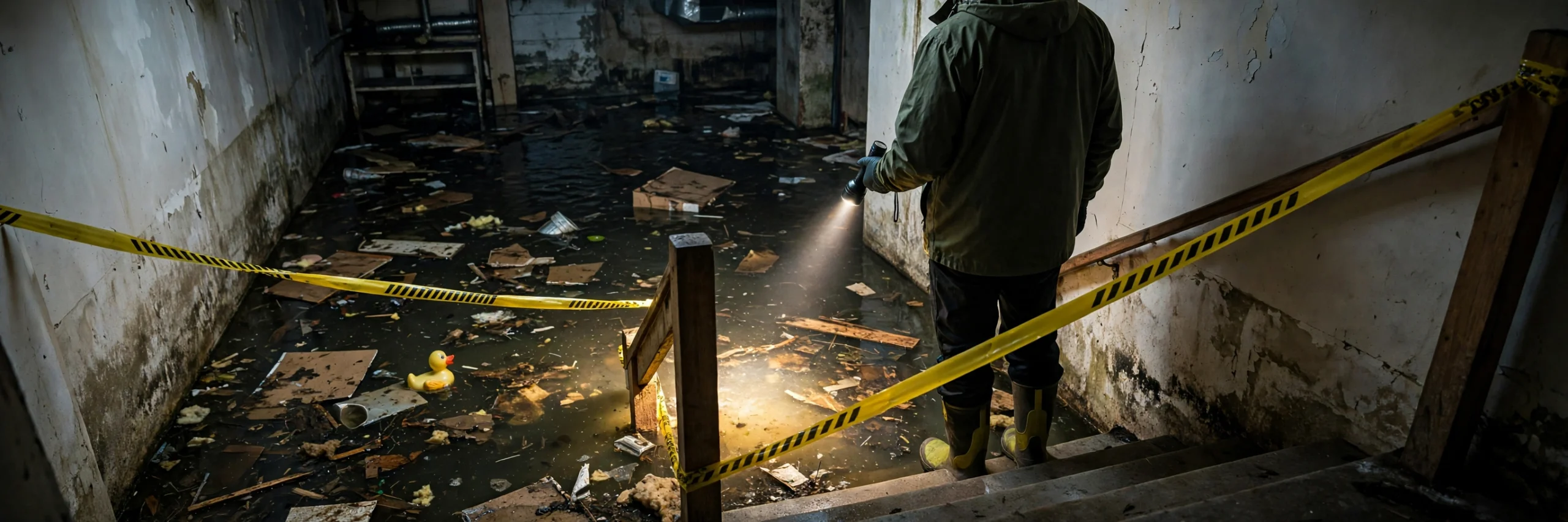
Black water is grossly contaminated and can contain pathogenic bacteria, viruses, sewage, chemicals, and other hazards. Sources include sewer backups, toilet overflows with feces, rising floodwater from rivers or streams, and seawater. Floodwater is always Category 3 because you cannot know what it picked up on the way in.
This is not a DIY category. Professional remediation for black water involves full PPE (respirators, coveralls, gloves, boots), removal of all porous materials the water touched, HEPA-filtered containment, and antimicrobial treatment of remaining structural surfaces. The process overlaps heavily with professional mold remediation in its containment and removal discipline, because the contamination risk is comparable.
Two rules for homeowners: never let children or pets near black water, and do not try to save porous belongings (mattresses, upholstered furniture, carpet pad) that were submerged. Some hard, nonporous items can be cleaned and disinfected, but when in doubt, discard.
Categories escalate with time
Here is the detail that catches people off guard: categories are not fixed. Clean water degrades. Category 1 water left sitting for 48 to 72 hours, especially in warm conditions, becomes Category 2 as bacteria multiply. Given more time and organic material to feed on, it can progress to Category 3.
This is the real reason professionals preach speed. A supply-line leak you discover and dry within hours is a straightforward drying job. The same leak discovered after a two-week vacation is a contamination job with removal, antimicrobial treatment, and a much bigger bill. Time does not just add damage; it changes the nature of the job.
Escalation can also affect your insurance outcome. An insurer may cover the initial sudden event but dispute the extra cost caused by delayed mitigation, arguing that the homeowner failed to protect the property from further damage. Most policies include a duty to mitigate, which is one more reason to act within hours rather than days.
What the category means for cleanup decisions
Use the category as your decision framework:
- Category 1, caught early: DIY is reasonable for handy homeowners: extract, dry aggressively, monitor with a moisture meter, and watch for signs of water damage in walls over the following weeks.
- Category 1, large volume or delayed discovery: call a professional for commercial drying equipment and verification.
- Category 2: remove contaminated porous materials, disinfect hard surfaces, use proper PPE. Consider professional help for anything beyond a small, contained area.
- Category 3: professional remediation, full stop. The health risks and the removal scope are beyond homeowner-level work.
When you call a company, tell them what the water source was and how long it has been sitting. A good technician reclassifies on arrival based on their own assessment, but your information helps them bring the right equipment the first time.
Frequently Asked Questions
Is rainwater clean water or gray water?
Rainwater entering directly (say, through an open window during a storm) starts as Category 1. But rain that runs across a roof, through gutters, or across the ground picks up contaminants and is generally treated as Category 2 or 3 depending on what it contacted. Rising groundwater and storm surge flooding are always Category 3.
Can clean water really become black water?
Yes, through time and temperature. Stagnant Category 1 water grows bacteria rapidly in warm conditions, and once it has been sitting in building materials for days, professionals treat it as Category 2 or 3. This escalation is why “we will deal with it this weekend” is such an expensive sentence.
Does homeowners insurance treat the categories differently?
Insurance cares more about the source and suddenness than the category label, but they correlate. Sudden clean-water events (burst pipes) are typically covered. Sewer backups usually require a separate endorsement. Floodwater requires flood insurance. Document the source carefully with photos from the start.
What is the difference between water categories and water classes?
Categories describe contamination level (how dirty the water is). Classes describe how much water the structure absorbed and how hard it will be to dry (based on materials and evaporation potential). A job can be Category 1 but Class 4 (clean water deeply absorbed into hardwood and plaster), which is still a difficult drying job.
Should I wear a mask for Category 1 cleanup?
An N95 respirator is sensible for any significant water cleanup, even Category 1, because disturbing wet materials releases dust and potentially mold spores. For Category 2 and 3, proper respiratory protection is not optional.
Bottom line
Learn the three categories once and you will make better decisions in every water emergency: clean water means dry fast, gray water means remove porous materials and suit up, black water means call professionals and keep everyone away. And whatever the category, speed is the variable you control. Hours of delay do not just add damage; they can upgrade the entire job into a higher, more expensive category.