

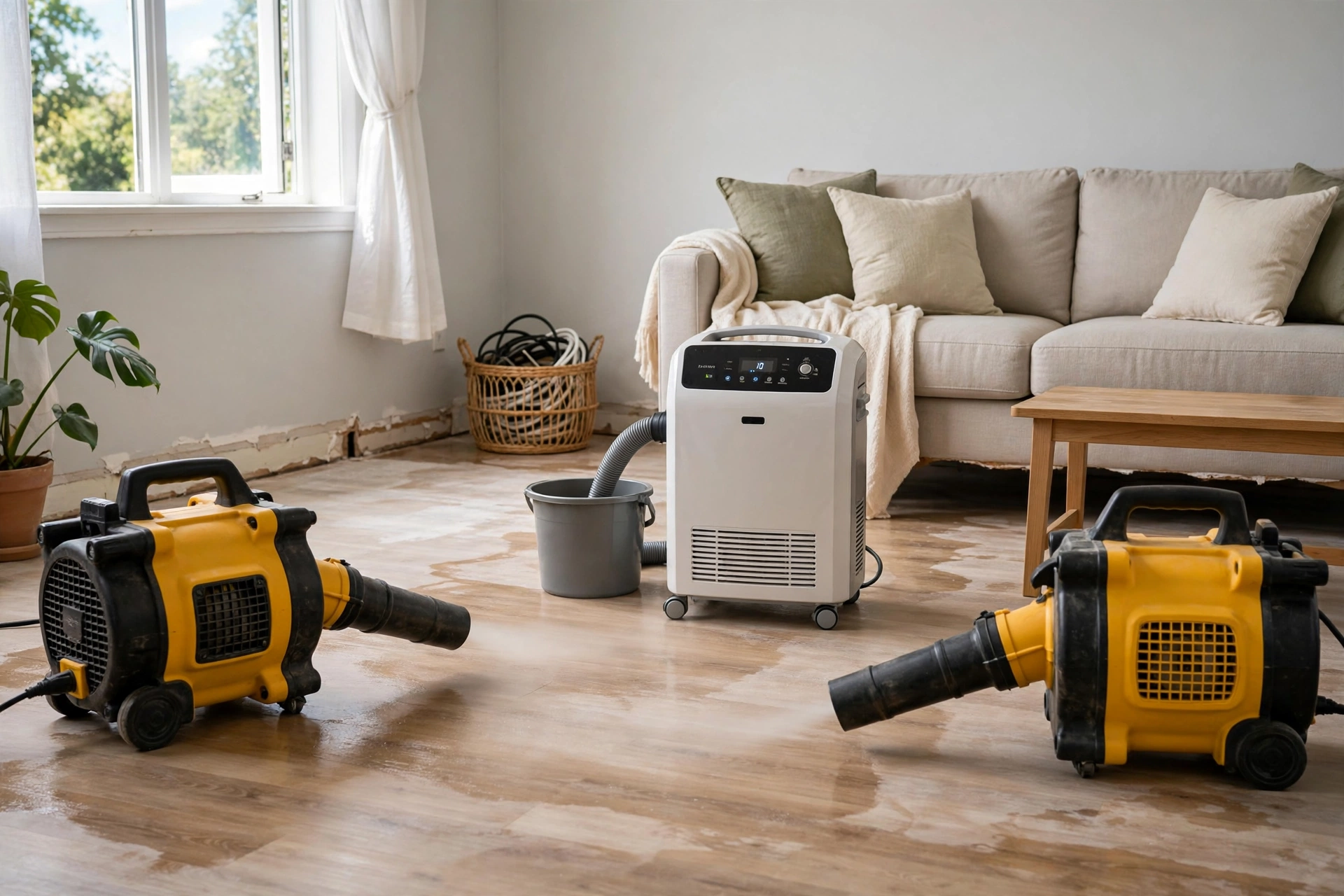
The water is gone, the fans are running, and you are wondering if that is enough. It usually is not. Mold can start growing on damp drywall, wood, and carpet within 24 to 48 hours of water exposure, which means the real work begins the moment the visible water is gone. Prevention is a race against the clock, and this checklist tells you exactly what to do, in order.
Follow these steps after any leak, flood, burst pipe, or appliance overflow. They are drawn from EPA and CDC guidance plus standard restoration practice, and they apply whether the damage is one wet wall or a whole flooded floor.
Why the first 24 to 48 hours decide everything
Mold spores are everywhere, indoors and out. They only need moisture, a food source (drywall, wood, dust, carpet backing all qualify), and a little time. The EPA’s widely cited guidance puts the danger zone at 24 to 48 hours: dry wet materials within that window and you usually prevent a mold problem; miss it and you are likely growing one.
Mold will grow in places with a lot of moisture. If wet or damp materials are not dried within 24 to 48 hours, mold growth is likely. (U.S. EPA)
That timeline is why restoration pros talk about “the first 48 hours” as the whole game. Everything below is organized to beat that clock. If you want the science behind the timing, read our explainer on how fast mold grows after water damage.
Step 1: Stop the water and stay safe
- Shut off the water source: fixture valve, appliance supply line, or the main shutoff.
- Kill power to wet areas at the breaker if water is near outlets or appliances. Do not wade into standing water until power is off.
- Assume floodwater is contaminated. Wear rubber boots, gloves, and eye protection. Floodwater can carry sewage, chemicals, and debris.
- Open windows and doors for ventilation if the outdoor air is drier than indoors.
Safety first is not a slogan here. Wet electrical systems and contaminated water injure people every year during cleanup. The EPA’s mold cleanup guidance starts with the same protective basics.
Step 2: Remove standing water fast
Every hour of standing water is an hour of soaking into subfloors, wall cavities, and baseboards. Work in this order:
- Extract: wet/dry vacuum, pump, or professional extraction for deep water. Mopping alone cannot pull water out of carpet pad or subfloor.
- Lift and remove: pull up wet area rugs. Carpet pad that has soaked through is almost never worth saving; cut it out and discard it.
- Open cavities: remove baseboards and drill or cut small inspection holes at the bottom of wet drywall so wall cavities can dry. Drywall that stayed wet more than 48 hours usually needs to be cut out at least 12 inches above the water line.
- Move wet contents: get furniture, boxes, and fabrics out of the wet zone and into dry air.
Step 3: Dry everything aggressively
Surface-dry is not dry. Wood framing, subfloors, and drywall hold moisture deep inside, and mold grows happily behind a surface that looks fine. Proper drying means:
- Run high-volume fans aimed at wet surfaces, not just into the room. Air movement across the surface is what evaporates trapped moisture.
- Run a dehumidifier sized for the space, draining continuously (hose to a sink or pump, not the little bucket you have to empty twice a day).
- Target indoor humidity below 60 percent, ideally 30 to 50 percent. A $15 hygrometer tells you whether you are winning.
- Keep drying for at least 72 hours, longer for soaked framing or concrete. A pin-type moisture meter ($30 to $50) is the only reliable way to confirm wood is back under 16 percent moisture.
- Do not close up walls or lay new flooring until moisture readings are normal. Sealing moisture inside a wall is how hidden mold colonies are born.
Basements deserve special attention because they dry slowest. Our guide to preventing mold in basements covers humidity, drainage, and airflow tactics for below-grade spaces specifically.
Step 4: Clean and disinfect the right way
Once materials are dry, clean what stayed. The CDC’s cleanup guidance emphasizes scrubbing mold off hard surfaces rather than just spraying them, and that applies to prevention too: dirt and organic film left on a surface become mold food the next time humidity spikes.
- Scrub hard, non-porous surfaces (tile, glass, metal, sealed concrete) with detergent and water, then dry completely.
- On semi-porous surfaces like wood framing, scrub with a detergent solution; an antimicrobial treatment after drying adds a layer of protection.
- Skip the bleach-on-drywall myth. Bleach does not reliably kill mold roots in porous materials, and it adds moisture. Cut out and replace moldy drywall instead.
- Wash fabrics in hot water and dry thoroughly. Anything that still smells musty after washing should go.
For the full rundown of what actually kills mold on different materials, the CDC’s 8 cleanup tips are worth bookmarking.
Step 5: Control humidity for the next 30 days
The danger does not end when the fans come up. Moisture hidden in framing and concrete keeps evaporating for weeks, and one humid stretch can restart growth. For the month after water damage:
- Keep the dehumidifier running until indoor humidity holds steady under 50 percent without it.
- Run bathroom exhaust fans during and 20 minutes after showers; run the kitchen range hood when cooking.
- Do not stack boxes or furniture tight against exterior walls in the affected area; air needs to circulate.
- Check the previously wet areas weekly with your eyes and nose. Musty odor with no visible mold means something is still damp inside a cavity.
Know when this becomes a professional job
DIY prevention works for clean-water incidents caught early. Call a professional remediator when:
- The affected area exceeds about 10 square feet of visible mold (the EPA’s DIY threshold).
- Water came from sewage, a sump backup, or flooding that may be contaminated.
- HVAC ducts or the air handler got wet; do not run the system until it is inspected.
- Anyone in the home has asthma, allergies, or immune issues and symptoms flare during cleanup.
- You suspect mold inside wall cavities or under flooring you cannot access.
If the damage involves an insurance claim, timing matters there too. Our guide on claim filing deadlines explains the notice windows most policies require.
The complete prevention checklist
- Water source stopped; power made safe; protective gear on.
- Standing water extracted within hours, not days.
- Wet carpet pad removed; wet drywall opened or cut out.
- Fans plus dehumidifier running; humidity under 60 percent and falling.
- Moisture meter confirms wood below 16 percent before closing walls.
- Hard surfaces scrubbed with detergent and fully dried.
- Dehumidifier keeps running until humidity holds under 50 percent on its own.
- Weekly smell-and-sight checks for 30 days.
- Professional called if mold exceeds 10 sq ft, water was contaminated, or HVAC got wet.
For a deeper dive on any single step, the EPA’s mold hub links to their full homeowner guidance.
Frequently Asked Questions
How quickly must I dry things to prevent mold?
Within 24 to 48 hours, according to EPA guidance. After 48 hours of dampness, assume mold is growing and plan for remediation, not just drying.
Will running the air conditioner prevent mold?
It helps, since AC removes humidity, but it is not a substitute for targeted drying. In cool weather when the AC rarely runs, you need a dehumidifier instead.
Can I just spray bleach on a wet wall to prevent mold?
No. Bleach does not penetrate porous materials like drywall or wood, and it adds moisture. Drying is the prevention; bleach is not a shortcut.
How do I know the wall cavity is dry?
Use a pin-type moisture meter on the framing through a small inspection hole. Surface dryness means nothing; wood needs to read below about 16 percent moisture content.
My basement always feels damp. Is a dehumidifier enough?
Often yes, if it is sized correctly and drains continuously. But chronic dampness can signal drainage or grading problems that a dehumidifier only masks. If you empty buckets constantly or see efflorescence on walls, investigate the water source.
What to do next
Start at the top of the checklist and do not skip the boring middle steps; drying thoroughly is what separates a close call from a mold remediation bill. If your basement is the problem area, work through our basement-specific prevention guide next, and keep an eye on the 24 to 48 hour window that started the moment water hit your floors.