

“Restoration” sounds like a single job, but it is actually a sequence of distinct phases, each with its own equipment, timeline, costs, and decisions for you to make. Understanding the sequence is the difference between watching the process anxiously and managing it confidently.
Knowing what happens when helps you in practical ways: you can hire smarter, track whether the crew is on schedule, document properly for insurance, and recognize when a phase is being skipped. A company that wants to jump from extraction straight to rebuild, for example, is skipping the drying verification that prevents your next mold problem.
This guide walks the full professional process from the first phone call to the final walkthrough. If you are still deciding whether to hire at all, read our guide on when to call a professional for water damage first; what follows assumes you have made the call.
Step 1: Emergency contact and inspection
It starts with a phone call, and a good dispatcher asks pointed questions: where is the water coming from, how large is the affected area, is the power on, and is anyone’s safety at risk. Many companies offer 24-hour emergency response because the first hours determine how much material can be saved.
On site, the technician inspects with moisture meters and often a thermal imaging camera to map how far water traveled, which is routinely beyond the visibly wet area. They classify the water as clean, gray, or black, since the category determines the entire safety and sanitation protocol. Our explainer on water damage categories covers what each classification means for your job. Expect a written scope of work before anything gets torn out. Timeline: same day, typically one to three hours on site.
Step 2: Water extraction
Extraction removes standing water and is the highest-leverage phase of the job. Truck-mounted or portable extractors pull water from floors and carpets, while submersible pumps handle deeper flooding. Every gallon extracted is a gallon the drying equipment does not have to evaporate, so thorough extraction shortens everything that follows.
This phase is fast and dramatic: most residential extraction finishes in a few hours. It is also where cost differences start, since extraction pricing depends on volume and equipment. See our breakdown of water extraction costs for typical price ranges.
Step 3: Drying and dehumidification
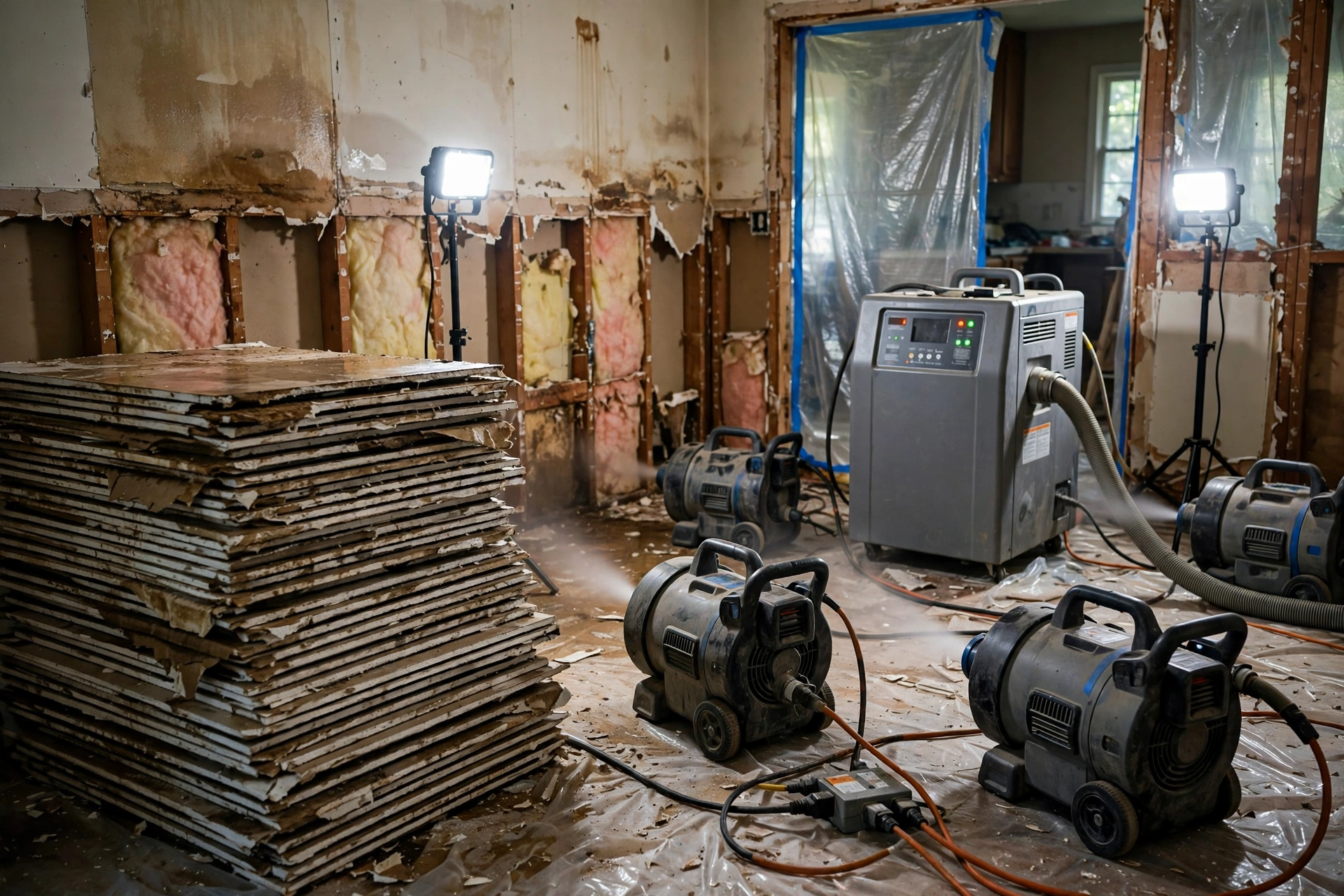
With standing water gone, the crew sets up the drying system: air movers positioned to push dry air across wet surfaces, and commercial dehumidifiers sized to the moisture load pulling that moisture out of the air. Baseboards may come off, and wet drywall sections get cut to expose wall cavities to airflow.
This is the longest active phase and the one homeowners most want to rush. Proper drying typically takes 3 to 5 days, with the crew returning daily to take moisture readings and reposition equipment. The job is done when meters confirm dry baselines, not when surfaces feel dry. For typical durations across job sizes, see our water damage restoration timeline guide.
Step 4: Cleaning and sanitizing
Once materials are dry, everything that got wet gets cleaned. Hard surfaces are scrubbed and treated with antimicrobial products, carpets are deep cleaned or removed depending on the water category, and contents like furniture and personal items are cleaned separately. Odor treatment happens here too if musty smells lingered.
The intensity of this phase depends on the water category. Clean-water jobs need straightforward cleaning; gray or black water requires aggressive sanitation and usually the disposal of porous materials like carpet pad, insulation, and the lower sections of drywall. Nothing gets rebuilt until this phase is complete and verified.
Step 5: Mold prevention and monitoring
Proper drying is itself the main mold prevention strategy, since mold needs sustained moisture to grow. During and after drying, the crew watches for any signs of colonization: musty odors, discoloration on framing, or moisture readings that refuse to drop. If mold is found, it becomes a separate remediation scope with its own containment, not an afterthought.
The EPA advises that water-damaged areas and items be dried within 24 to 48 hours to prevent mold growth, which is why rapid extraction and equipment setup matter more than any antimicrobial product, according to its guide to mold, moisture, and your home.
Professional standards for all of this come from the IICRC, the body that certifies restoration technicians and publishes the industry’s standard of care. A company working to that standard documents moisture readings at every visit, giving you a paper trail that proves the structure was actually dry before rebuild.
Step 6: Repairs and rebuild
Only now does the “restoration” most homeowners picture begin: replacing cut drywall sections, reinstalling baseboards, repairing or replacing flooring, repainting, and restoring the space to its pre-loss condition. This phase often involves a different crew than the drying team and runs on a construction timeline rather than an emergency one.
Expect days for minor repairs and several weeks for extensive rebuilds involving flooring, cabinetry, or structural work. You will typically select finish materials yourself, and this is where project management matters most: confirm the drying sign-off happened before any wall gets closed up, because sealing moisture inside a wall cavity guarantees a future mold claim.
Step 7: Final walkthrough and documentation
The job ends with a walkthrough, not just a handshake. Walk every affected area with the project manager, review the final moisture readings, inspect repairs and finishes, and confirm the equipment is gone and the space is clean. Raise any concern now, while the crew is still mobilized.
Collect the documentation packet: the initial scope, daily moisture logs, photos, and itemized invoices. This packet is what makes an insurance claim smooth instead of painful, so store digital copies somewhere safe. A reputable company provides this without being asked.
Frequently Asked Questions
How long does the whole restoration process take?
The emergency and drying phases typically wrap in 3 to 5 days. Full restoration including repairs runs one to four weeks for most residential jobs, with extensive rebuilds taking longer. The drying phase should never be compressed to hit a schedule; rebuilding over damp materials creates far bigger problems.
Do I need to leave my home during restoration?
Usually not for clean-water jobs: the equipment is loud but the home remains livable, with contained work areas off-limits. For sewage contamination or large mold remediation, temporary relocation is sometimes recommended. Discuss it during the inspection so you can plan ahead.
Will my insurance cover the restoration?
Sudden and accidental water damage, like burst pipes or appliance failures, is typically covered, while gradual leaks and maintenance issues usually are not. File the claim early, document everything with photos, and keep every receipt. The documentation packet from Step 7 exists largely for this purpose.
Can hardwood floors be saved during restoration?
Sometimes, with fast response. Specialized floor drying mats can pull moisture from hardwood without tear-out if treatment starts within a day or two. Floors that cupped significantly or stayed wet for days usually need refinishing or replacement. Early extraction is the deciding factor.
Does the same company handle drying and rebuilding?
Often yes, but not always. Many restoration firms do mitigation only and hand off to a general contractor for rebuild, while full-service firms do both. Either model works; what matters is that the drying company provides verified dry readings before the rebuild crew closes anything up.
What to do next
If you are facing water damage right now, the sequence is simple: stop the source, document everything with photos, and get extraction started, whether by you or a company. Every hour of standing water expands the job into more rooms and more materials.
If you have not yet decided who should handle it, our guide on when to call a professional for water damage will help you make that call with confidence.