
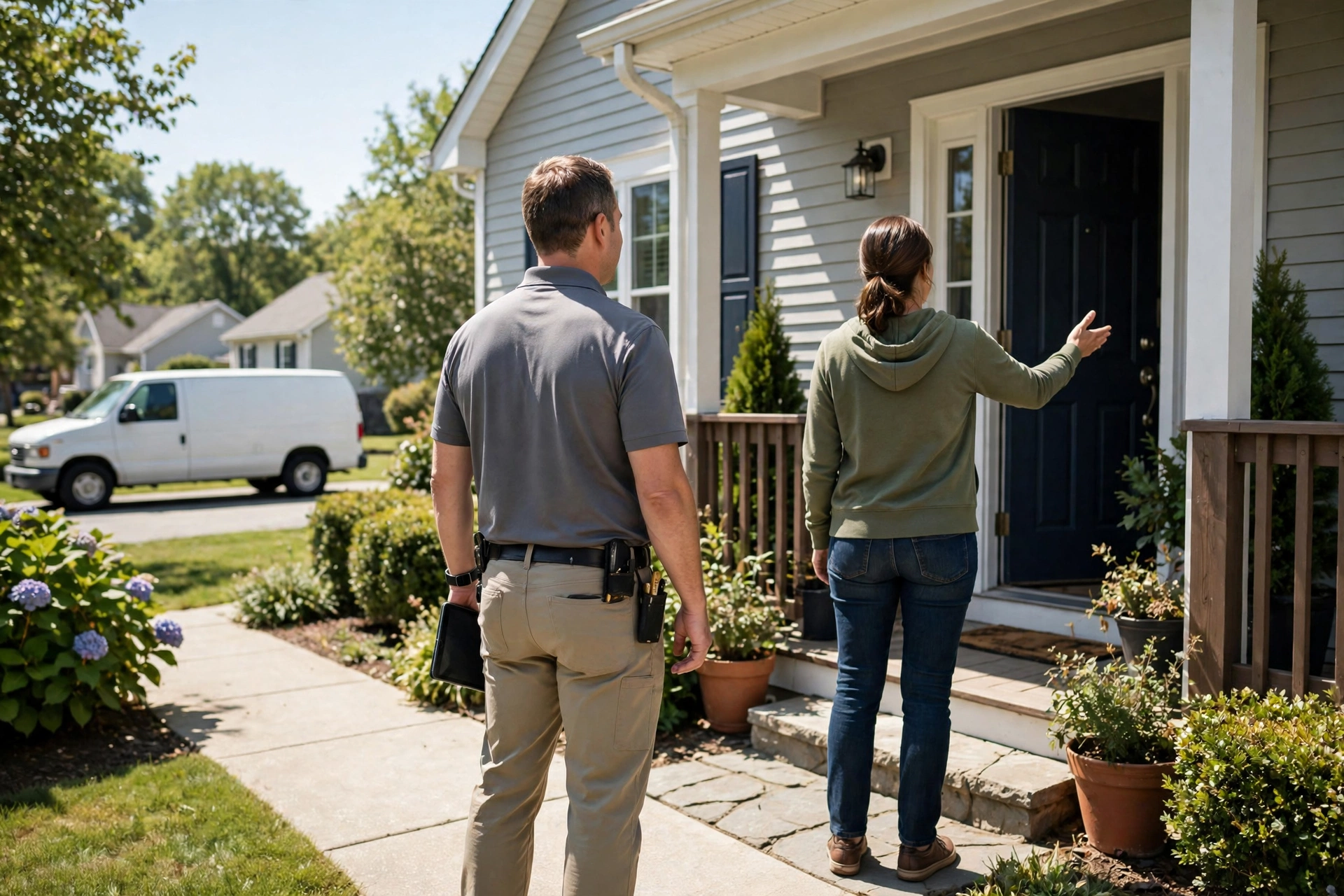
Water is in your home where it should not be, and now a stranger with a clipboard is telling you what needs to happen next. Choosing a restoration company under that kind of pressure is how homeowners end up overcharged, under-dried, or stuck with a contractor who disappears mid-job.
You do not need to become an industry expert. You need twelve good questions, asked before anyone starts cutting drywall. They cover credentials, response, process, and money, and the answers will tell you quickly who is professional and who is just persuasive.
Before you start calling
Do three things first. Stop the water if you safely can (main shutoff valve, appliance supply line). Document everything with photos and video before anything is moved. Then call your insurer to open a claim if the damage looks significant. With that done, you can interview companies from a position of calm instead of panic.
Aim to talk to at least two or three companies. For emergency mitigation starting tonight, you may only get one on site quickly, but you can still ask every question below over the phone before they arrive.
One more thing before the calls: do not throw anything away yet. Insurers want to see damaged materials and belongings before disposal, so bag small items and photograph everything in place. If something is a health hazard, like sewage-soaked carpet, photograph it thoroughly first and then remove it, noting the reason.
Questions 1 to 3: Credentials
1. Are you licensed and insured in my state?
This is non-negotiable. Ask for the license number and verify it with your state’s contractor board, and ask for a current certificate of insurance showing general liability and workers’ compensation. If a worker gets hurt in your home and the company has no coverage, you can be pulled into the mess.
2. Will IICRC-certified technicians be on my job?
Ask specifically which technicians hold which certifications, not just whether “the company” is certified. For water work you want WRT (Water Damage Restoration Technician); for mold, AMRT (Applied Microbial Remediation Technician). Our IICRC certification guide explains exactly what each credential means and how to verify it in the IICRC’s online registry.
3. How long have you been doing restoration work?
Experience matters because every house dries differently. A company with years of local work has seen your region’s construction types and knows how they behave wet. Be cautious with companies that cannot name local references or whose online presence is only a few months old.
Questions 4 to 6: Response and availability
4. Do you offer 24/7 emergency response?
Water damage does not wait for business hours, and neither should your mitigation company. Ask what “24/7” actually means: a live person answering, or an answering service that pages someone eventually.
5. How fast can you get a crew to my home?
For active water intrusion, hours matter. A good company gives you a realistic arrival window and meets it. Vague promises (“we’ll try to get someone out this week”) for an active leak tell you to call the next company on your list.
6. Who will actually show up, and who supervises?
Some companies sell the job and subcontract the work to whoever is available. Ask whether the crew are employees or subcontractors, and who the certified supervisor on your specific job will be. You want a name, not “one of our teams.”
Questions 7 to 9: Process and equipment
7. How will you assess the damage before starting work?
Professionals do not diagnose with a glance. Expect moisture meters, possibly thermal imaging, and a documented moisture map of affected areas. If the “assessment” is a quick look around followed by a demolition quote, that is a red flag.
8. Walk me through your drying process.
Listen for specifics: water extraction first, then containment of the drying area, commercial air movers and dehumidifiers (not household fans), and daily moisture readings until materials reach documented dry standards. Ask how they verify something is actually dry rather than just “dry enough.” For any mold-related work, the EPA’s remediation guidelines describe the containment and filtration steps a qualified crew should follow. Understanding the professional remediation process beforehand helps you spot vague or skipped steps.
9. What equipment will you use, and is it commercial grade?
Proper structural drying uses high-velocity air movers, low-grain refrigerant or desiccant dehumidifiers, and HEPA air scrubbers where contamination is a concern. A company whose equipment list sounds like a trip to the hardware store is not equipped for the job.
Questions 10 to 12: Money and paperwork
10. Will I get a written, itemized estimate before work starts?
For emergency mitigation, some work starts before a full estimate exists, but you should still get a written scope and pricing as soon as possible. Reputable companies use standardized pricing software (Xactimate is the industry standard) that your insurer will recognize. Refusal to put numbers in writing is a dealbreaker.
11. Do you work directly with insurance companies?
An experienced company documents everything in the format adjusters expect: photos, moisture logs, line-item invoices. Ask whether they will communicate with your adjuster and whether they have handled claims with your insurer before. Be wary of anyone asking you to sign over your entire claim (assignment of benefits) on the first visit; get advice before signing that. It also helps to know upfront whether homeowners insurance covers water damage in your situation, so you can ask sharper questions about billing and payment.
12. What is your payment schedule?
Reasonable structures exist, but large upfront deposits before any work begins are a warning sign. For insurance jobs, payment often follows the claim process. Get the schedule in writing, including what happens if the insurer disputes part of the bill.
Red flags that mean walk away
Even good answers to the twelve questions do not help if you ignore these warning signs:
- High-pressure tactics: “sign now or the price goes up,” or insisting you decide before getting other quotes
- Door-to-door solicitation right after a storm, especially from out-of-state trucks
- Demanding cash payment or full payment upfront
- No physical business address, only a mobile number and a new website
- Promising your insurance will “cover everything” before seeing your policy
- Starting demolition before you have agreed to a scope of work in writing
Frequently Asked Questions
Should I get multiple quotes for emergency water damage?
For the emergency mitigation phase (stopping water, extraction, initial drying), speed matters more than comparison shopping; get the best available company moving fast. For the rebuild and repair phase afterward, get at least two or three detailed quotes since prices and approaches vary widely.
Is the cheapest quote the best choice?
Rarely. Very low bids often mean skipped steps: no proper drying verification, no containment, or uninsured labor. Compare scopes line by line. A higher quote that includes thorough drying and documentation usually costs less than a cheap job that leads to mold six months later.
Can I just use my insurance company’s preferred contractor?
You can, and preferred vendors are usually competent, but you are not required to use them. You have the right to choose your own contractor. Some homeowners prefer an independent company that works for them rather than one with a volume relationship with the insurer.
What if the company finds more damage once work starts?
Hidden damage is common once walls are opened. A professional documents the new findings with photos and moisture readings, updates the written scope, and gets your approval before proceeding. Surprise charges with no documentation are not acceptable.
How do I check a company’s reviews properly?
Look beyond the star rating. Read the negative reviews for patterns (communication breakdowns, billing disputes, incomplete drying) and check how the company responds. Also ask the company directly for two or three recent local references and actually call them.
What to do next
Keep this list on your phone before you need it. When water hits, you will be glad the questions are already written down. Start with credentials and insurance, confirm a real emergency response, pin down the process and equipment, and get everything about money in writing. Companies that answer all twelve clearly are the ones worth hiring. If two companies both check out, choose the one whose documentation and communication impressed you most, since you will be dealing with them for weeks.