

Basements are supposed to smell like nothing. When yours smells like a damp towel that has been sitting too long, that odor is telling you something specific: somewhere down there, organic material is staying wet enough for mold or bacteria to grow. Air fresheners, candles, and plug-in scents just layer perfume over the problem. The smell always comes back, because the cause never left.
Getting rid of a musty basement smell permanently is a three-part job: find and fix the moisture source, clean what has already grown, and control humidity going forward. Skip any one of those steps and the odor returns within weeks. This guide walks through each part in order, with realistic expectations about what you can do yourself and when to bring in help.
Why basements smell musty in the first place
Basements sit partially or fully below grade, surrounded by damp soil. Concrete and block walls are porous, so moisture wicks through them constantly. The space stays cooler than the rest of the house, which means relative humidity runs higher even with the same absolute moisture. Add poor air circulation, stored cardboard boxes, carpet, or wood paneling, and you have everything mold needs.
The musty odor itself comes from gases released as mold and bacteria digest organic material: dust on concrete, the paper facing of drywall, carpet backing, wood framing, or even the dirt on the floor. A finished basement can smell musty with the growth entirely hidden behind the finished walls, which is why the odor often shows up long before anything is visible.
It is worth distinguishing a true musty smell from other basement odors. A rotten-egg smell suggests a dry drain trap or sewer issue, not mold. A sharp chemical smell could be off-gassing from new materials. The classic mold mustiness is earthy and damp, like soil after rain or a forgotten load of laundry.
Step 1: Find the moisture source
Cleaning without fixing the moisture is mopping the floor with the tap still running. Work through the likely sources before you clean anything.
Check the easy wins first
- Gutters and downspouts. Walk outside during rain if you can. Downspouts that dump water right at the foundation are the single most common cause of basement moisture. Extensions that carry water at least 6 feet from the house fix many musty basements.
- Grading. The soil should slope away from the foundation, not toward it. Low spots that pond water against the wall need to be built up.
- Plumbing. Check the water heater, washing machine hoses, and any exposed pipes for slow drips. Feel along pipe runs for dampness.
- Window wells. Clogged wells fill with water and leak through old window frames. They should drain freely and sit a few inches below the sill.
Look for the subtle signs inside
With a bright flashlight, inspect where the wall meets the floor all the way around. Look for white, crusty mineral deposits (efflorescence), which prove water has been moving through the concrete. Check for rust on the bottom of metal shelving or the furnace, damp spots on stored cardboard, and any discoloration on the lower part of finished walls. Press baseboards gently for softness.
If the basement is finished, the growth may be behind the drywall. Sniff along baseboards and outlets, and look for the classic signs of hidden mold in walls before deciding whether to open anything up.
Step 2: Remove what is feeding the smell
Once you know where the moisture is coming from (and have a plan to fix it), clear the decks. Mold cannot keep producing odor if it has nothing to eat.
- Get porous junk off the floor. Cardboard boxes sitting directly on concrete wick moisture and grow mold on the bottom where you never look. Move everything into plastic bins, ideally on shelving.
- Pull up problem carpet. Basement carpet over concrete is a mustiness machine. If it smells and the pad is damp or discolored, replacement (or switching to a hard surface) beats repeated cleaning.
- Clean hard surfaces properly. Scrub concrete walls and floors with detergent and water, then rinse. The EPA’s mold cleanup guidance emphasizes that physical removal matters more than which cleaner you use. For visible growth on walls, our basement wall mold guide covers concrete-safe cleaning in detail.
- HEPA vacuum everything. Soft furnishings, exposed joists, and storage areas collect spore-laden dust. A vacuum with a true HEPA filter keeps it from just redistributing.
- Wash fabrics hot. Curtains, slipcovers, and stored clothing that smell musty should go through a hot wash and full dry. Sunlight helps too.
Wear an N95 respirator, gloves, and eye protection for all of this, following the CDC’s safety tips for mold cleanup. If the affected area is larger than about 10 square feet, or you find growth inside finished walls, stop and get a professional assessment instead of pushing ahead.
Step 3: Get humidity under permanent control
This is the step most people skip, and it is why the smell comes back. Basements need active, year-round humidity management.
Run a real dehumidifier, correctly
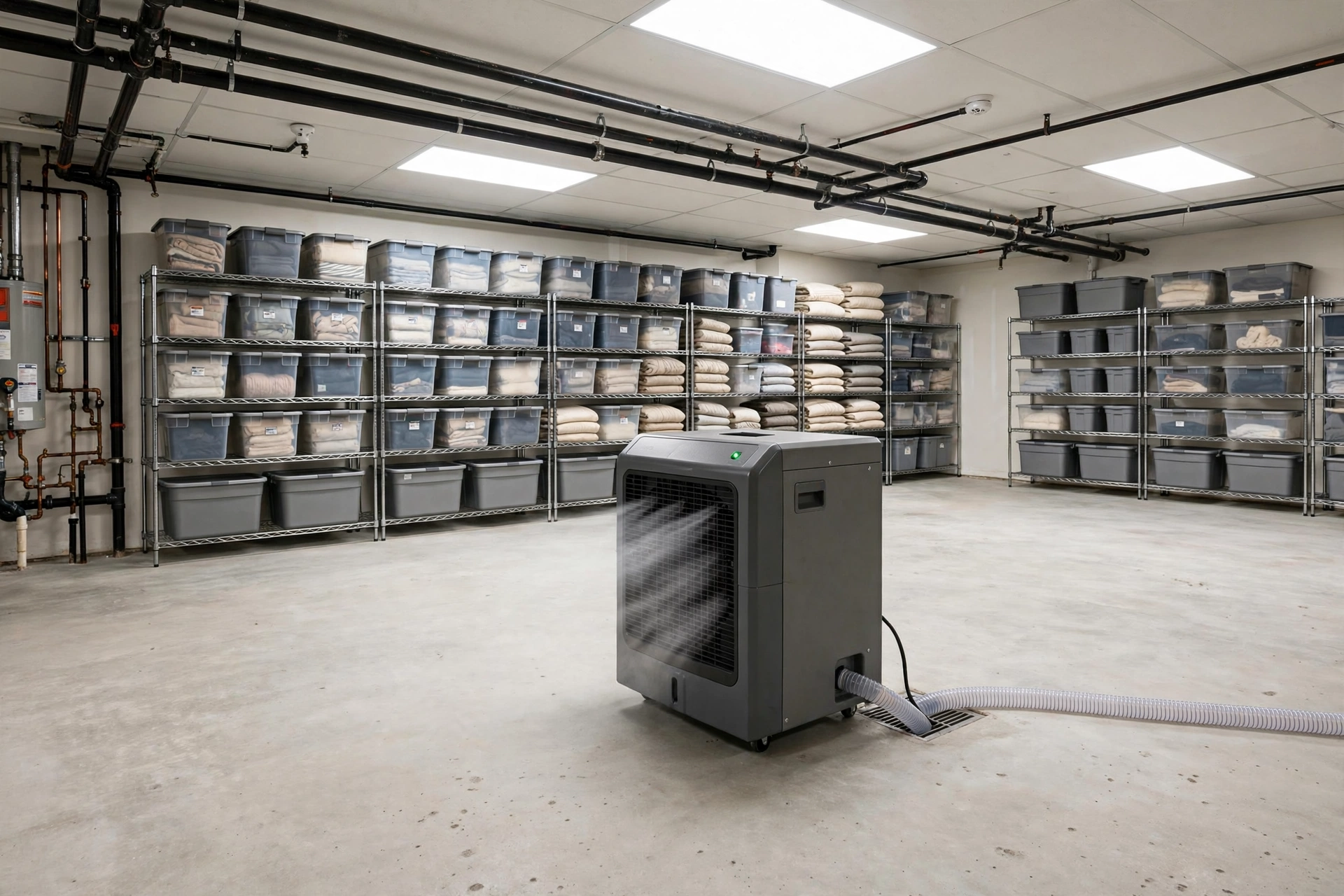
A small portable unit from the discount aisle will not cut it for a whole basement. Size the dehumidifier to the space and the dampness level: for a damp (not wet) basement, roughly 30 to 50 pints per day of capacity for each 1,000 square feet is a reasonable starting point, going higher if the space is very damp. Set the humidistat to keep relative humidity between 30 and 50 percent, the range the EPA recommends.
Placement and drainage matter as much as size. Put the unit centrally, away from walls, with room for airflow. If you have a floor drain or sump pit, set up a hose for continuous drainage so you are not emptying a bucket twice a day. Clean the filter monthly. A dehumidifier with a dirty filter is just a noisy box.
Improve air movement
Stagnant air lets humid pockets form. A simple oscillating fan, or better yet tying the basement into the home’s HVAC with a supply vent, keeps air mixing. If your basement has no HVAC connection, even cracking airflow between the basement and upstairs (a louvered door, a transfer grille) helps more than people expect.
Seal the obvious entry points
Caulk gaps where pipes and wires penetrate the foundation walls. Seal the rim joist area, which is a major path for humid outdoor air. These are weekend jobs with outsized effects on basement humidity.
What about odor bombs, ozone, and foggers?
You will see products promising to eliminate basement odor with a fog or an ozone treatment. Here is the honest breakdown. Odor-sealing foggers can help as a final step after proper cleaning, but used alone they just coat the problem. Ozone generators can knock down odors temporarily, but ozone is a lung irritant, the effect fades once the machine is off, and it does nothing about the moisture feeding the growth. Concrobium-style antimicrobial sprays are fine as part of cleaning, not as a substitute for it. There is no shortcut around the three steps: fix moisture, remove growth, control humidity.
When the smell means a bigger problem
Call a professional if the odor persists after you have addressed drainage, cleaned thoroughly, and run a properly sized dehumidifier for a few weeks. That pattern suggests hidden growth in finished walls, under flooring, or in the HVAC system. Also get help promptly if the musty smell appeared after a flood or major leak, since mold establishes fast after water events and the affected area may be larger than it looks.
Sewage odors mixed with mustiness are a different category entirely. If you suspect any sewage involvement, do not DIY the cleanup. Contaminated water carries pathogens that household cleaning cannot safely handle.
Frequently Asked Questions
How long does it take for the smell to go away?
After proper cleaning and with humidity controlled, most basements smell noticeably better within a week and neutral within two to three weeks. If the odor is unchanged after a month of correct humidity control, the moisture source or the growth site has not been fully addressed.
Will a dehumidifier alone fix a musty basement?
It helps a lot but rarely fixes it alone. A dehumidifier controls airborne humidity; it cannot dry water wicking through walls from bad drainage or clean mold already growing on surfaces. Pair it with source fixes and cleaning.
Is musty basement smell harmful?
For most healthy people it is mainly unpleasant, but the mold producing the smell can trigger allergies and respiratory irritation in sensitive individuals. Persistent mustiness deserves investigation regardless, because the underlying moisture damages the house itself.
Should I seal my concrete walls with waterproof paint?
Waterproof coatings help with minor vapor transmission but will not stop real water intrusion, and they can trap moisture inside the wall if applied over an active leak. Fix drainage and grading first, then consider coatings as a finishing step, not a solution.
Why does the smell get worse in summer?
Warm air holds more moisture, so summer brings higher basement humidity and more active mold growth. Air conditioning can also create condensation issues. This seasonality is normal and is another reason year-round dehumidification matters.
Bottom line
A musty basement smell is a moisture report, not a cleaning failure. Fix the water entry first (gutters, grading, and plumbing cover most cases), remove the materials feeding the growth, then keep humidity between 30 and 50 percent with a properly sized dehumidifier and decent airflow. Do those three things and the smell does not come back. If you have worked the plan and the odor persists, the growth is probably hidden, and our guide on finding mold when nothing is visible will help you track it down. For the actual scrubbing and safety gear, follow the steps in our black mold removal guide before you start.