

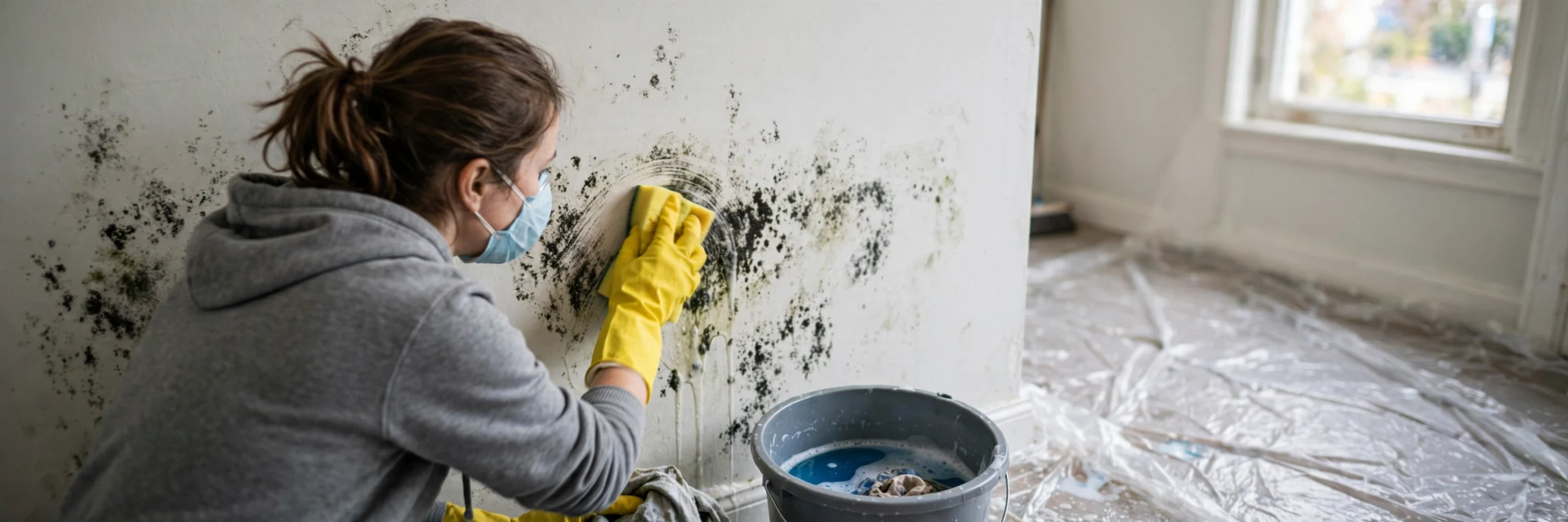
You spot it in the shower corner or behind the dresser you finally pulled from the wall: dark, patchy growth that was not there a month ago. Your first instinct may be to grab the bleach and scrub. Hold on: bad mold cleanup spreads spores through the whole house and can leave you coughing for days.
This guide covers safe black mold removal room by room: the protective gear you need, which surfaces you can clean, which materials have to go, and where DIY stops being smart. Mold can start growing within 24 to 48 hours of water exposure, so the clock is ticking. Our guide on how fast mold grows after water damage explains that timeline in detail.
What black mold actually is
“Black mold” usually means Stachybotrys chartarum, a dark greenish-black mold that grows on cellulose-rich materials like drywall, wood, and paper backing. It has a scary reputation because it can produce mycotoxins, compounds that irritate the lungs and sinuses of sensitive people.
Color alone tells you almost nothing. Plenty of dark molds are common Cladosporium or Aspergillus, and plenty of harmful molds are not black at all. You cannot identify the species by sight, and for cleanup you do not need to. The EPA’s position: if you can see or smell mold, you have a mold problem, and testing before cleanup is usually unnecessary.
What matters is extent, location, and moisture. A few square inches on bathroom grout is a weekend chore; ten square feet inside a wall cavity is a containment job. This guide assumes visible surface mold in living spaces and flags every point where you should call a professional instead.
Safety gear and ground rules before you touch anything
Spores go airborne the moment you disturb a colony, so protection is not optional. Wear an N95 respirator (not a paper dust mask), nitrile gloves past the wrist, sealed safety goggles, long sleeves, and clothes you can throw away afterward. The CDC’s mold cleanup tips cover the same basics and are worth a read before you start.
Ground rules before you begin:
- Fix the moisture source first. Cleaning mold while the leak continues is mopping with the tap running.
- Never mix bleach with ammonia or any other cleaner. The fumes are dangerous.
- Do not run the HVAC near a large colony. It spreads spores through the ductwork.
- Seal the work area with plastic sheeting if the patch is bigger than a dinner plate.
- Bag moldy porous materials in heavy plastic before carrying them through the house.
The EPA draws a practical line at about 10 square feet: smaller patches are generally manageable for a homeowner, larger areas call for professional containment. Measure honestly before deciding.
Bathroom: grout, caulk, and the fan nobody cleans
Bathrooms grow mold because they stay humid. The number one fix is not stronger cleaner, it is better ventilation. If your exhaust fan sounds broken or vents into the attic instead of outside, fix that first. Run it during every shower and for 30 minutes after.
For mold on tile and grout, scrub with a stiff brush and detergent, then rinse. That physically removes the colony from non-porous surfaces like tile, glass, and tub surrounds, and it generally does not return if the area dries properly. Grout is semi-porous, so deep staining may remain; if grout stays discolored or crumbly, regrouting is the honest fix.
Mold roots into silicone and latex caulk, and surface cleaning never fully removes it. Cut out moldy caulk, clean and dry the joint, and apply fresh mildew-resistant caulk. It is a 30 minute job that solves the problem for years instead of weeks.
Basement: concrete walls and everything stored against them
Basement mold traces back to moisture: seepage through foundation walls, condensation on cold surfaces, or a past flood that never fully dried. Pull everything off the walls for airflow and run a dehumidifier at 30 to 50 percent relative humidity.
On bare concrete or block, scrub with detergent and water, then HEPA-vacuum once dry. A standard shop vacuum blows fine spores back into the air, so the HEPA filter matters. For a sense of pro-level drying at this scale, see our flooded basement cleanup cost breakdown, which covers DIY versus pro pricing.
Be ruthless with porous materials. Cardboard, carpet, upholstered furniture, and drywall that stayed wet more than a day or two usually cannot be saved: mold grows into fibers where no surface cleaner reaches. Bag these items and get them out. Do not try to save a moldy mattress.
Attic: sheathing, insulation, and ventilation problems
Attic mold surprises people because the space feels dry. Warm, moist air from the living space rises into the cold attic, condenses on the roof sheathing, and feeds mold on the wood all winter. Bathroom fans venting into the attic instead of through the roof are the classic cause.
Small patches on plywood sheathing can be scrubbed and HEPA-vacuumed once the moisture source is fixed, but attics are awkward, hot, poorly ventilated spaces. Wear your respirator up there without exception. If mold covers large sections of sheathing or has reached blown-in insulation, that insulation usually needs professional removal: wet insulation loses its R-value and becomes a spore reservoir.
The long-term fix is ventilation balance: clear soffit vents, a working ridge vent, sealed air leaks from the living space, and bath fans ducted outside. Clean the mold without fixing the airflow and you will repeat the job next year.
Bedrooms and living areas: drywall, carpet, and furniture
Mold on bedroom or living room walls usually means a hidden moisture source: a slow plumbing leak, condensation inside an exterior wall, or water wicking up from the floor. Find the source before you clean, or it returns within weeks.
On painted drywall, surface cleaning only works if the drywall is firm and the growth is superficial. Press the area: if it feels soft or crumbly, or the paper facing peels, cut out the section at least 12 inches beyond the visible mold, bag it, and patch with new drywall. It feels drastic the first time, but mold colonizes the paper backing where cleaners cannot reach.
Carpet with mold underneath almost always has a contaminated pad too. Area rugs can sometimes survive professional cleaning, but wall-to-wall carpet over a moldy pad should go. Tile or sealed concrete can be scrubbed and kept.
Kitchen and laundry room: under sinks and behind appliances
Kitchen and laundry mold hides where you rarely look: under the sink around slow drain leaks, behind the refrigerator near the water line, behind the washing machine where supply hoses weep. Pull appliances out and inspect with a flashlight once a year.
Under-sink cabinets are often particleboard, which swells and molds fast once wet. If the cabinet floor is warped or mold has penetrated the material, replace the floor instead of sealing over it. Check the P-trap and supply connections while you are there, since the drip that caused the problem is often still active.
Front-loaders deserve special mention: the rubber door gasket stays damp and grows mold that transfers odor to laundry. Wipe it dry after wash days, leave the door ajar between loads, and run a hot empty cycle with washing machine cleaner monthly.
When DIY stops being enough
Call a professional remediation company when any of these apply:
- The affected area is larger than about 10 square feet.
- Mold is inside the HVAC system or ductwork.
- The water source was sewage or floodwater, which carries bacteria too.
- Someone in the household has asthma, immune suppression, or chronic lung disease.
- You cleaned it properly and it came back, which means the moisture source is still active or hidden.
Professional remediation typically means containment barriers, negative air pressure, HEPA filtration, removal of contaminated porous materials, and drying verified with moisture meters. Before you call, check our black mold removal cost guide for room-by-room pro pricing, plus the EPA’s mold cleanup guidance.
Frequently Asked Questions
Does bleach kill black mold?
Bleach kills surface mold on hard, non-porous materials like tile, but not roots in porous materials like drywall and wood. The water in bleach can even feed the roots it leaves behind. On porous surfaces, removing the material beats any chemical.
Can I just paint over mold?
No. Paint traps moisture and mold grows through it within months. Mold-killing primers work as a final step after proper remediation, but they are no substitute for removing the colony and fixing the moisture source.
How long does it take to remove black mold from a room?
A small bathroom patch takes an afternoon including drying. A multi-wall basement job can take two to four days with drying equipment running. Large-area professional remediation typically takes three to seven days.
Is it safe to stay in the house during mold removal?
For small DIY jobs with the area sealed off, yes. During professional remediation the contained area is under negative pressure and the rest of the house is generally safe, though people with asthma or mold allergies sometimes stay elsewhere during large jobs.
Will an air purifier get rid of black mold?
A HEPA purifier reduces airborne spores and helps symptoms, but it does nothing about the colony on your wall. It is a supplement to removal, never a replacement.
Bottom line
Black mold removal comes down to three things: protect yourself, remove the colony completely instead of just bleaching the surface, and eliminate the moisture that fed it. Small patches on hard surfaces are fair game for a careful homeowner; anything large, hidden, or recurring belongs to a professional. If the job looks bigger than a weekend project, get quotes before it gets more expensive.