

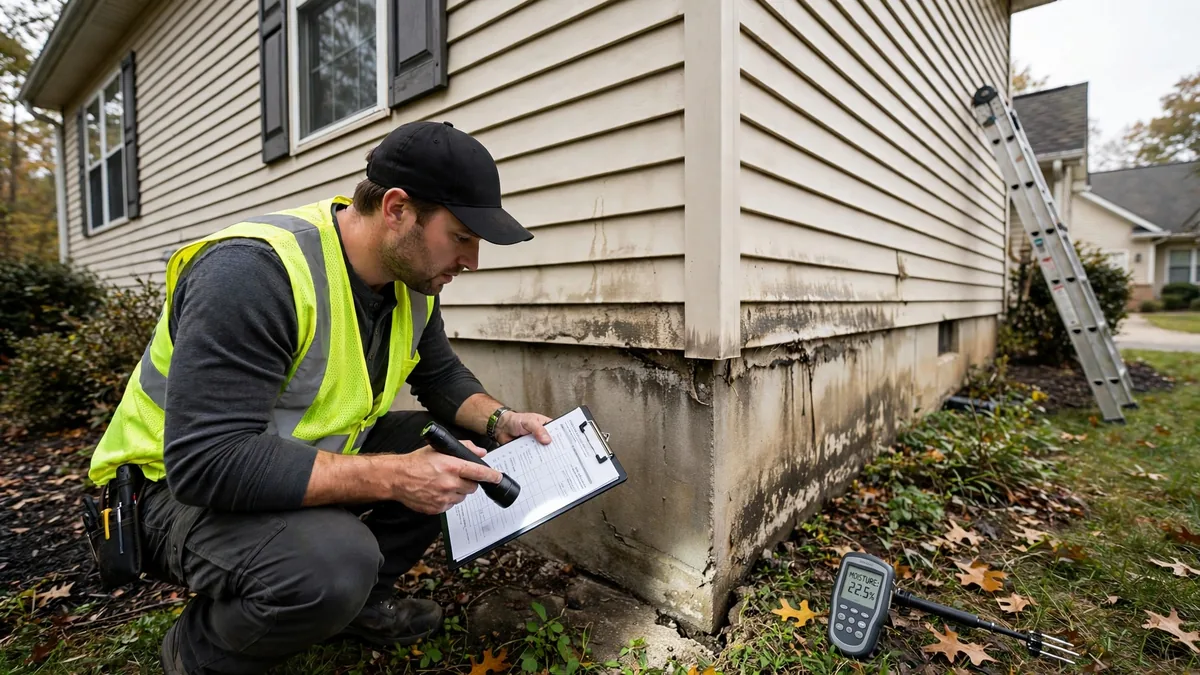
You found the house. Good neighborhood, right price, kitchen you can picture yourself in. Then the disclosure mentions “previous water intrusion in basement, remediated 2021,” or the inspector’s moisture meter starts beeping at a suspicious stain on the ceiling. Suddenly the dream house comes with a question mark.
Past water damage does not automatically disqualify a home. Plenty of houses have survived a burst pipe or a roof leak, been properly repaired, and gone on to be perfectly sound. The problem is that some have not, and the difference between a properly remediated home and a cosmetically patched one is not always visible on a casual walkthrough.
This guide shows you how to read the signs of old water damage, what to ask the seller, how to make your inspection count, and how past damage affects insurance, financing, and resale. If you are still learning what water damage looks like on walls, start with our visual guide to water damage signs in walls, then come back here for the buying-specific strategy.
Past water damage is not always a dealbreaker
Water damage exists on a spectrum, and where a house falls on it determines everything. A dishwasher supply line that burst, was discovered the same day, and was professionally dried and repaired is a fundamentally different situation from a basement that flooded three times and got a coat of paint each time.
What you are really evaluating is not whether water ever touched the house. It is whether the damage was fully remediated: water source fixed, wet materials removed or properly dried, mold addressed, and repairs done to standard. A documented, professional remediation with permits and receipts is a green flag. A vague disclosure with no paperwork is a red one.
Price matters too. A house with a water history should cost less than an equivalent house without one, because you are accepting residual risk and a future disclosure obligation when you sell. If the seller is not discounting for it, that is information in itself.
Red flags to look for during the walkthrough
Before the inspector ever arrives, your own eyes and nose can pick up a surprising amount. Tour the house slowly and look for these.
Stains, discoloration, and fresh paint in odd places
Yellow-brown rings on ceilings, streaks down walls, and warped baseboards are the classics. But also be suspicious of fresh paint in only one section of a ceiling or a single wall in an otherwise untouched room. Selective repainting is one of the most common ways old damage gets cosmetically hidden. Our guide on finding hidden water leaks covers the subtler signs, like efflorescence on masonry and nail pops in drywall, that survive even a fresh coat of paint.
Warped, buckled, or mismatched flooring
Hardwood that cups or crowns, laminate that bubbles at the seams, or tile with cracked grout lines all suggest water got underneath. Also note flooring that changes abruptly in one room, which can indicate a section was replaced after damage. In basements, look for water lines on walls or the bottom of the furnace.
Musty smells, especially in basements and closets
Your nose is a legitimate inspection tool. A musty or earthy smell means moisture and microbial growth are present somewhere, even if you cannot see them. Pay special attention to basements, crawl space access points, under-sink cabinets, and closets on exterior walls. Air fresheners working overtime in a basement are worth noting too.
Sagging ceilings and soft drywall
Press gently on suspicious ceiling areas and around windows. Drywall that gives under light pressure, feels soft, or crumbles slightly has been wet. Check window sills and the wall beneath windows for swelling or peeling paint, which points to flashing or seal failures.
The exterior tells a story too
Walk the perimeter. Look at grading: does the soil slope away from the foundation or toward it? Check gutters and downspouts: are they intact, and do downspouts discharge at least several feet from the house? Look for staining on foundation walls, peeling paint near the ground, and any history of sump pump or French drain installation, which tells you water has been a known issue.
What to ask the seller, and how to read the answers
The seller disclosure is your starting point, not the whole story. Disclosure laws vary by state, but most require sellers to reveal known water damage, flooding, and mold remediation. Ask these questions directly, in writing, through your agent.
- Has the home ever had water damage, flooding, or mold remediation? Get dates, locations, and causes. “A pipe burst in 2019” is an answer; “not that I know of” on a 40-year-old house with a musty basement is an evasion.
- Who did the repair work, and can I see receipts and permits? Professional remediation companies document their work. A handyman cash job with no paperwork is not the same as a permitted repair.
- Have any insurance claims been filed on the property? Ask specifically about water claims. You can also order a CLUE report (Comprehensive Loss Underwriting Exchange), which shows insurance claims filed on the address, though it only captures claims, not unreported damage.
- Is the home in a flood zone, and has it ever flooded? Check FEMA flood maps yourself rather than relying on the seller’s memory. Ready.gov’s flood resources explain flood zones and why they matter for insurance costs.
- What waterproofing or drainage systems exist? Sump pumps, French drains, sealed crawl spaces, and backup power for the pump are all positives, but ask when they were installed and whether they were a response to a specific event.
Vague, defensive, or contradictory answers are themselves a red flag. A seller with a properly remediated issue is usually eager to show you the documentation, because it protects their price.
Making your home inspection count
A standard home inspection is visual and general. When water history is in play, you need to push it further.
Tell your inspector about the water history upfront
Do not assume the inspector will find it on their own. Share the disclosure, point out the stains and smells you noticed, and ask them to spend extra time in the basement, attic, bathrooms, and around the water heater, washing machine, and dishwasher connections.
Ask for moisture meter readings
A pin or pinless moisture meter is the single most useful tool for this job. Ask the inspector to take readings on suspicious walls, ceilings, and floors, and around plumbing fixtures. Readings significantly above the surrounding materials indicate active or recent moisture, even where the surface looks fine.
Consider specialized inspections
For a house with real water history, consider going beyond the general inspection. A mold inspection with air or surface sampling can reveal hidden growth; a sewer scope inspects the main drain line for breaks and root intrusion, a common source of basement backups; and a roof inspection by a roofer, not just the generalist, is wise if the disclosure mentions roof leaks. Each costs a few hundred dollars, which is cheap compared to the price of the house.
Check the attic and crawl space personally
If you can safely access them, look yourself. In the attic, check for stained roof decking, mold on the underside of the roof, and proper ventilation. In the crawl space, look for standing water, vapor barriers, and mold on joists. These are the areas where old damage hides longest, and our guide to signs of mold behind drywall will help you recognize what you are looking at.
How past water damage affects insurance and financing
This is the part buyers forget until it costs them money after closing. A house with a water claim history can be harder and more expensive to insure.
When you shop for homeowners insurance, the insurer will pull the property’s CLUE report and see past water claims. Multiple claims, or a large mold claim, can mean higher premiums, a water damage exclusion, or in some cases difficulty getting coverage from standard carriers at all. Get insurance quotes during your inspection period, not after closing, so a surprise does not derail your financing. Our overview of homeowners insurance and water damage explains how insurers evaluate this risk.
Flood zone status affects financing directly: federally backed mortgages require flood insurance in high-risk zones, which adds a significant annual cost. Even outside high-risk zones, lenders are paying more attention to flood and water risk than they used to.
Finally, remember that whatever you discover becomes your disclosure obligation when you eventually sell. A properly remediated issue with documentation is a manageable disclosure. An undocumented mess you inherited becomes your problem to explain to the next buyer.
The EPA’s guidance on mold and moisture emphasizes that mold can begin growing on damp materials within 24 to 48 hours, which is why the speed and completeness of the original remediation matters more than how long ago the event happened, per its brief guide on mold, moisture, and your home.
Negotiating: credit, repair, price reduction, or walk away
What you found determines your negotiating position. There are four basic outcomes.
Ask for repairs before closing when the issue is specific and fixable, like an active leak or a failed sump pump. Get the work done by licensed contractors with permits, not by the seller’s cousin, and require documentation.
Ask for a credit when the scope is uncertain or you want control over the contractor. Credits are often better than seller repairs, because you choose who does the work and to what standard.
Ask for a price reduction when the water history is real but fully remediated, reflecting the residual stigma and your future disclosure obligation. A documented past event with professional remediation typically justifies a modest discount.
Walk away when the damage is extensive and poorly documented, when the seller is evasive, when mold is widespread, or when structural elements like framing or the foundation are compromised. No house is worth inheriting someone else’s cover-up. Your earnest money is protected by the inspection contingency precisely for this moment; use it.
Frequently Asked Questions
Should I buy a house that had mold remediation?
It depends on the documentation. Professional remediation with a clear scope, proper containment, post-remediation verification, and a fixed moisture source is generally fine. What should worry you is remediation with no paperwork, no identified water source fix, or recurrence of mold after the supposed fix.
How do I check a property’s flood history?
Start with FEMA flood maps for the official zone designation, then ask the seller directly, order a CLUE report for insurance claims, and talk to neighbors, who often remember which houses on the street have flooded. Local building departments may also have records of flood-related permits.
Will past water damage show up on a home inspection?
A good inspector will find visible evidence: stains, moisture readings, and ventilation problems. But standard inspections are non-invasive, so damage hidden behind walls or under floors can be missed. That is why moisture meters, targeted questions, and specialized inspections matter when water history is known.
Can I get homeowners insurance on a house with past water damage?
Usually yes, but expect scrutiny. One old, well-documented claim is rarely a problem. Multiple water claims or a large mold payout can trigger higher premiums or exclusions. Shop quotes during the inspection contingency period so you know the real cost before you are committed.
Does the seller have to disclose past water damage?
In most states, yes, sellers must disclose known material defects including water damage, flooding, and mold. But “known” is the operative word, and enforcement after closing is difficult and expensive. Do your own investigation rather than relying solely on the disclosure form.
How much should past water damage reduce the price?
There is no standard discount. A fully remediated, documented incident might justify 1 to 3 percent off comparable value, reflecting stigma and future disclosure. Active or poorly documented problems justify much larger reductions, or walking away entirely. A local agent experienced with distressed properties can calibrate this to your market.
The bottom line
Buying a home with past water damage is a due-diligence exercise, not a gamble, as long as you treat it like one. Look for the signs yourself, ask direct questions in writing, make your inspector focus on moisture, get specialized inspections when warranted, and price your insurance before closing.
The houses to buy are the ones with documented professional remediation and an honest seller. The houses to avoid are the ones with fresh paint, vague answers, and no paperwork. Trust the evidence, use your inspection contingency, and never fall so in love with a house that you stop reading what it is telling you.