

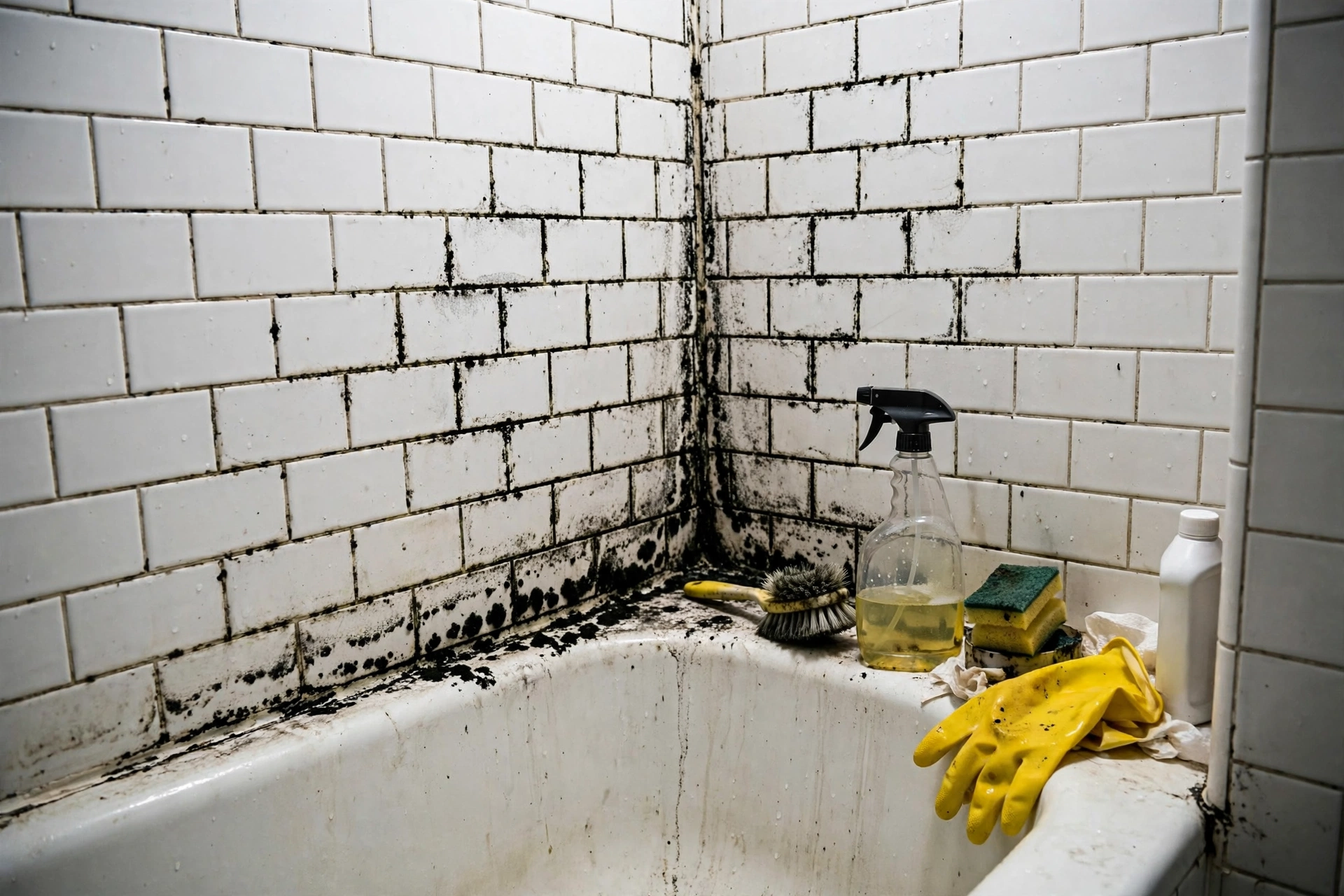
You found black mold, and now you need it gone. The first question everyone asks is the practical one: what is this going to cost me? The honest answer is that black mold removal costs vary enormously, from under 500 dollars for a small DIY-safe cleanup to 6,000 dollars or more for a whole-basement professional remediation.
This guide breaks down realistic 2026 pricing room by room, explains what drives quotes up or down, and helps you decide when you can handle it yourself versus when hiring a pro is the smarter money.
Average black mold removal cost in 2026
For professional remediation, most homeowners pay between 1,500 and 6,000 dollars for a typical job. Small, contained projects can run 500 to 1,500 dollars, while extensive contamination across multiple rooms or inside HVAC systems can reach 10,000 dollars or more. The national average lands around 2,500 to 3,000 dollars for a moderate single-area remediation.
These are remediation costs only: containment, removal, HEPA filtration, cleaning, and clearance. They do not include repairing the water damage that caused the mold or rebuilding removed drywall, which are usually billed separately. For the bigger picture, our water damage restoration cost breakdown covers the full job from dry-out to rebuild.
Room-by-room pricing
Location matters because it affects access, the materials involved, and how much containment the job needs. Typical professional ranges:
- Bathroom: 500 to 1,500 dollars. The most common job: mold in grout, caulk, behind toilets, or under sinks. Small areas are often DIY-able; widespread growth behind tile usually is not.
- Bedroom or living room: 1,000 to 3,000 dollars. Usually tied to a wall or window leak. Costs climb if drywall sections need removal and the room needs full containment.
- Kitchen: 1,200 to 3,500 dollars. Under-sink and dishwasher leaks are the usual suspects. Cabinet removal and replacement adds to the bill.
- Basement: 1,500 to 6,000 dollars. Basements combine large areas, porous concrete-adjacent materials, and often the original water intrusion problem that still needs fixing.
- Attic: 1,500 to 5,000 dollars. Usually driven by roof leaks or poor ventilation. Tight access and the need to protect insulation complicate the work.
- Crawl space: 1,500 to 4,000 dollars, often plus encapsulation costs if moisture control is added. Miserable access conditions drive labor up.
- Whole-house or HVAC contamination: 3,000 to 10,000 dollars or more. If mold reached ductwork, the job expands to system cleaning and sometimes component replacement.
Cost per square foot, explained
Many companies quote by the square foot of affected area, typically 10 to 30 dollars per square foot for professional remediation. A 10-square-foot bathroom patch might cost 500 dollars (50 per square foot) because of minimum charges and setup, while a 200-square-foot basement at 15 dollars per square foot runs 3,000 dollars. Per-foot pricing gets more accurate as jobs get bigger.
Our mold remediation cost per square foot guide digs deeper into how pros measure the affected area and why two quotes for the “same” job can differ so much.
What drives the price up
Understanding cost drivers helps you read quotes critically instead of just comparing bottom lines:
- Size of contamination: the single biggest factor. Under 10 square feet is a different universe from 100 square feet.
- Location and access: attics, crawl spaces, and behind built-ins cost more in labor than an open basement wall.
- Water category: clean-water mold is cheapest to handle. Mold following sewage or floodwater requires stricter protocols and more material removal.
- Materials affected: surface mold on tile is cheap; mold inside drywall, insulation, or subflooring means removal and replacement.
- Containment needs: larger jobs require plastic containment barriers and negative air pressure, which add equipment and labor.
- Testing: pre- and post-remediation testing (air samples, surface samples) typically adds 300 to 800 dollars. Not every job needs it, but clearance testing is the proof the job worked.
- The underlying water problem: if the leak or drainage issue is not fixed, remediation is temporary. Honest quotes flag this instead of just treating the symptom.
DIY versus professional: the real math
DIY mold cleanup for a small area (under about 10 square feet, on hard surfaces, from clean water) typically costs 50 to 250 dollars in supplies: protective gear, cleaner, HEPA vacuum bags, and disposal materials. The EPA’s mold guidance considers this size range reasonable for careful DIY work with proper precautions.
Hire a professional when the growth covers a large area, is inside walls or HVAC, followed sewage or flooding, or anyone in the home has significant health vulnerabilities. Our room-by-room safe cleanup guide walks through exactly where the DIY line sits and what proper protective setup looks like.
The expensive mistake is not hiring a pro for a big job; it is DIY-ing a big job badly, spreading spores through the house, and then paying a pro to fix both the original mold and the cross-contamination.
What a professional quote should include
When comparing quotes, make sure each one covers the same scope. A complete professional remediation typically includes:
- Containment of the work area with plastic sheeting and negative air pressure
- HEPA-filtered air scrubbers running during and after the work
- Removal of contaminated porous materials (drywall sections, insulation, carpet)
- HEPA vacuuming and damp-wiping of all surfaces in the contained area
- Proper disposal of contaminated materials
- Post-remediation verification, ideally with clearance testing on larger jobs
Quotes that skip containment or air filtration for anything beyond a tiny job are cutting corners. The IICRC, the industry’s main standards body, publishes the remediation standard (S520) that reputable companies follow; asking a contractor whether they work to the IICRC S520 standard is a quick quality filter.
How to avoid overpaying
- Get at least three quotes for any job over 1,000 dollars. Outlier quotes in either direction deserve skepticism.
- Ask for line items, not just a total. You want to see labor, materials, equipment, and testing broken out.
- Verify credentials: IICRC certification in mold remediation, plus proper licensing and insurance in your state.
- Fix the moisture source first or as part of the same project. Paying for remediation while the leak continues is money thrown away.
- Be wary of scare tactics. “Toxic black mold emergency” language pressuring same-day decisions is a red flag, not a sign of professionalism.
- Check whether your situation overlaps with a covered insurance event. Mold from a sudden pipe burst is often covered up to a sublimit; see our guide to fixing water damage in walls for how wall repairs and mold work typically sequence together.
Frequently Asked Questions
Why do mold removal quotes vary so much?
Because “mold removal” describes jobs ranging from wiping a shower to gutting a basement. Area size, location, water category, and whether rebuilding is included all swing the price. Always compare itemized scopes, not just totals.
Does homeowners insurance cover black mold removal?
Sometimes, when the mold resulted from a covered sudden event like a burst pipe, often up to a sublimit around 10,000 dollars. Mold from long-term leaks, humidity, or flooding is usually excluded. Document the cause carefully.
Can I stay in the house during remediation?
For small, well-contained jobs, usually yes. For large jobs with full containment and heavy filtration, contractors often recommend staying elsewhere during the most intensive days. Ask your contractor directly.
How long does professional mold remediation take?
Small jobs take a day or two. Typical single-area jobs run 3 to 5 days including drying and clearance. Large multi-room projects can take one to two weeks, plus rebuild time afterward.
Is the cheapest quote ever the right choice?
Rarely for remediation. Suspiciously cheap quotes often skip containment, filtration, or proper disposal, which can spread the problem. The middle quote from a credentialed company is usually the value pick.
What to do next
Start by scoping your problem honestly: measure the affected area, identify the moisture source, and decide whether it falls in DIY territory or needs a pro. Get multiple itemized quotes, verify IICRC credentials, and make sure the water issue gets fixed alongside the mold. For the hands-on side, our safe black mold cleanup guide covers the protective setup and techniques that keep a small job from becoming a big one.