

You walk into a room and it just smells off. Damp. Earthy. Like an old basement. But the walls are clean, the ceiling is fine, and there is not a speck of mold anywhere. That disconnect is maddening, and it is one of the most common ways hidden mold announces itself.
A musty smell with no visible mold almost always means growth is somewhere you cannot see: inside a wall, under flooring, in the HVAC system, or in a crawl space. Your nose is detecting the gases mold releases as it digests organic material. This guide gives you a logical search order, room by room, so you can find the source instead of masking the smell.
Why you can smell mold you cannot see
Growing mold releases microbial volatile organic compounds, gases produced as it breaks down its food. Humans detect these compounds at very low concentrations, so a colony the size of a dinner plate inside a wall can perfume a whole room while staying invisible.
Smell also travels. Air moves through wall cavities, under doors, and through ductwork, carrying odor from the growth site to wherever you notice it. The room that smells worst is a clue, not a verdict: the source is often nearby but hidden, behind the drywall or below the floor of the smelly room.
The smell usually strengthens when humidity rises or the HVAC runs, because both increase gas release and push more air past the colony. If the odor comes and goes with the weather or the HVAC cycle, that pattern is useful evidence.
Start with the nose test
Before touching a tool, do a systematic sniff walk. Close the house up for a few hours, then walk through slowly and note where the smell is strongest, at different heights: near the floor, at outlet height, near the ceiling. Odor often concentrates low on walls or near air returns.
Note the timing too. Spikes when the AC starts point to ducts or the evaporator coil. Worse on rainy days points to exterior moisture intrusion. Stronger in the morning after the house sat closed all night points to a slow, steady source like a wall cavity or crawl space.
Write it down. A note like “strongest in the hall closet, worse when AC runs” saves an inspector time and saves you money if you hire one.
The 10 most common hiding spots, in search order
Work through these roughly in order, ranked by how often each turns out to be the culprit.
1. Inside wall cavities near plumbing
Walls behind showers, tubs, toilets, and under sinks are the number one hiding spot. A slow supply-line drip or failed shower-pan seal can soak the cavity for months. Look for soft baseboards, loose tiles, and caulk that keeps failing. Our guide to the signs of mold behind drywall covers the full checklist.
2. Under and behind appliances
Pull the refrigerator out and check the wall behind it, especially around the ice-maker line. Check under the dishwasher with a flashlight and behind the washing machine, where supply hoses fail more often than people expect.
3. The HVAC system and ductwork
The evaporator coil stays damp in cooling season, and the drain pan harbors growth if the condensate line clogs. If the smell blasts from the vents when the system starts, have the coil, pan, and a duct section inspected. Change the filter first: a filthy filter can smell musty on its own and costs almost nothing to rule out.
4. Basements and crawl spaces
Odor rises, so a first-floor smell often originates below. In the basement, check where wall meets floor, behind stored boxes, and inside finished wall cavities. In a crawl space, look for damp soil, condensation on ducts, and growth on joists. If the basement is the source, our plan for eliminating musty basement smell walks through the full fix.
5. Under flooring
Carpet padding holds odor after even minor water events, and laminate can trap moisture underneath. If the smell is strongest at floor level in one area, pull back a carpet corner or check wood floors for cupping.
6. Around windows and exterior doors
Failed window flashing lets rain into the wall a little at a time. Check for soft drywall under sills, peeling trim paint, and staining below windows. This one is seasonal: the smell often peaks after heavy rain.
7. Bathrooms with poor ventilation
A fan venting into the attic instead of outside pumps moist air into a cold space every shower, growing mold where you never look. Check where your fan actually exhausts. No fan, or one nobody uses, is just as bad.
8. Attics
Attic mold usually comes from moisture driven up from the house (bathroom fans, unsealed hatches, recessed lights) rather than roof leaks. The smell may reach living spaces only faintly, often as staleness rather than clear mustiness. Poke your head up with a flashlight and check the underside of the roof sheathing.
9. Closets on exterior walls
Closets are unventilated, packed against cold exterior walls, and rarely inspected. Condensation forms where warm room air meets the cold wall behind clothes. If a closet smells musty, empty it and check the baseboards and wall behind.
10. Potted plants and forgotten organic material
Sometimes the answer is simple. Overwatered houseplants grow mold on the soil. A damp laundry-room rug, a gym bag left in a closet, or cardboard boxes on a basement floor can all smell convincingly musty with no structural mold involved. Rule out the easy stuff before opening walls.
Tools that actually help
You do not need pro gear, but three affordable tools make the search far more effective.
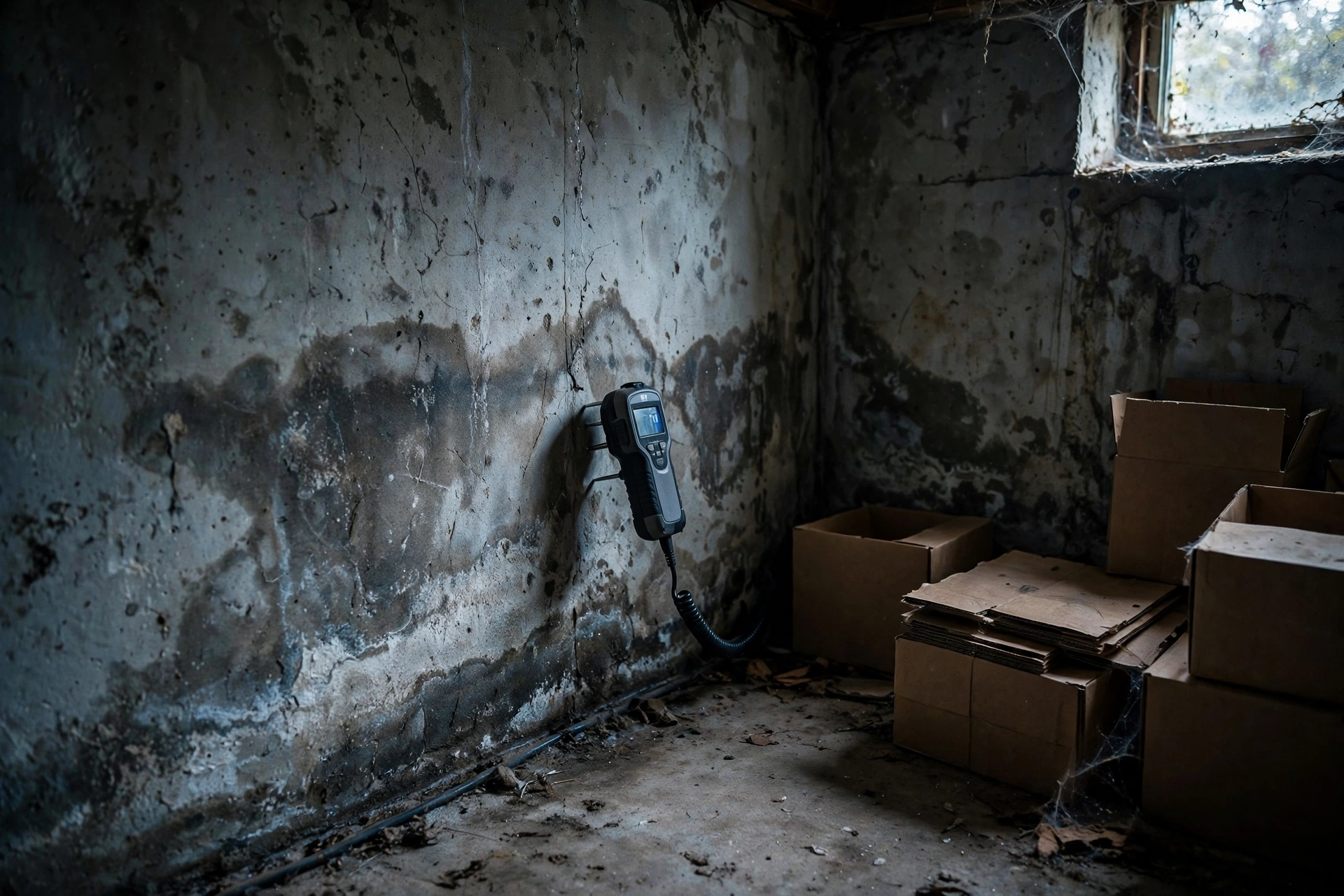
- A pinless moisture meter. Scan suspect walls and floors without holes. Compare to a known-dry area; anything dramatically wetter deserves a closer look.
- A bright flashlight at a low angle. Raking light across walls and baseboards reveals staining and warping that overhead lighting washes out.
- A look inside the air handler. If you are comfortable opening the panel, a visual check of the evaporator coil and drain pan takes five minutes and rules out a common odor source.
Skip the hardware-store mold test kits. They grow mold from virtually any air sample, including clean outdoor air, so a positive result tells you almost nothing. Spend the money on a moisture meter instead.
When the smell is actually a moisture problem, not mold
High indoor humidity alone can make fabrics, carpets, and upholstery smell stale, especially in basements and closed-up homes. If your search finds elevated humidity but no moisture damage or growth, the fix may be as simple as a dehumidifier and keeping indoor humidity between 30 and 50 percent, the range the EPA recommends for mold prevention.
A dry P-trap in a rarely used drain also lets sewer gas seep in, which many people describe as musty. Run water in guest bathrooms and floor drains periodically. If the smell disappears, you solved it for free.
When to call a professional
Bring in help when the smell persists after your search, moisture readings stay high with no visible source, anyone has unexplained respiratory symptoms, or you suspect the HVAC system or a large wall area. A good inspector starts with moisture mapping and thermal imaging, not with selling air samples.
If growth is found over more than about 10 square feet, professional remediation is the safer route. For smaller, accessible areas, careful DIY cleanup following EPA cleanup guidance and CDC safety tips is reasonable. Our black mold removal guide covers protective gear and containment.
One timing note: mold can establish within 24 to 48 hours of a water event, so if the smell started after a leak or flood, treat the search as time-sensitive.
Frequently Asked Questions
Can mold smell travel through walls from another room?
Yes. Odor moves with air through wall cavities, gaps around pipes and wiring, and ductwork. The smelliest room is often next to, not containing, the growth. Search neighboring walls, the floor below, and the ceiling above.
Why does the musty smell get worse when it rains?
Rain raises outdoor humidity and can push water through failed flashing, foundation cracks, or roof issues. Both increase moisture at the growth site and boost odor release. Rain-linked odor strongly suggests exterior water intrusion.
Will painting over the wall remove the smell?
No. Paint seals the surface while the colony keeps growing behind it, and the smell returns. Odor-sealing primers belong as a final step after proper remediation, never as a substitute.
Can a musty smell come from air ducts even if they look clean?
Yes. Growth on the evaporator coil, in the drain pan, or on duct lining near the air handler is invisible from the vents. If odor spikes when the system starts, have those components inspected first.
Is a musty smell dangerous if I feel fine?
Not necessarily, but investigate anyway. The smell signals active microbial growth somewhere, and colonies only grow larger and pricier with time. Lack of symptoms is not proof the air is clean.
Bottom line
A musty smell with no visible mold means something is wet where it should not be. Work the search order: plumbing walls, appliances, HVAC, basement and crawl space, flooring, windows, bathrooms, attic, closets, then the easy stuff. Use a moisture meter, trust the patterns, and skip the air fresheners. Find the moisture, fix it, clean up properly, and the smell leaves with it. If your search points at a wall cavity, the seven signs of mold behind drywall will help you confirm before you open anything up.