

The remediation crew is coming Tuesday to tear out the moldy drywall, and you are wondering whether the family should be in the house while it happens. It is one of the most practical questions in mold remediation, and the answer is genuinely it depends.
Small contained jobs and whole-house tear-outs are different situations with different risks. This guide explains what actually happens to your indoor air during remediation, when leaving is the smart call, the precautions that make staying reasonable, and the questions to ask your contractor before work starts.
The short answer
For small, well-contained remediation jobs, most healthy adults can stay home if they stay out of the work area. For large jobs involving significant demolition, or if anyone in the household has asthma, allergies, or a weakened immune system, temporary relocation is the safer choice.
The deciding factors are the size of the contaminated area, the amount of demolition involved, whether the work zone can be truly isolated from living spaces, and who lives in the house. A reputable contractor will give you a straight recommendation based on your specific job; a contractor who dismisses the question entirely is telling you something about their standards.
If you are still deciding between professional help and doing it yourself, read our DIY mold remediation guide first. The safety calculus is different when you are the one inside the containment.
Why remediation temporarily makes air quality worse
This surprises people, but it makes sense once you think about it. Mold colonies sitting undisturbed release relatively few spores. Demolition changes that: cutting out drywall, pulling insulation, and scrubbing surfaces aerosolize enormous quantities of spores and fine dust. Spore counts inside the work area spike dramatically during active remediation.
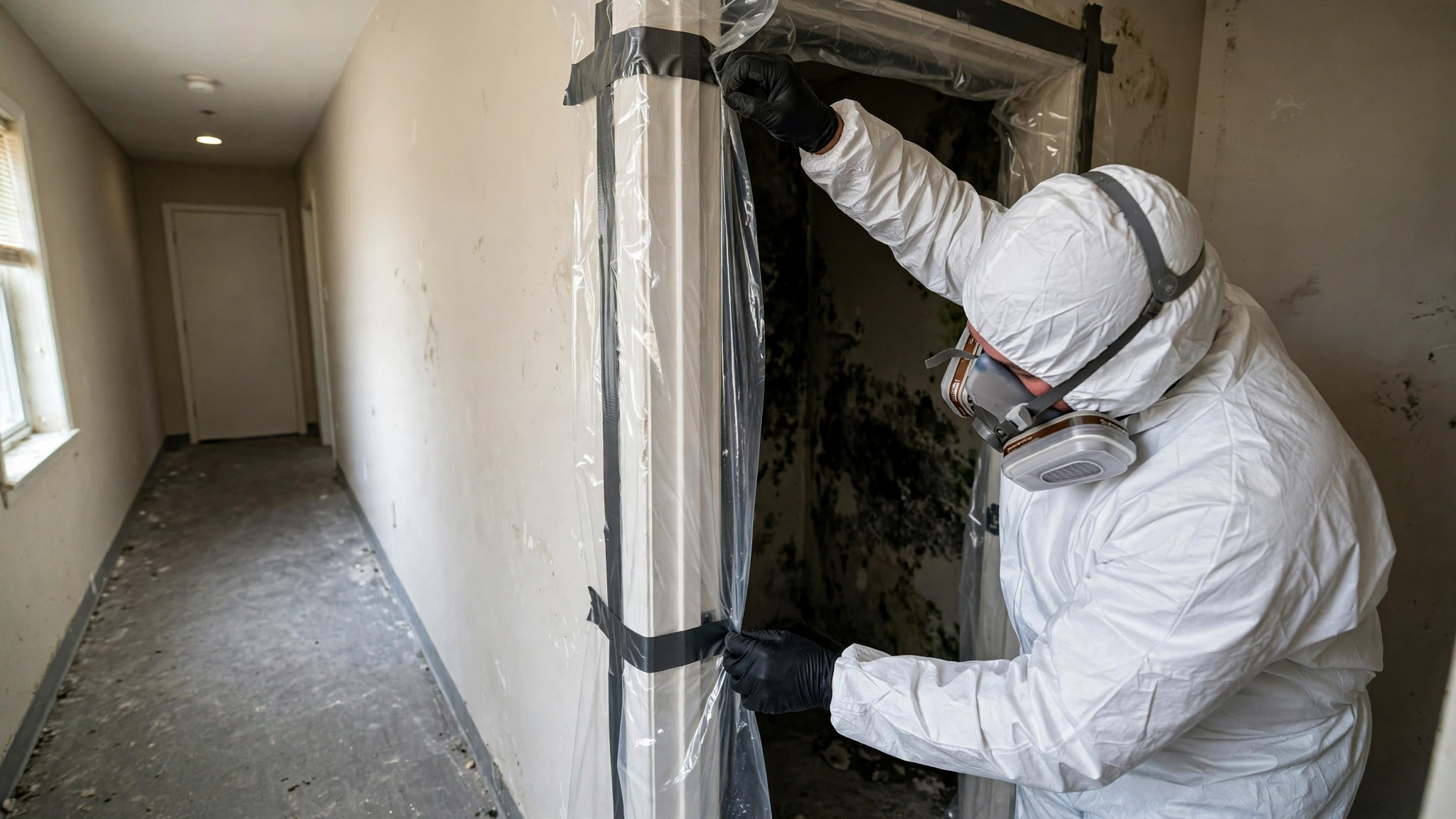
Professional crews manage this with containment and negative air pressure. The work zone gets sealed with plastic sheeting, and HEPA-filtered air scrubbers exhaust air outside, so the contaminated air flows into the work zone rather than out of it. When done correctly, the rest of the house stays relatively clean. When done sloppily or skipped, spores drift through the whole house, which is how a contained problem becomes a whole-house problem.
Understanding the full sequence helps you judge whether a contractor is doing it right. Our walkthrough of the mold remediation process explains each phase, from inspection through clearance, so you know what proper containment looks like.
When you should definitely leave
Large-scale demolition jobs
If the job involves tearing out drywall across multiple rooms, removing flooring, or opening up wall cavities throughout the house, plan to be elsewhere. The dust and disruption alone make the house unpleasant, and no containment is perfect across a job that size. Most contractors expect you to relocate for major work and will say so in the estimate.
Anyone with asthma, allergies, or breathing issues
People with respiratory conditions should not be in the house during active remediation, period. Even with good containment, spore levels rise, and sensitive airways react at levels healthy people would not notice. This includes children with asthma and older adults with COPD or similar conditions.
Weakened immune systems
People undergoing chemotherapy, taking immunosuppressants, or living with immune disorders face a risk of serious fungal lung infections from high spore exposure. The CDC’s mold cleanup guidance specifically flags this group. If this describes anyone in your household, relocate for the duration and have the doctor weigh in.
HVAC-connected contamination
If mold has spread into the ductwork or air handler, the system that heats and cools your house becomes the distribution system for spores during remediation. Until the HVAC is cleaned and isolated from the work, staying home means breathing whatever gets dislodged. Shut the system down or seal it off, and strongly consider leaving.
When staying home is reasonable
A small job, say a single bathroom wall or a contained patch under 10 square feet, with proper plastic containment, negative air, and the HVAC sealed off from the work zone, is a different story. Healthy adults can typically stay home, using common sense: keep the work area door closed, do not enter the containment, and keep the rest of the house ventilated.
The key word is proper containment. Before agreeing to stay, verify the crew is actually building it: floor-to-ceiling poly sheeting sealed with tape, a zippered entry, HEPA air scrubbers running, and protective coverings on the path from the door to the work area. If the crew shows up with just a spray bottle and a shop vac, the job is not contained and you should not be breathing that air.
Even for small jobs, run the numbers on a hotel night or two versus the disruption. Remediation is loud, dusty, and stressful, and sometimes the cheapest option is also the most comfortable one. If you are unsure the job will work at all, our article on whether mold remediation works covers what success looks like and the red flags of a bad job.
Safety precautions if you stay
- Stay completely out of the work zone; treat the containment barrier as a wall
- Keep interior doors between the work area and living spaces closed
- Ask the contractor to seal HVAC vents in and near the work area so the system does not pull contaminated air through the house
- Run a HEPA air purifier in the rooms you are occupying
- Do not run the central HVAC during heavy demolition if the ducts connect to the work zone
- Keep children and pets away from the work area entirely; pets track dust everywhere
- Wear an N95 respirator if you must briefly enter or pass near the work zone
- Shower and change clothes after any time spent near the work area
The EPA’s remediation guidelines describe containment and worker protection practices in detail, and while they are written for schools and commercial buildings, the principles apply directly to homes. The core idea is simple: keep the contamination in one place until it is gone. You can read the agency’s approach in its mold remediation guidelines.
Kids, pets, and sensitive family members
Children deserve extra caution. They breathe more air relative to body weight, spend time on floors where settled spores accumulate, and are less reliable about staying out of an interesting work zone. If remediation involves any real demolition, arrange for kids to be elsewhere during work hours at minimum.
Pets are often forgotten. Dogs and cats walk through dust, lie on contaminated drop cloths if given the chance, and then carry spores through the house on their fur. Board them or keep them strictly in a closed-off clean area. Birds are especially sensitive to airborne particulates and should be relocated during any dusty work.
For family members already experiencing symptoms, review our mold exposure symptoms guide and consider whether symptoms worsen during remediation days. If they do, that is your answer: get out until the work and the post-remediation cleaning are complete.
Questions to ask your contractor before work starts
- Will you build full containment with negative air pressure, and can I see it before demolition starts?
- How will you isolate the HVAC system from the work zone?
- Do you recommend we stay or leave during the work, and why?
- What is the post-remediation cleaning process, and do you do clearance testing?
- How will you protect the path from the entrance to the work area?
- What happens if hidden mold is found beyond the original scope?
Clear, specific answers signal a professional operation. Vague reassurances signal the opposite. The contractor works for you, and a good one welcomes these questions.
Frequently Asked Questions
How long do we need to stay out of the house?
For most residential jobs, one to five days covers the active work. Add time for post-remediation cleaning and drying before moving back into affected rooms. Ask your contractor for a day-by-day schedule so you can plan; reputable companies provide one without being asked.
Is it safe to sleep in the house during remediation?
If the work zone is properly contained, the HVAC is isolated, and no one in the house has respiratory vulnerabilities, many people do. If containment is questionable, the job is large, or anyone is sensitive, do not. When in doubt, spend the night elsewhere; it is the cheapest insurance in the project.
Can mold spores spread to the rest of the house during remediation?
They can if containment fails or is skipped, which is why containment quality matters more than almost anything else in the job. Proper negative-pressure containment with HEPA filtration keeps the vast majority of spores in the work zone. Ask to see the setup before demolition begins.
Should we turn off the HVAC during mold remediation?
During heavy demolition, yes, or at minimum seal the vents serving the work area. Running the system can pull contaminated air into the ductwork and distribute it everywhere. Your contractor should address HVAC isolation in the work plan; if they have not mentioned it, ask.
What about our belongings in the work area?
Porous items like clothing, upholstery, and papers in a heavily contaminated zone may need HEPA vacuuming or professional cleaning; badly affected porous items sometimes cannot be saved. Non-porous items can be wiped down. Move valuables out before work starts rather than discovering afterward what the dust did to them.
How do we know it is safe to move back in?
The work area should be visibly clean, dry, and free of dust and debris, with all containment removed and a final HEPA cleaning done. For larger jobs, independent post-remediation verification, visual inspection plus air or surface sampling compared to baseline, gives objective confirmation. Do not accept “looks good to me” as clearance on a major job.
The bottom line
Small contained jobs: healthy adults can usually stay home with sensible precautions. Large demolition jobs, HVAC involvement, or anyone with asthma, allergies, or a weakened immune system: leave until the work and final cleaning are done. The deciding factors are job size, containment quality, and who lives there.
Before the crew arrives, confirm the containment plan in writing, isolate the HVAC, move kids and pets out of the way, and know the daily schedule. Remediation done right ends with a cleaner, safer house; a few days of inconvenience is a small price for getting there without breathing the process.