

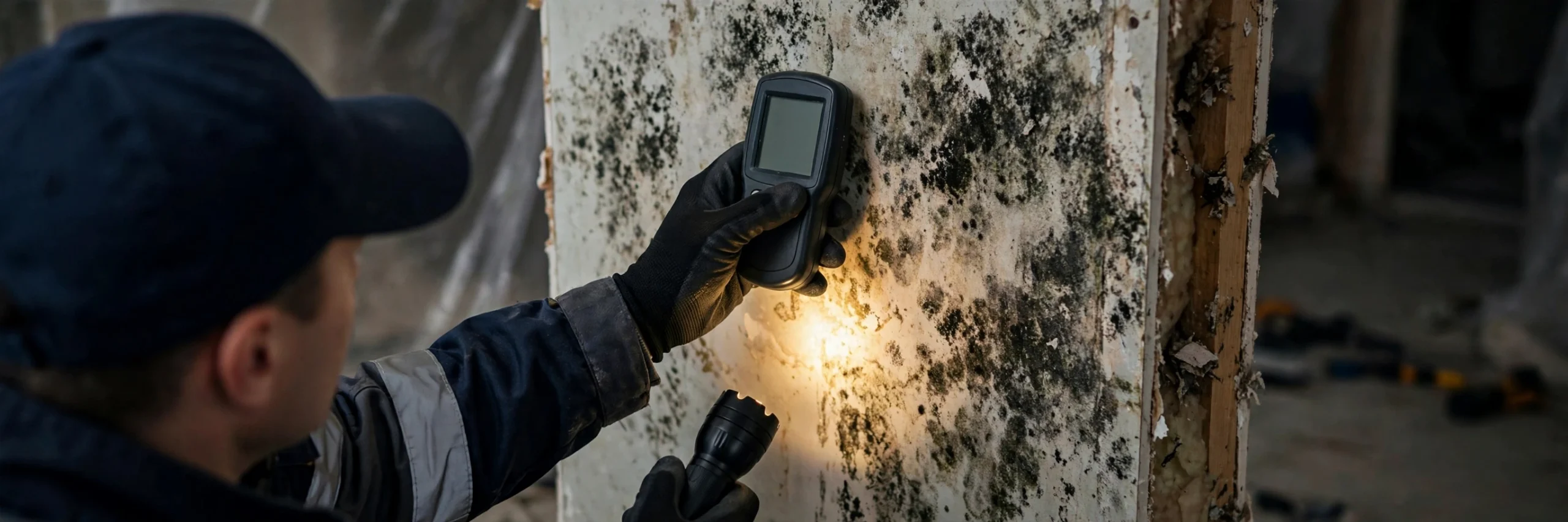
You spot dark, blotchy patches creeping across the bathroom ceiling or behind the washing machine. You search online, and within minutes you are reading words like “toxic black mold” alongside warnings that sound genuinely frightening. It is easy to spiral from a stain on drywall to imagining the worst for your family.
Take a breath. The truth about black mold sits somewhere between “it is completely harmless” and “it will poison everyone in the house.” This guide separates what scientists and public health agencies actually say from the fear-driven claims, so you can respond calmly and correctly.
What people mean by “black mold”
When people say “black mold,” they usually mean Stachybotrys chartarum, a greenish-black mold that grows on material rich in cellulose, like drywall, wood, and ceiling tiles, when those materials stay wet for a long time. It has a slimy appearance when damp and produces spores that can become airborne when disturbed.
Here is the first thing most panic-inducing articles skip: not every dark mold is Stachybotrys. Cladosporium, Alternaria, and Aspergillus niger can all look black or very dark to the naked eye, and they are far more common in homes. You cannot identify a mold species by color alone, no matter what a photo comparison chart claims. The EPA explains that molds come in many colors and that sampling is the only way to know the species, though it also notes that species identification rarely changes what you should do about the growth.
Stachybotrys also needs sustained moisture to thrive. It typically takes one to two weeks of constant dampness before it gets established, which is why it shows up after slow leaks, chronic condensation, or flooding that was never dried properly.
What the research says about health risks
Public health agencies are clear that mold exposure is a real health concern, but they are equally clear about the limits of what is proven. According to the CDC’s guidance on mold and health, exposure to mold can cause nasal stuffiness, throat irritation, coughing, wheezing, and eye or skin irritation. People with mold allergies may have more severe reactions, and people with asthma or chronic lung conditions can experience worsened symptoms. For the full rundown, see our guide to the health effects of black mold.
The groups most at risk are consistent across the research:
- Infants and young children, whose lungs are still developing
- Older adults and people with weakened immune systems
- People with asthma, allergies, or chronic obstructive pulmonary disease
- Anyone with an existing mold sensitivity
What the evidence does not firmly support is the long list of dramatic effects sometimes attributed to “toxic mold,” such as permanent brain damage, organ failure, or death in otherwise healthy adults. Studies have found associations between damp indoor environments and respiratory symptoms, but proving that one specific mold species caused a specific illness in a specific person is extremely difficult. That uncertainty is exactly what fear-based marketing exploits.
Three claims that go too far
Once you know the basics, the exaggerated claims become easier to spot. Here are the three you will see most often.
1. “All black mold is toxic and will poison your family”
Toxicity is not a property of a color. Some molds produce compounds called mycotoxins under certain conditions, and Stachybotrys is one of the species capable of producing them. But the presence of mycotoxins in a lab sample does not automatically mean dangerous exposure levels in your living room air. Dose, duration, and individual sensitivity all matter enormously.
2. “Mycotoxins seep through walls and poison the whole house”
Mold needs to be disturbed to release significant spores into the air. A contained patch behind drywall is a problem you should fix, but it is not silently flooding your home with poison while you sleep. This is also why professionals set up containment before tearing into moldy walls: the danger spikes during disturbance, not during quiet coexistence.
3. “You must move out immediately or gut the entire house”
For a small patch of surface mold in a bathroom, moving out is absurd overkill. Remediation companies that push full-house gut jobs for minor growth are selling fear, not service. The EPA’s mold guidance scales the cleanup response to the size of the problem, and small areas can often be handled by the homeowner with proper protection.
When mold genuinely deserves urgency
None of the above means you should ignore mold. Some situations warrant fast, serious action:
- Large affected areas. The EPA uses roughly 10 square feet as the threshold where professional remediation becomes advisable instead of DIY cleanup.
- HVAC contamination. Mold inside ductwork or air handlers can distribute spores through the whole house every time the system runs.
- Vulnerable people in the home. If someone has severe asthma, is immunocompromised, or is an infant, be more conservative about exposure.
- Sewage or floodwater involvement. Mold growing after a sewer backup or river flooding comes with bacterial contamination too, which changes the safety calculation completely.
- Growth you cannot see the edges of. A small visible patch can be the tip of a much larger colony inside the wall cavity.
If any of these apply, skip the home remedies and read our guide to black mold health effects and symptoms to understand what doctors actually watch for.
What to do if you find suspicious growth
First, do not panic and do not start scrubbing aggressively. Disturbing a large colony without containment spreads spores through the house. Second, find the moisture. Mold is a symptom; the leak, condensation, or flooding is the disease. No cleanup lasts if the material gets wet again.
For small surface areas (a few square feet on tile, glass, or other hard surfaces), you can clean it yourself: wear an N95 respirator, gloves, and eye protection, ventilate the area, scrub with detergent and water, and dry everything completely. Skip the bleach on porous materials like drywall; it does not reach the roots and the water in it can feed regrowth.
For larger growth, growth inside walls, or any HVAC involvement, hire a professional. Look for a company whose technicians hold IICRC certification in microbial remediation, which means they are trained in containment, HEPA filtration, and proper removal rather than just spraying chemicals and painting over the problem. It also helps to know what to expect: our walkthrough of the professional mold remediation process covers containment, removal, and clearance testing.
As for testing: air sampling can confirm elevated spore counts, but agencies including the EPA note that testing is often unnecessary because the cleanup approach is the same regardless of species. Testing makes the most sense when you need documentation for an insurance claim, a landlord dispute, or medical follow-up.
Health note: This article is for general information only and is not medical advice. If you have symptoms you think may be related to mold exposure, talk to a qualified healthcare provider.
Frequently Asked Questions
Can black mold kill you?
In otherwise healthy people, death from household mold exposure is not something the scientific literature supports as a realistic outcome. Severe infections from mold are documented almost exclusively in people with badly weakened immune systems. That said, mold can genuinely worsen asthma and allergies, so “not lethal” is not the same as “harmless.”
Is it safe to stay in a house with black mold?
It depends on the extent. A small patch in one bathroom while you arrange cleanup is a very different situation from extensive growth throughout the home with a vulnerable person living there. If the affected area is large, involves the HVAC system, or someone in the home has serious respiratory issues, staying elsewhere during remediation is reasonable.
How can I tell if the black stuff is actually Stachybotrys?
You cannot tell by looking. Stachybotrys tends to be very dark greenish-black and slimy when wet, but so are several other common molds. Only laboratory analysis of a sample can identify the species. In most cases the species does not change the cleanup plan, so visual identification is not worth obsessing over.
Does bleach kill black mold?
Bleach can kill surface mold on hard, nonporous materials, but it is a poor choice for drywall, wood, and other porous surfaces because it does not reach the roots and leaves moisture behind. The EPA recommends detergent and water scrubbing followed by thorough drying for most homeowner-level cleanup.
Will an air purifier solve a mold problem?
No. An air purifier with a HEPA filter can reduce airborne spores temporarily, but it does nothing about the colony growing on the wall or the moisture feeding it. Purifiers are a supplement to remediation, never a substitute.
Bottom line
Black mold deserves respect, not panic. It can cause real respiratory symptoms, especially in sensitive people, but most of the terrifying claims online outrun the evidence. Find the moisture source, size up the problem honestly, clean small areas safely yourself, and bring in certified professionals for anything large, hidden, or HVAC-related. Calm, proportionate action beats fear every time.