

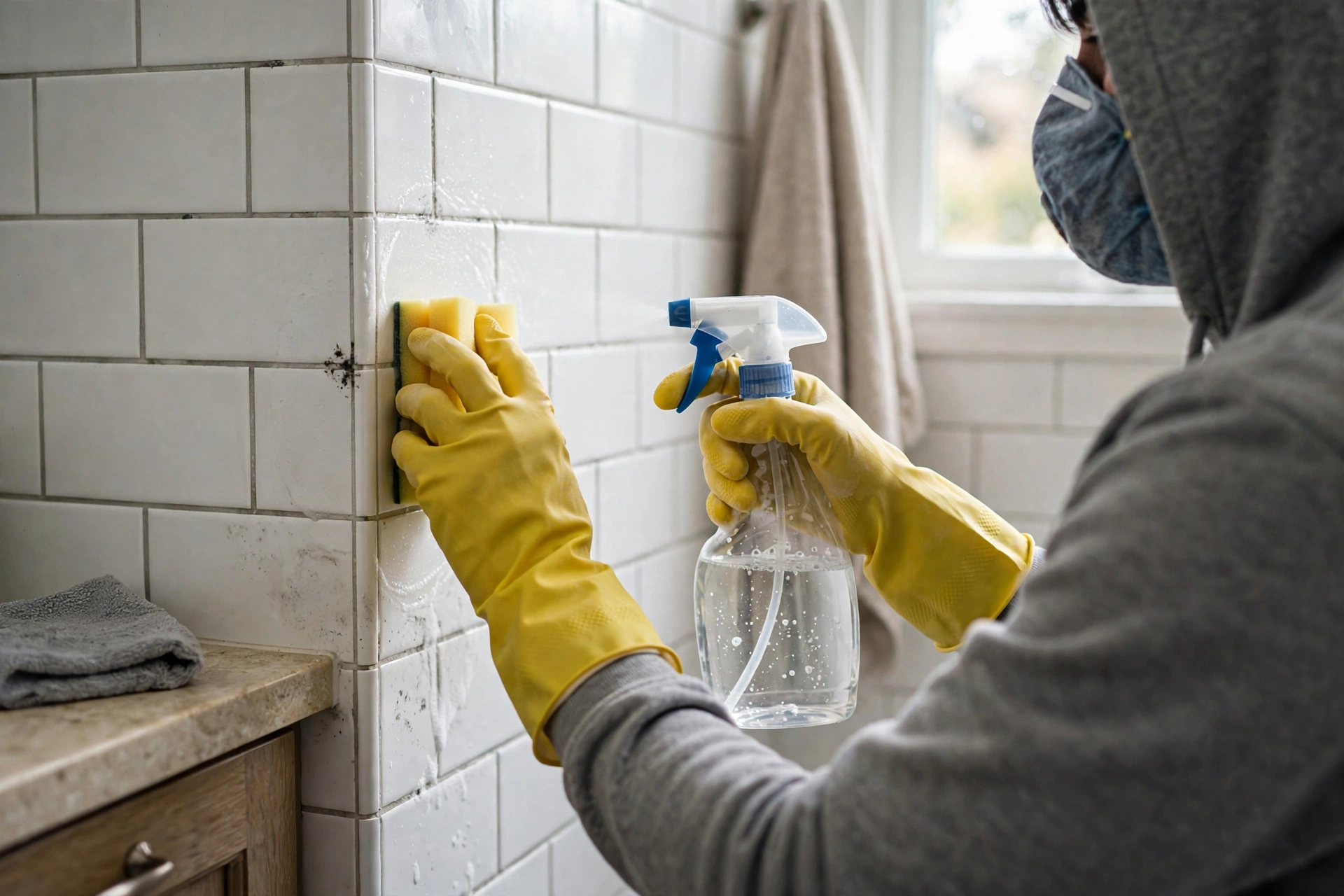
A patch of mold on the bathroom ceiling or a musty corner of the basement raises the same question every time: can I handle this myself, or do I need to pay a professional? For many homeowners, DIY mold remediation is a perfectly reasonable project. For others, it is a health risk and a waste of money that ends with a pro redoing the work.
The EPA draws the line clearly, and it is simpler than most people expect. This guide walks through the agency’s guidelines, the famous 10-square-foot rule, the safety gear and steps that matter, and the situations where DIY is the wrong call.
The EPA’s 10-square-foot rule
The EPA states that small areas of mold, generally less than about 10 square feet (a 3-by-3-foot patch), can usually be handled by the homeowner. Larger areas, roughly 10 square feet or more, call for professional remediation. This threshold appears in the agency’s guidance for homes and is the rule of thumb contractors and inspectors reference most.
Ten square feet is bigger than it sounds: it is an entire bathtub surround wall or a good-sized closet corner. The rule applies to the total area of growth, including what you cannot see yet. If the visible patch is 2 square feet but you suspect it extends behind the drywall, assume you are over the line until you know otherwise.
When DIY is off the table regardless of size
Size is only the first test. The EPA and CDC both flag situations where you should not do the work yourself even for small patches. If the mold resulted from sewage or contaminated water, leave it to professionals with proper equipment. If someone in the household has asthma, severe allergies, or a compromised immune system, disturbing mold at home puts them at risk.
Mold inside HVAC systems is also a pro-only job. Your ductwork can carry disturbed spores through the entire house in minutes, and cleaning ducts properly requires equipment homeowners do not own. The same goes for mold hidden in large wall cavities or under flooring that requires demolition to reach: once you are cutting into walls, the job has usually outgrown DIY.
When in doubt, the professional approach is described in our mold remediation process guide. Compare those steps with what you are prepared to do, and be honest about the gap.
Safety gear you actually need
DIY mold cleanup without protection is a common mistake. Disturbing mold releases a cloud of spores directly into your breathing zone. At minimum, the EPA recommends an N95 respirator, not a dust mask or bandana, along with gloves and goggles that seal against the face. Long sleeves and pants keep spores off your skin.
Ventilate the room while you work and keep the rest of the house isolated as much as practical. Close doors to other rooms, and avoid running the HVAC fan during the work if the system connects to the affected area. For a full breakdown of precautions, see our mold remediation safety guide.
The DIY process, step by step
First, fix the moisture source. Scrubbing mold while the leak continues is pointless; the colony will return. Then protect yourself and the room: gear on, doors closed, and plastic sheeting over furniture and vents near the work area if you want to limit spore spread.
For hard, non-porous surfaces like tile, glass, and metal, scrub with detergent and water, then dry the area completely. Porous materials are a different story: moldy drywall, insulation, carpet pad, and ceiling tiles generally cannot be cleaned and should be cut out and bagged. Cutting drywall means cutting at least 12 inches past the visible growth in every direction, since the colony extends beyond what you see.
Wood framing that stays can be scrubbed with detergent solution and HEPA vacuumed once dry. Do not rely on bleach for porous materials; it whitens the stain without reaching the roots. After cleaning, everything must dry fully within 24 to 48 hours. Our guide on how to remove black mold covers surface-specific techniques in more detail.
The CDC’s 8 tips to clean up mold reinforce the same basics: protect yourself, remove what cannot be cleaned, dry everything promptly, and never mix cleaning chemicals. Those tips were written for disaster cleanup, but they apply to a bathroom ceiling just as well.
Common DIY mistakes
- Cleaning without fixing the leak first, so the mold returns within weeks.
- Skipping the respirator and goggles, especially on ceiling work where spores fall directly onto your face.
- Using bleach on porous materials and calling the whitened stain a success.
- Painting over mold to hide it, which traps moisture and lets the colony keep growing underneath.
- Throwing moldy drywall in open trash bags and carrying them through the house, spreading spores along the way.
- Running the HVAC system during cleanup, which distributes spores to every room.
How much DIY remediation costs
The honest answer is that the materials are cheap and the judgment is expensive. Expect $30 to $80 for an N95 respirator multi-pack, goggles, gloves, detergent, scrub brushes, plastic sheeting, and trash bags. A basic moisture meter adds $25 to $40 and is worth it: it tells you whether the surrounding materials are actually dry before you close the wall back up.
Where DIY costs sneak up is in the mistakes: cutting out too little drywall, contaminating clean rooms, or spending three weekends on a job a pro would finish in a day. If your first attempt fails and mold returns, you have spent the DIY budget and still need the professional one.
When to call a professional instead
Call a pro when the area exceeds 10 square feet, when mold is inside walls, floors, or ductwork, when contaminated water caused it, or when anyone in the home has respiratory conditions. Also call one if your DIY attempt did not fully resolve the problem; a second round of surface treatment rarely succeeds where the first failed.
A reputable company will start with moisture mapping, not just a glance at the stain. If you are weighing the professional route, our article on whether mold remediation really works explains what a competent job includes and how to tell the difference from a cosmetic one.
Frequently Asked Questions
What does the EPA say about cleaning mold yourself?
The EPA says homeowners can generally handle mold areas smaller than about 10 square feet themselves, provided they fix the moisture problem and take safety precautions. Larger areas, hidden mold, and contamination from sewage call for professional help. The agency’s mold cleanup guidance lays out the precautions in detail.
Can I just use bleach to kill mold?
Bleach can disinfect hard, non-porous surfaces, but it does not work on porous materials like drywall and wood, where it only bleaches the stain. Scrubbing with detergent and water, removing what cannot be cleaned, and drying completely is the more effective approach for most DIY jobs.
How do I know if the mold is bigger than it looks?
Probe the surrounding area with a moisture meter; readings well above the dry baseline suggest the problem extends beyond the visible stain. Soft or discolored drywall, a musty smell with no visible source, and water stains spreading from the patch are all signs of hidden growth that likely exceeds the DIY threshold.
Should I seal off the room when doing DIY mold cleanup?
For small jobs, closing doors and covering nearby vents and furniture is usually enough. For anything approaching the 10-square-foot line, hanging plastic sheeting over the doorway reduces spore drift into the rest of the house. True negative-pressure containment is a professional setup that most DIY jobs do not need.
How long should I wait before repainting a cleaned area?
Wait until moisture meter readings in the area match the dry baseline of surrounding materials, which usually takes a few days after the moisture source is fixed. Painting over damp materials traps moisture and invites regrowth. Use a mold-resistant primer on the repainted area for extra protection.
The bottom line
DIY mold remediation is legitimate for small, visible patches on the condition that you fix the moisture first, wear real protective gear, remove porous materials you cannot clean, and dry everything completely. The EPA’s 10-square-foot guideline is a practical boundary, and the situations that override it, contaminated water, HVAC involvement, hidden growth, and vulnerable household members, are worth taking seriously.
Respect those limits and DIY saves you real money. Ignore them and you risk your health and a bigger bill later. When the job is bigger than the guideline, hire it out.