

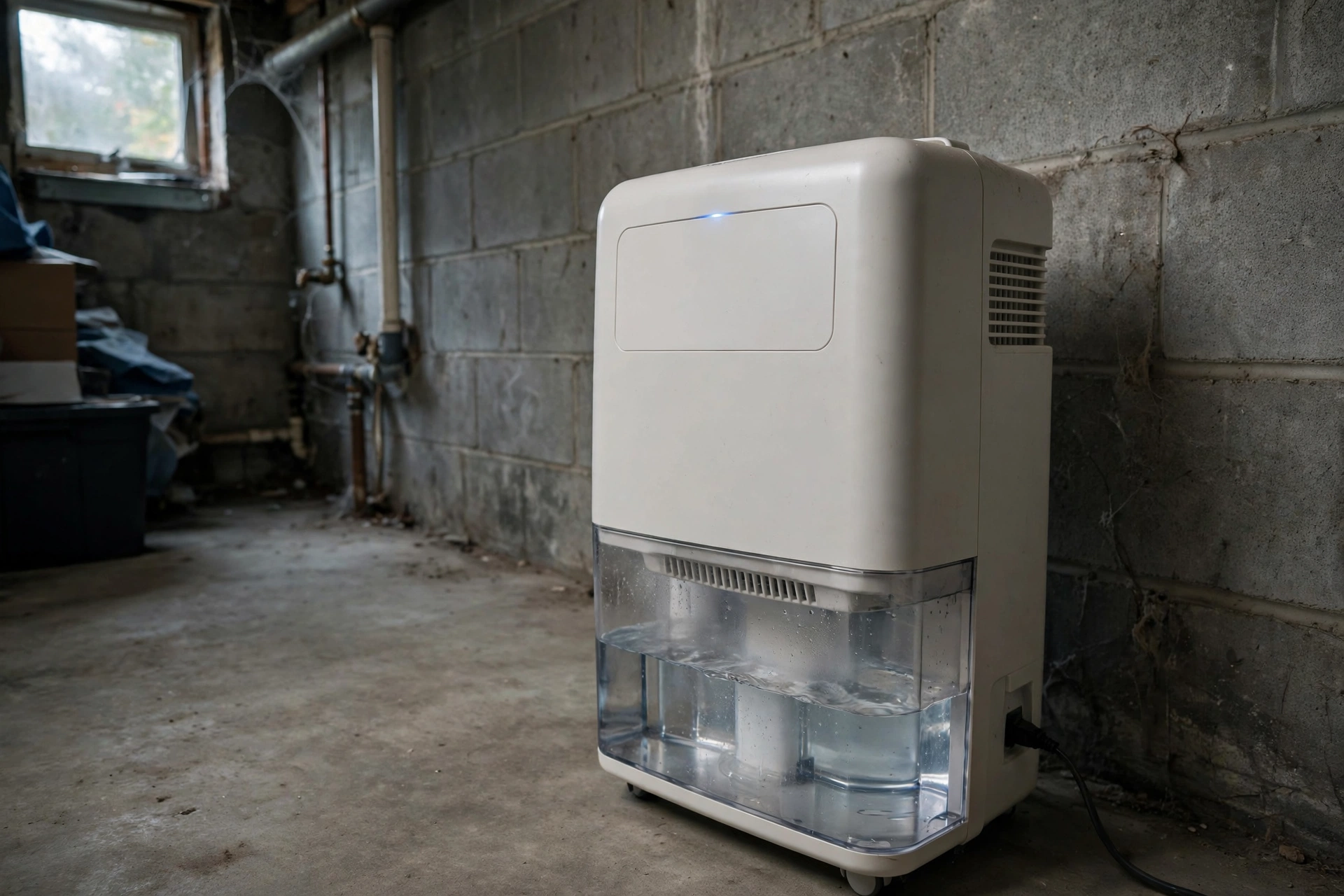
The water is extracted, the fans are humming, and the dehumidifier is filling its bucket. Now comes the question every homeowner asks: how long does this thing need to run? The answer is not a number of days, though there are useful benchmarks. The real answer is that the dehumidifier runs until the materials are dry, and only a moisture meter tells you when that happens.
Running it too briefly is the more expensive mistake. Shutting down while wall cavities are still damp hands mold exactly what it needs, and the remediation bill that follows dwarfs a few extra days of electricity. This guide covers realistic timelines, what affects drying speed, and how to know the job is actually done.
Typical timelines by severity
For a minor leak caught fast, say a small supply-line drip affecting one wall section, expect 2 to 4 days of active dehumidification with air movement. Moderate damage, a room with wet carpet and wicking drywall, typically takes 3 to 5 days. Major flooding that soaked drywall, insulation, and framing usually needs 5 to 10 days or longer.
These are working ranges, not guarantees. Two identical rooms can dry on different schedules depending on the factors below, which is why professionals monitor daily and pull equipment based on readings. If you are drying a whole basement, our guide to drying a flooded basement covers the full sequence, and our wet carpet drying guide covers floor-level specifics.
What controls how fast things dry
Dehumidifier capacity is the first variable. A 30-pint residential unit in a soaked basement is like bailing a boat with a coffee cup; it will run constantly without moving the needle. For active water damage, use a unit rated at least 50 pints per day for a single room, and consider 70 pints or more for large areas. Our best basement dehumidifier guide explains sizing in detail.
Temperature matters too. Dehumidifiers, especially refrigerant types, lose efficiency below about 65 degrees Fahrenheit. A cold basement in winter dries much slower than the same basement in summer. Keeping the space in the 70 to 80 degree range speeds evaporation noticeably, as long as you are not cooking finishes.
Air movement is the third leg. A dehumidifier removes moisture from the air, but air movers push dry air across wet surfaces so moisture releases into the air in the first place. The two work as a system, which we explain in our comparison of air movers vs dehumidifiers. Running one without the other stretches the timeline substantially.
Finally, the materials themselves set the pace. Drywall gives up moisture faster than concrete, which releases it slowly for weeks. Wood framing falls in between. This is why surface dryness misleads: the air can feel dry while the slab underneath is still releasing moisture.
The correct way to run it: continuously, in a closed space
Run the dehumidifier 24 hours a day until the job is done. Cycling it off at night lets humidity rebound overnight, and the materials reabsorb moisture you already paid to remove. Drying equipment is designed for continuous duty; intermittent running just extends the rental period and the risk.
Keep the space closed. Doors and windows shut, HVAC vents in the drying zone closed or the system set so it is not fighting the dehumidifier. Every cubic foot of humid outdoor air you let in is water the machine has to remove again. In humid climates, opening windows “to air things out” is actively counterproductive.
Drainage beats buckets. Rig a drain hose to a floor drain, sink, or sump pit so the unit never shuts off on a full tank. A dehumidifier that fills its bucket at 2 a.m. and sits idle until morning has lost eight hours of drying, exactly the hours when humidity rebounds most.
How to know when to stop: readings, not days
The shutoff decision belongs to instruments, not the calendar. A pin-type moisture meter, $25 to $40, gives you the data professionals use. Take readings in the affected materials and compare them to a known-dry reference area of the same material in the same house. When affected readings match the dry baseline and hold there for a full day, the materials are dry.
A hygrometer tracking room humidity is the second instrument. The EPA recommends indoor humidity between 30 and 50 percent, and during drying you want to see the room settle into that range and stay there with the equipment running, then hold after a test period. If humidity climbs back above 55 to 60 percent within a day of shutting down, the materials are still releasing moisture and the job is not done.
Watch for the stall pattern: humidity drops fast for two days, then plateaus above target. A plateau usually means undersized equipment, a still-active water source, or moisture trapped where air is not reaching, like inside a wall cavity. More days with the same setup will not fix a plateau; the setup needs to change.
The EPA advises drying wet materials within 24 to 48 hours to prevent mold growth, which means the dehumidifier should be running on day one, not after the weekend, according to its guide on mold and moisture.
Signs you stopped too early
- A musty odor returns within days or weeks of shutting the equipment down.
- Humidity rebounds above 60 percent and stays there without the dehumidifier.
- Paint bubbles, wallpaper peels, or baseboards swell after you thought drying was complete.
- Moisture meter readings in wall bases or subfloor still read well above the dry baseline.
- Condensation appears on cool surfaces like windows or concrete walls.
Any of these means the materials were not dry. Restart the equipment and investigate what was missed before mold gets the 24 to 48 hour window it needs.
What it costs to run
A typical 50-pint residential dehumidifier draws roughly 500 to 700 watts. At average U.S. electricity rates, that works out to roughly $1.50 to $2.50 per day of continuous running. A week of drying costs on the order of $10 to $18 in electricity, which is trivial next to the cost of mold remediation if you stop early. Rental units for commercial-grade dehumidifiers run about $50 to $100 per day, so sizing the rental period correctly matters more than the power bill.
Frequently Asked Questions
Can I run the dehumidifier too long?
For the drying phase, no. Over-drying a home during a week of structural drying is not a realistic concern; the risk is entirely on the side of stopping early. Once readings confirm materials are dry, you can shut it down. Running it indefinitely afterward just wastes electricity.
Should the dehumidifier run at night?
Yes. Nighttime is when humidity rebounds most, because temperatures drop and evaporation from materials continues. Turning the unit off overnight undoes daytime progress. Set up continuous drainage and let it run around the clock.
What humidity level means the room is dry enough?
Target 30 to 50 percent relative humidity, held steadily. But room humidity alone is not enough; confirm with a moisture meter that the materials themselves match dry baselines. Air can reach 45 percent while wall cavities are still wet.
Can I use my basement dehumidifier for water damage drying?
It helps, but a standard residential unit may be undersized for serious water damage. For anything beyond a minor leak, step up to a 50-pint or larger unit, or rent commercial equipment. An undersized unit running for two weeks costs more in time and risk than the right unit running for five days.
Why is my dehumidifier running but humidity not dropping?
Either the unit is undersized for the space, the space is not sealed, there is an ongoing water source, or the temperature is too low for efficient operation. Check these in order before assuming the machine is broken. A plateau after initial progress usually points to trapped moisture or an active leak.
The bottom line
Plan on 3 to 7 days of continuous dehumidifier operation for typical water damage, longer for major flooding, but let the moisture meter make the final call. Run it around the clock in a sealed space with drainage rigged, pair it with air movers, and verify dryness against known-dry baselines before you shut anything off.
The electricity for a few extra days costs almost nothing. The mold that grows when you stop early costs thousands. When in doubt, run it longer.