

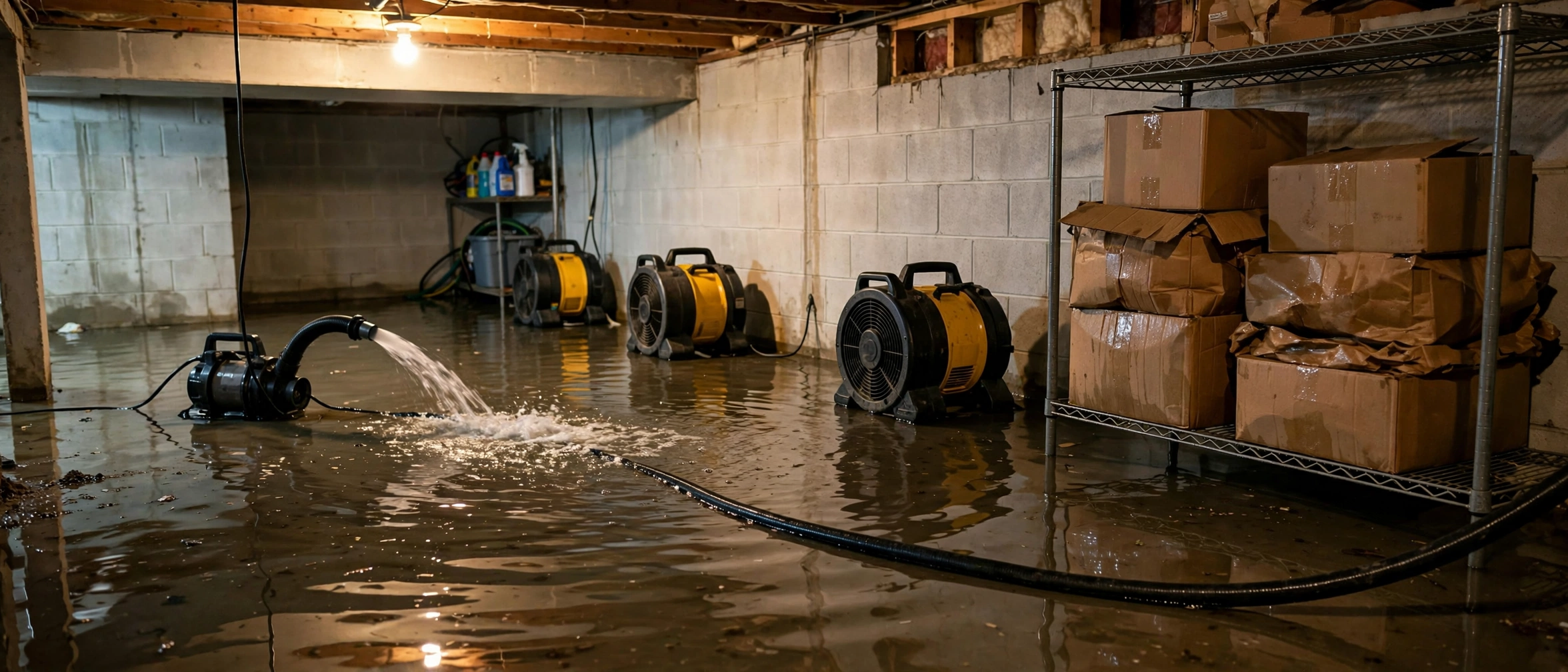
You walk downstairs and hear it before you see it: the squelch of soaked carpet under your shoes. A flooded basement is one of the most stressful things a homeowner can face, and the decisions you make in the first 48 hours determine whether this becomes a manageable cleanup or a five-figure restoration job.
The good news is that the process is straightforward. Safety first, water out second, drying third, and mold prevention throughout. This guide gives you a clear hour-by-hour plan for those critical first two days.
Before you go downstairs: safety first
Floodwater in a basement is not just an inconvenience; it can be genuinely dangerous. Run through these checks before you start hauling water:
- Electricity: if water reached outlets, the breaker panel, or any appliances, do not enter until an electrician or the power company confirms it is safe. Water and electricity kill quickly and silently.
- Gas: if you smell gas, leave immediately and call the gas company from outside. Pilot lights on water heaters and furnaces can be extinguished by floodwater, letting gas accumulate.
- Contamination: assume floodwater from outside is contaminated. It can carry sewage, chemicals, and bacteria. Wear rubber boots, gloves, and eye protection, and keep kids and pets out entirely.
- Structure: in a severe flood, check for cracked or bowing foundation walls before spending hours inside. If anything looks shifted, get a professional assessment first.
Ready.gov’s flood guidance covers these hazards in more detail and is worth a quick read while you gear up. Once the space is safe to enter, move fast: every hour counts, because mold can start growing within 24 to 48 hours of water exposure.
Hours 0 to 6: stop the water and document everything
Your first job is to stop more water from coming in. Shut off the main water supply if a pipe burst, or call a plumber for an emergency stop. If groundwater is seeping through the foundation during heavy rain, there may be nothing to shut off; focus instead on getting water out as fast as it comes in.
While the water is still there, document everything for insurance. Take photos and video of water levels, damaged items, and the source if you can identify it. Open closets and shoot behind furniture. This five-minute task can be worth thousands later, and our guide on whether homeowners insurance covers water damage explains what adjusters look for and which causes are typically covered.
Move undamaged valuables upstairs now: electronics, important papers, photo albums, and anything sentimental. For items already wet, separate them into piles (save, maybe, trash) outside the basement if weather allows, so they stop feeding humidity into the space.
Hours 6 to 24: get the water out
Standing water is the enemy. It wicks up drywall, saturates framing, and destroys flooring by the hour. Pick your removal method based on depth:
- More than a few inches: rent or borrow a submersible utility pump. A basic pump moves hundreds of gallons per hour and costs around 50 to 80 dollars per day to rent. Discharge the hose well away from the foundation, ideally to a street drain or downhill slope.
- A few inches or less: a wet/dry shop vacuum works well. Empty it frequently; a 12-gallon vac fills fast when you are chasing an inch of water across a whole basement.
- Last traces: push remaining water toward a floor drain or sump pit with a squeegee or push broom, then mop up.
Pump or drain gradually if the water is deep. Dropping the level too fast against saturated foundation walls can, in rare cases, create pressure problems, so many pros recommend lowering it in stages over several hours. If the flooding came from outside rather than a clean pipe break, check the EPA’s flooding resources for cleanup precautions specific to contaminated floodwater.
Call a professional water extraction service if the water is more than a foot deep, if it involves sewage, or if you cannot identify the source. Emergency pump-out typically runs a few hundred dollars and buys you the single most valuable thing in this situation: time.
Hours 24 to 48: dry everything aggressively
With standing water gone, the real drying begins. Your goal is to get every surface, including hidden ones, back to normal moisture levels within the 48-hour mold window.
- Airflow: set up fans to blow across wet surfaces, not just into the room. Position them so air moves along walls and floors. If you can rent commercial air movers, they move far more air than household fans.
- Dehumidification: run a large dehumidifier continuously, 50 pints per day or bigger for a typical basement. Empty the reservoir often or rig a hose to a drain. This is the most important tool you own right now.
- Remove the unsalvageable: wet carpet padding almost never dries in place; pull it and cut it into strips for disposal. Cardboard boxes, saturated insulation, and swollen particle-board furniture should go too. Removing them exposes wet surfaces behind and beneath them to airflow.
- Open wall cavities: if drywall wicked up water, cut a strip a foot or two high along affected walls (a “flood cut”) so air reaches the studs and insulation. It sounds destructive, but it dries the cavity in days instead of weeks and the strip is easy to patch later.
- Check with a meter: a pin-type moisture meter, about 30 to 50 dollars, tells you when wood framing is truly dry (under about 16 percent moisture content) rather than just dry to the touch.
Keep everything running around the clock. Drying is not a daytime-only activity; mold does not take nights off.
What to throw away versus what to save
Not everything survives a basement flood, and guessing wrong wastes effort or risks health. General rules:
- Throw away: carpet padding, wet insulation, cardboard, mattresses that soaked through, upholstered furniture that sat in water, and any food or medicine touched by floodwater.
- Often salvageable: solid wood furniture (dry slowly to avoid cracking), concrete and tile floors (clean and disinfect), washable clothing (hot wash), and hard plastic or metal items (clean thoroughly).
- Maybe, with pro help: wall-to-wall carpet after clean-water flooding can sometimes be saved with professional extraction and drying, but after sewage or outside floodwater it should go.
When in doubt about porous items exposed to contaminated water, replacement is the safer call. Our first-hour checklist for water damage has a printable-style rundown you can keep with your emergency supplies for next time.
Preventing mold while you dry
Mold prevention is not a separate step; it is the reason for every step above. A few extra measures help during the dry-out:
- Keep indoor humidity below 50 percent if you can. The dehumidifier display is your scoreboard.
- Do not close up the basement to “contain the smell.” Ventilation and airflow are your friends until everything is dry.
- Clean hard surfaces with detergent and water once they are dry, then disinfect. The EPA’s guide to mold and moisture is the gold standard reference for what to clean versus what to remove.
- Watch for musty odors over the next two weeks. Smell without visible mold often means growth inside a wall cavity that needs a closer look.
When to call a professional
DIY dry-out works for many clean-water basement floods, but call a restoration company when any of these apply: the water came from sewage or outside flooding, water sat for more than 48 hours before you started, mold is already visible across a large area, the electrical or HVAC systems got wet, or the basement is finished and you want it properly dried without tearing out more than necessary. Pros bring commercial dehumidifiers, moisture mapping, and the experience to find water you cannot see.
Frequently Asked Questions
How long does it take to dry out a flooded basement?
Surface water can be removed in hours, but thorough structural drying usually takes 3 to 5 days with proper equipment, and sometimes a full week for saturated framing. A moisture meter, not the calendar, tells you when it is done.
Can I use my home’s HVAC to help dry the basement?
Running the air conditioner in summer helps dehumidify, but do not run the system if floodwater reached the furnace, air handler, or ductwork. Contaminated components can spread microbes through the whole house.
Should I open windows while drying?
Only if the outside air is drier than inside. On a humid rainy day, open windows work against your dehumidifier. On a dry breezy day, they help a lot. Check a weather app’s humidity reading before deciding.
Will my homeowner’s insurance pay for the drying equipment I rent?
Often, yes, if the cause of loss is covered. Keep every receipt for pumps, vacuums, dehumidifiers, and fans; reasonable emergency mitigation costs are typically reimbursable under a covered claim.
How do I know if the basement is dry enough?
Wood framing should read under 16 percent moisture content on a pin meter, drywall under about 1 percent above its normal baseline, and indoor relative humidity consistently below 50 percent. If readings stall for more than a day, something is still wet behind a surface.
What to do next
The first 48 hours are about speed: make it safe, get the water out, document for insurance, and dry aggressively with fans and a real dehumidifier. Once the basement is verifiably dry, walk through our first-hour water damage checklist to make sure nothing was missed, and keep an eye (and nose) out for mold over the next couple of weeks.