

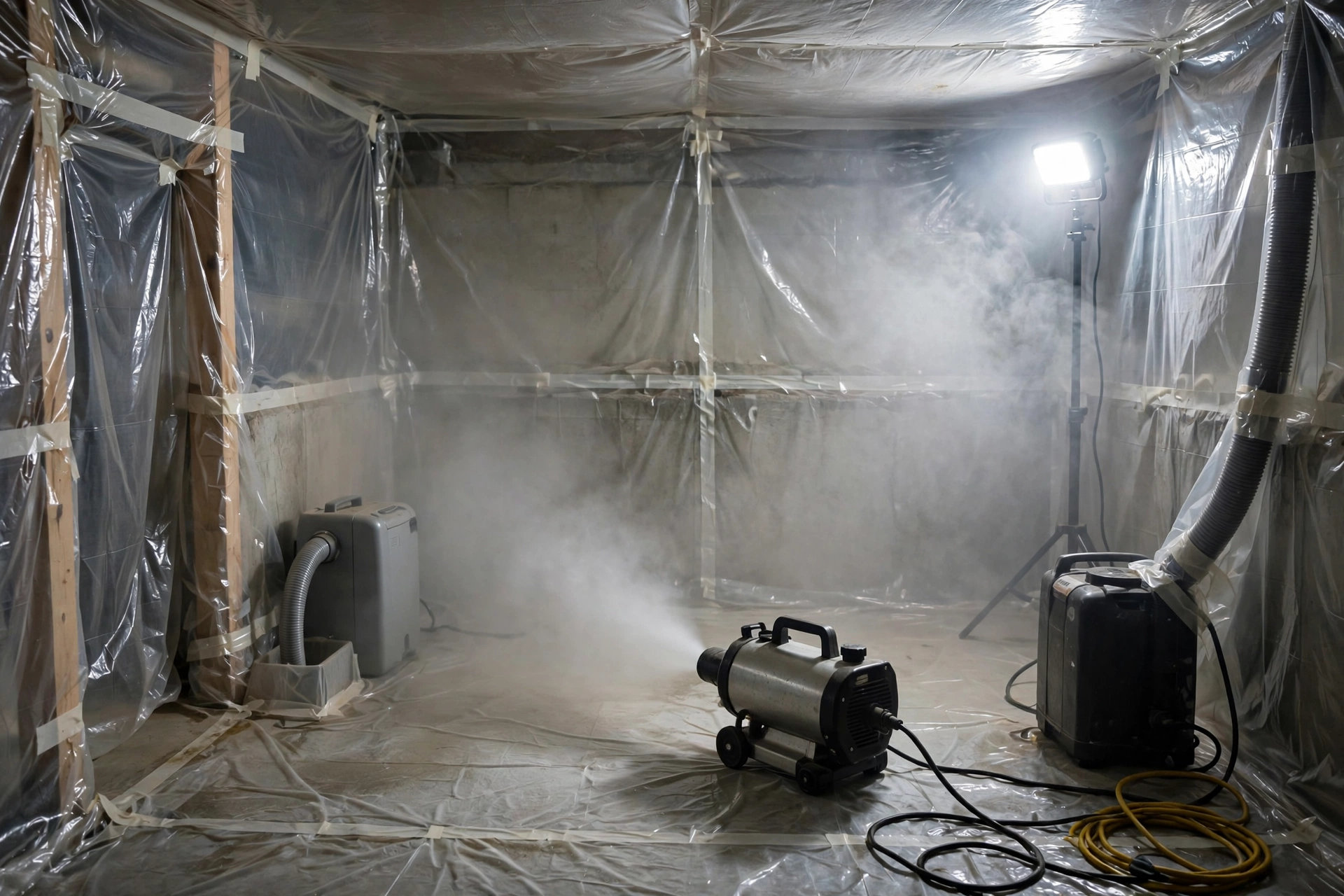
Mold fogging ads make a tempting promise: a machine fills your home with a fine antimicrobial mist, kills mold everywhere it touches, and you never have to scrub a thing. Some companies sell it as a whole-house cure that replaces tear-out, containment, and all the messy parts of remediation.
The reality is more complicated. Fogging is a real tool that professional restorers use, but almost always as a finishing step after the actual cleanup work is done. Sold as a standalone cure, it is one of the most oversold services in the mold industry.
This guide explains what fogging actually is, what it can legitimately do, what it cannot do no matter what the ad says, what it costs DIY versus pro, the scams to watch for, and an honest verdict on when it helps.
What mold fogging actually is
Fogging uses a machine called a fogger to turn a liquid antimicrobial product into a fine mist that drifts through the air and settles on surfaces. The most common machines are ULV (ultra low volume) cold foggers, which use air pressure rather than heat. Thermal foggers use heat to create an even finer fog and are mostly used for odor treatment rather than mold.
The mist itself is not magic: it is a delivery method for ordinary EPA-registered products like Concrobium, hydrogen peroxide based disinfectants, or botanical antimicrobials. Fogging spreads the product into cracks, crevices, and cavities that hand spraying misses, which is its genuine advantage. If you want background on the products being fogged, our Concrobium vs bleach comparison covers how the most common fogging solution actually works.
What fogging can legitimately do
Fogging does three things well. First, it treats large areas quickly and evenly: an attic or basement that would take hours to hand spray can be fogged in under an hour. Second, the mist reaches places you cannot easily wipe, such as the backs of framing, inside wall cavities opened during remediation, and textured surfaces. Third, it lays down an even preventive barrier on every surface the mist touches.
Used after physical cleaning, fogging is a sensible final antimicrobial pass. Many pros also use thermal fogging for odor treatment after the mold itself is gone, since the fine fog penetrates soft materials that hold musty smells. These are real, limited capabilities, and they explain why the tool exists on professional trucks.
What fogging cannot do
Here is the list that matters more. Fogging does not remove mold. Dead mold stays exactly where it was, and dead mold can still trigger allergic reactions, so a fogged-over colony is a cosmetic fix, not a cleanup. It does not remove stains, does not dry anything, and does not fix the moisture source that caused the growth.
It also does not replace containment, HEPA vacuuming, or cutting out water-damaged porous materials. This is the heart of the “dry fogging” controversy: some companies claim their fogging system eliminates mold with no tear-out at all. But EPA cleanup guidance still centers on physically removing mold from porous materials, because a chemical mist cannot extract a colony from inside drywall or insulation.
The EPA puts it plainly: “It is impossible to get rid of all mold and mold spores indoors; some mold spores will be found floating through the air and in house dust.” Any company promising total elimination through fogging is promising something the science does not support, per the EPA’s guide to mold, moisture, and your home.
When professionals actually use fogging
In a legitimate remediation job, fogging comes near the end, not the beginning. The real sequence is: find and fix the moisture source, set containment, remove unsalvageable porous materials, HEPA vacuum every surface, damp wipe the remaining structure, verify dryness, and then fog as a final antimicrobial and preventive treatment.
At that stage fogging earns its place: the mist treats the entire contained area uniformly, including spots the crew could not reach by hand. Our walkthrough of the mold remediation process step by step shows exactly where fogging fits in that sequence. If a company’s entire plan is “we fog,” they are selling you the last 5 percent of the job and skipping the other 95.
DIY fogging vs hiring a pro: real costs
DIY fogging is affordable. A ULV cold fogger rents for about 50 to 75 dollars per day or costs 80 to 150 dollars to buy outright, and a gallon of fogging solution runs 30 to 60 dollars. Add a respirator, goggles, and gloves, and a DIY fogging job typically totals 100 to 250 dollars. That is reasonable as a preventive treatment for a clean, dry basement or attic.
The problem is that most DIYers fog instead of cleaning: they skip the scrubbing, removal, and drying that make fogging worthwhile. Professional fogging as an add-on to a full remediation typically costs 500 to 1,500 dollars depending on home size. Standalone “whole house fogging” offers run 800 to 2,500 dollars, and at that price you should expect a full remediation protocol, not just a misting. See our mold remediation cost breakdown to compare what complete jobs actually cost.
Fogging scams and red flags
Fogging attracts questionable operators because the equipment is cheap and the visual is impressive. Watch for these warning signs:
- The company proposes fogging as the only treatment, with no moisture inspection and no plan to fix the water source.
- No containment, no HEPA vacuuming, and no removal of damaged materials appear in the quote.
- They promise to “kill 99.9 percent of mold forever” or guarantee a mold-free home.
- They refuse post-treatment verification or will not explain how they confirm the job worked.
- High-pressure tactics, same-day discounts, or door-to-door offers after storms.
A legitimate operator follows recognized industry standards for the whole job. The IICRC sets the certification standards restoration professionals train to, and a certified firm will describe fogging as one step in a documented process, not the entire service.
Frequently Asked Questions
Is fogging alone enough to get rid of mold?
No. Fogging kills surface mold it contacts but removes nothing: the dead colony, stains, and spores in porous materials all remain. Without physical removal and moisture repair, fogging alone is a temporary cosmetic treatment, and the mold typically returns.
Is mold fogging safe for my family and pets?
The products used are EPA-registered when applied per the label, but the application itself requires precautions. Everyone, including pets, should leave the treatment area during fogging and stay out until the mist has settled, surfaces are dry, and the space is ventilated, typically a few hours. Always follow the specific product label.
How long does a fogging treatment take?
The fogging itself usually takes one to three hours for a typical home area, plus drying and ventilation time afterward. As an add-on to professional remediation, it is generally a same-day step. DIY jobs take longer mostly because of prep: clearing the area, protecting belongings, and suiting up.
Can I stay in the house during fogging?
Not in the treated area. Leave during application and until the space is dry and ventilated according to the product label. For whole-house treatments, plan to be out for the better part of a day and confirm the re-entry time with whoever performs the service.
Does fogging treat mold inside air ducts?
Poorly. Fog mist does not travel through ductwork the way conditioned air does, so duct interiors get little coverage. Mold in HVAC systems needs dedicated duct inspection and cleaning as a separate service, not a room fogging.
The honest verdict on fogging
Fogging is a legitimate finishing step after real remediation: cleaning, removal, drying, and moisture repair. As a standalone cure for a mold problem, it is oversold, and companies selling fogging as the whole job are selling the easiest 5 percent of the work at a premium price.
If you are hiring, make sure fogging appears as a line item after cleaning and removal, not instead of them. And if you are still unsure whether professional treatment is warranted at all, read our honest look at whether mold remediation really works and what to expect after treatment.