

Search for “mold removal” and you will find companies promising to eliminate every last spore from your home. Search for “mold remediation” and you will find a multi-step process involving containment, moisture repair, and verification. The two terms get used as if they mean the same thing, but they describe very different scopes of work.
The difference matters because it determines whether the mold comes back. Paying for removal when you needed remediation usually means paying twice: once for the cosmetic fix, and again months later when the colony returns through the moisture problem nobody addressed.
This guide defines both terms plainly, explains why removal alone fails, walks through what real remediation includes, decodes how companies use these words in marketing, compares costs, and helps you figure out which one you actually need.
What “mold removal” actually means
Taken literally, mold removal means physically eliminating mold from surfaces and materials: scrubbing it off, sanding it out of wood, HEPA vacuuming spores, or cutting out mold-damaged drywall and hauling it away. That work is legitimate, and it is part of every real mold job. Nobody disputes that the mold itself has to go.
The problem is how the term gets sold. Many companies market “mold removal” as the total elimination of mold from your home, which is a promise no one can keep. Mold spores are everywhere, indoors and outdoors, at all times. A company can remove the visible colony, but it cannot remove mold from the air you breathe or the dust in your home. For surface-level jobs done right, our guide to removing black mold safely covers the proper procedure.
What “mold remediation” actually means
Remediation means fixing the problem, not just the symptom. A real remediation job returns mold levels to normal and corrects the conditions that allowed the growth: the leak gets repaired, the wet materials get dried or removed, the affected area gets cleaned under containment, and the work gets verified. The goal is not zero mold, which is impossible, but a dry home with normal background spore levels.
Think of it this way: removal addresses the mold you can see, while remediation addresses the mold plus the reason it grew. That extra scope is the entire difference between a fix that lasts and one that does not. Our step-by-step mold remediation process walks through each phase in order.
Why “mold removal” alone fails
Removal without remediation fails for one simple reason: the moisture is still there. Scrub a colony off a damp wall without fixing the leak behind it, and the regrowth starts within weeks. It is the equivalent of mopping the floor under a leaking pipe and calling the plumbing fixed.
There are two more failure modes. First, aggressive removal without containment spreads spores through the house, seeding new colonies in previously clean rooms. Second, dead mold left behind after a surface-only treatment can still trigger allergic reactions, so “the mold is dead” is not the same as “the problem is solved.”
The EPA states it directly: “It is impossible to get rid of all mold and mold spores indoors; some mold spores will be found floating through the air and in house dust.” That is why the agency frames the goal as cleanup plus moisture control, not elimination, as explained on the EPA’s mold guidance hub.
What a real remediation job includes
A legitimate remediation follows a sequence, and each step exists for a reason:
- Assessment and moisture inspection. Finding all affected areas, including hidden ones, and identifying the water source with meters or thermal imaging.
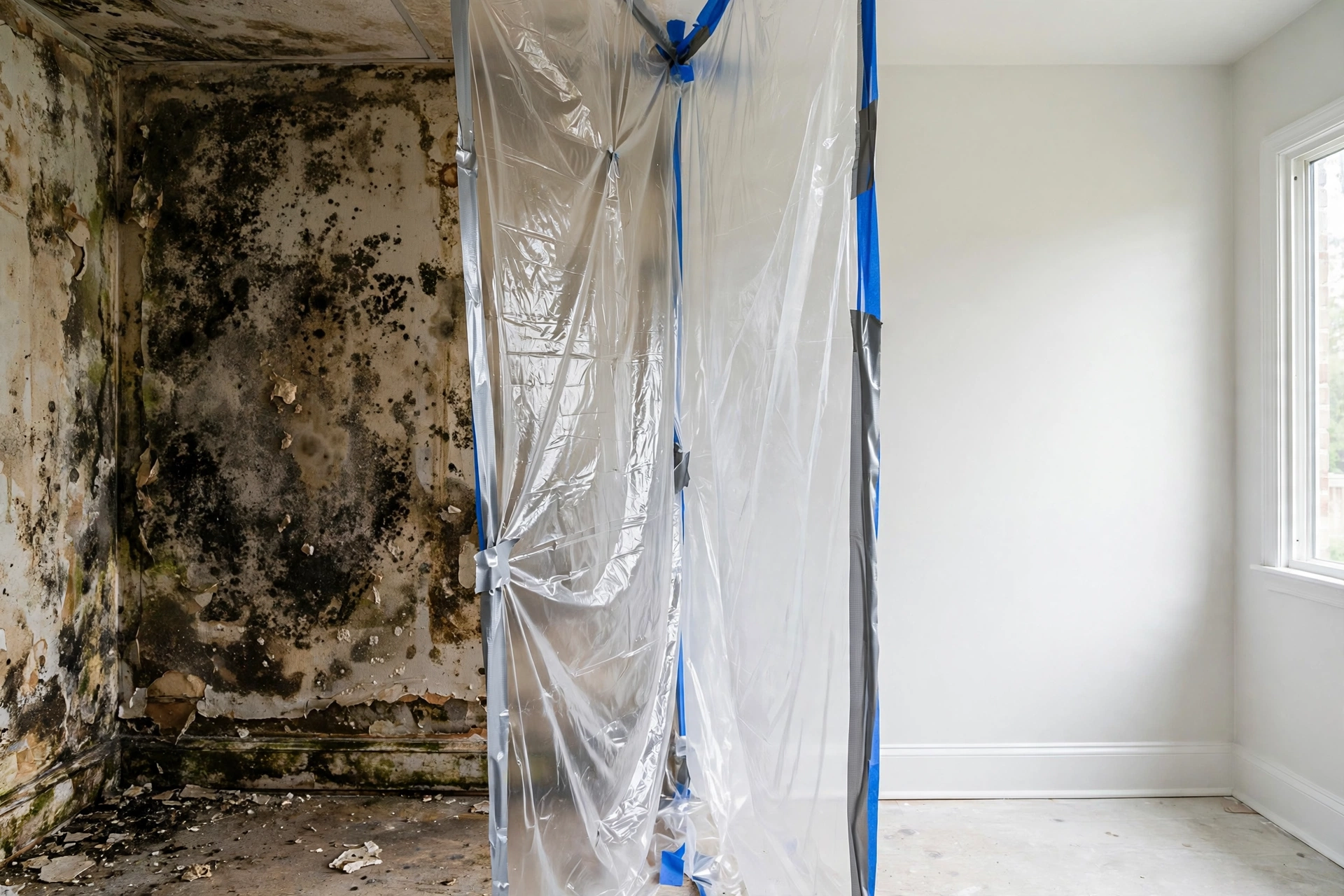
- Containment. Sealing the work area with plastic sheeting and using negative air pressure so spores do not spread during the work.
- Air filtration. Running HEPA air scrubbers to capture airborne spores released during removal.
- Removal of unsalvageable materials. Cutting out porous materials like drywall and insulation that cannot be cleaned, while salvageable structure gets cleaned in place.
- HEPA vacuuming and damp wiping. Physically removing mold from every remaining surface in the contained area.
- Drying and dehumidification. Bringing all materials to verified dry readings so regrowth cannot start.
- Moisture source repair. Fixing the leak, grading, ventilation, or humidity issue, either by the same company or a coordinated tradesperson.
- Post-remediation verification. Visual inspection and moisture readings, sometimes with third-party testing, confirming the job is complete.
The EPA’s detailed mold remediation guidelines describe this same progression. If a quote you receive skips half these steps, you are being sold removal, whatever the company calls it.
How companies use these terms in marketing
Here is the open secret: many honest companies advertise “mold removal” simply because that is what homeowners search for, then explain the remediation process during the estimate. The word on the website matters less than the scope in the written quote.
Judge the company by its red flags instead. Be wary of anyone promising 100 percent mold elimination, a permanently mold-free home, or results from a single spray with no containment. Ask for the written scope: does it include moisture source identification, containment, HEPA filtration, and verification? A firm whose technicians hold IICRC certification is trained to the industry standard for this work, and the IICRC’s standards define what a complete remediation includes.
Cost differences between the two
Removal-only quotes are usually cheaper because they skip the expensive steps: containment setup, air scrubbers, moisture investigation, and verification. A small surface-mold cleaning might run 300 to 800 dollars, while a full remediation of the same area typically runs 500 to 1,500 dollars once containment and verification are included. Larger jobs with significant tear-out run 2,000 to 6,000 dollars or more.
The cheap option costs more over time when the mold returns. Before paying anyone, it helps to know what is realistic to handle yourself: our guide to DIY mold remediation and the EPA guidelines explains the 10 square foot rule and when homeowner cleanup is appropriate.
Frequently Asked Questions
Is “mold removal” a scam?
The physical work of removing mold is real and necessary. What is misleading is the promise of total elimination implied by the marketing. A company that removes the colony, fixes the moisture, and verifies the work is doing remediation by any honest definition, regardless of which word is on the truck.
Can mold ever be completely removed from a house?
No, and this is the key fact the industry’s marketing often skips. Background mold spores exist in every home and in outdoor air. The achievable goal is removing the abnormal growth, eliminating the moisture that fed it, and returning the home to normal, dry conditions.
How do I know if I need remediation or just cleaning?
Cleaning alone is reasonable for surface mold under about 10 square feet on hard, nonporous materials with no moisture problem behind it. Call for full remediation when the area is larger, the mold is inside walls or HVAC components, it keeps returning, or there is an active or recent water intrusion.
Does remediation include fixing the leak?
It should include identifying the moisture source, but the actual repair is sometimes a separate trade. Some remediation firms handle minor plumbing or roofing fixes in-house; others coordinate with or refer a plumber or roofer. Confirm exactly what is in scope before work starts so the moisture repair does not fall through the cracks.
Will my insurance cover mold remediation?
It depends on what caused the mold. Remediation tied to a sudden covered event, like a burst pipe, is often covered, while mold from long-term leaks or humidity usually is not. Document the water source carefully and check your policy language before assuming either way.
Which one do you actually need?
Small surface mold on hard materials with no moisture problem behind it: thorough cleaning and removal, done properly, is enough. Anything bigger, hidden, recurring, or tied to water intrusion: you need remediation, meaning removal plus moisture repair plus verification, or you will be doing the job again.
When you talk to companies, ignore which buzzword they lead with and compare their written scopes against the full sequence above. For a detailed look at each phase, start with our mold remediation process guide.