

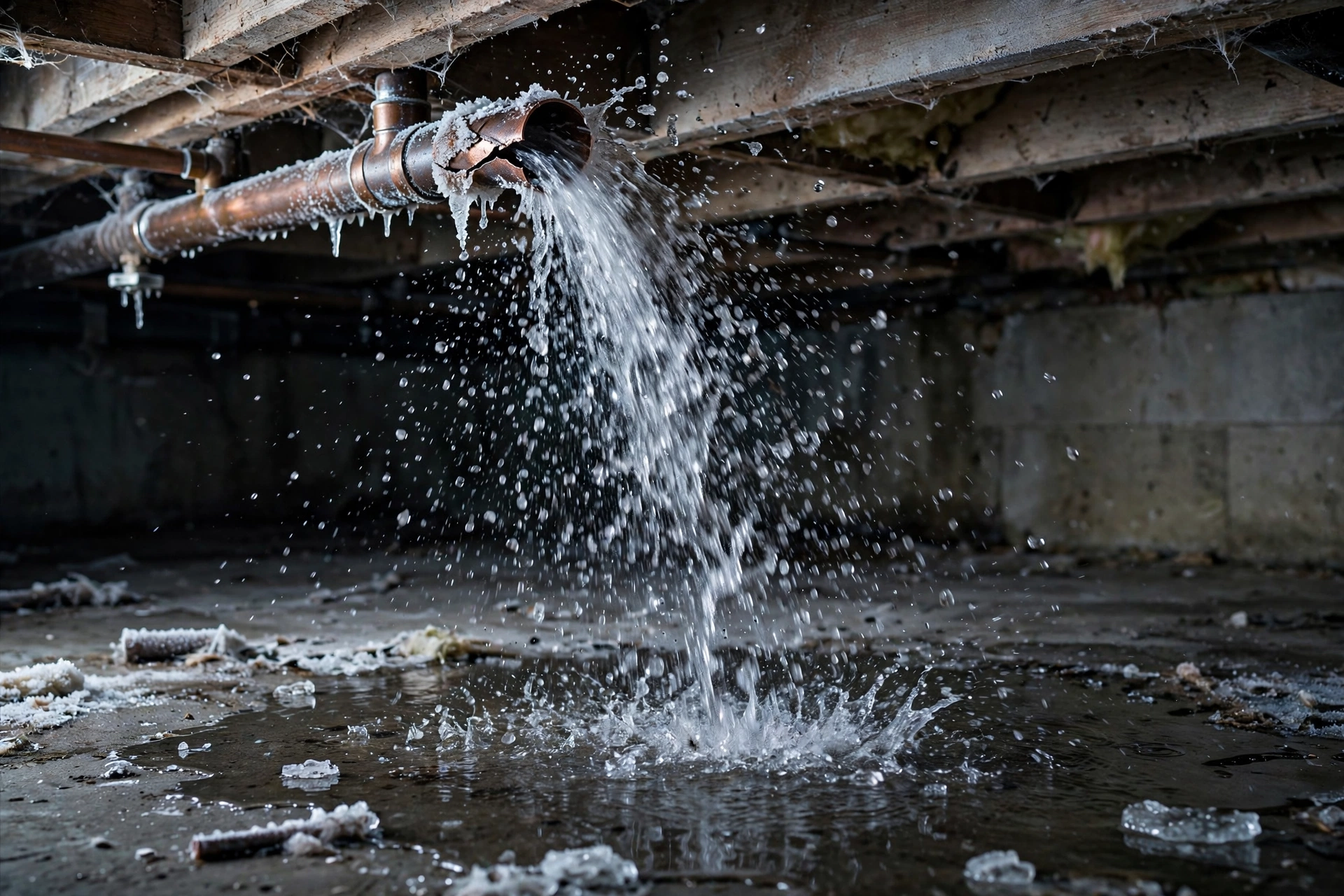
A burst pipe does not leak. It gushes. A single 1/2-inch supply line can release more than 50 gallons an hour, and if it bursts while you are at work, you can come home to standing water in every room on that floor. Frozen pipes in winter are the classic cause, but corrosion, high water pressure, and physical damage burst pipes year-round.
This guide covers exactly what to do in the first minutes, how the repair process works, and what burst pipe water damage costs to fix, from the plumbing repair to drying and rebuilding.
Immediate steps: the first 15 minutes
Speed matters more than perfection here. Work through these in order:
- Shut off the main water valve. Every adult in the house should know where it is before an emergency. It is usually near the water meter, in the basement, garage, or a utility closet. Turn it clockwise until it stops.
- Turn off electricity in wet areas. If water is near outlets, the breaker panel, or light fixtures, kill power to those circuits at the breaker box. Do not step into standing water to reach the panel; call an electrician if you are unsure.
- Open faucets to drain the lines. Open cold taps at the lowest point in the house to relieve pressure and drain remaining water, then flush toilets to empty tanks.
- Move valuables and start removing water. Get rugs, electronics, and furniture off wet floors. Mop, wet-vacuum, or push water toward drains. Every gallon you remove now is a gallon that does not soak into drywall.
- Document everything. Take photos and video of the burst pipe, the water, and damaged belongings before you move too much. Your insurer will want this.
- Call a plumber and your insurer. The plumber stops the source permanently; the insurer opens the claim. Do both the same day.
Our first-hour checklist for water damage expands on these steps for any water emergency, not just burst pipes.
Why pipes burst (and how to prevent the next one)
Understanding the cause helps you prevent a repeat, and your insurer will ask about it too.
Freezing
Water expands when it freezes, and the pressure between the ice blockage and a closed faucet can split copper, PEX, or CPVC. Pipes in exterior walls, attics, crawl spaces, and garages are most vulnerable. Prevention: insulate exposed pipes, seal air leaks near plumbing, keep the thermostat at 55°F or higher when away, and let faucets drip during extreme cold snaps.
Corrosion and age
Galvanized steel pipes corrode from the inside out over 40 to 50 years until the wall gives way. If your home still has galvanized supply lines, a burst is a matter of when, and repiping is the real fix.
High water pressure
Municipal pressure above 80 psi stresses pipes, fittings, and appliance hoses. A $15 pressure gauge on an outdoor spigot tells you where you stand; a pressure-reducing valve fixes it.
Physical damage and shifting
Nails through walls during renovations, tree roots shifting underground lines, and water hammer (the bang when valves slam shut) can all rupture pipes.
What burst pipe repair costs
Total costs split into two parts: fixing the pipe itself, and fixing the water damage it caused. The damage almost always costs more than the plumbing.
Plumbing repair
- Simple pipe repair (accessible location): $150 to $400
- Pipe repair inside a wall or ceiling: $300 to $800, plus drywall patching
- Replacing a section of corroded pipe: $500 to $1,500
- Whole-house repiping (old galvanized): $4,000 to $15,000 depending on size and material
- Emergency or after-hours plumber call: add $100 to $300 to the above
Water damage restoration
- Water extraction and drying (one room): $1,000 to $3,000
- Multiple rooms or a full floor: $3,000 to $8,000
- Drywall, flooring, and trim replacement: $2,000 to $10,000+ depending on finishes
- Mold remediation if drying was delayed: $500 to $6,000
A typical burst pipe incident with moderate damage runs $5,000 to $15,000 all in. Severe cases with finished basements or long undetected leaks can exceed $25,000. The EPA emphasizes drying water-damaged areas within 24 to 48 hours to prevent mold growth (EPA mold and moisture guide), which is why fast extraction saves real money.
The restoration process, step by step
After the plumber caps or replaces the burst section, restoration follows a standard sequence:
- Water extraction. Truck-mounted or portable extractors pull standing water from floors and carpets.
- Moisture mapping. Technicians use meters and thermal cameras to find water inside walls and under floors, not just what is visible.
- Demolition of unsalvageable materials. Soaked drywall, insulation, and carpet pad usually get removed. Solid wood and concrete can often be dried in place.
- Structural drying. Industrial air movers and dehumidifiers run 3 to 5 days, with daily moisture readings.
- Cleaning and sanitizing. Antimicrobial treatment on affected surfaces, especially if water sat for a while.
- Repairs and rebuild. New drywall, paint, flooring, and trim to bring rooms back.
Clean supply-line water is the easiest category to remediate. If the burst involved a drain or sewer line instead, the contamination level (and cost) jumps; gray and black water require stricter protocols.
Insurance: is a burst pipe covered?
In most cases, yes: standard homeowners policies cover sudden and accidental water damage from burst pipes, including the cost to repair the resulting damage. What they typically do not cover is the cost to fix the pipe itself (that is considered maintenance) or damage from long-term leaks you neglected.
The big exception is freezing exclusions. Many policies deny freeze-related bursts if the home was vacant or heat was not maintained. If you travel in winter, keep the heat on and have someone check the house; it protects both your pipes and your claim. Document the sudden nature of the event with photos and the plumber’s report.
Preventing the next burst
- Know where your main shutoff is and test it yearly so it does not seize.
- Insulate pipes in unheated spaces and seal wall penetrations that let in cold air.
- Install a smart water shutoff valve ($400 to $900 installed) that detects abnormal flow and closes automatically. Some insurers discount premiums for these.
- Replace aging galvanized or polybutylene supply lines before they fail.
- Keep cabinet doors open under sinks on exterior walls during cold snaps so warm air reaches the pipes.
- For basements prone to groundwater too, a sump pump installation handles the water that comes up from below while pipe maintenance handles what comes from above.
Appliance supply lines deserve the same attention: washing machine hoses burst the same way pipes do. Our guide to appliance leak water damage covers the hoses and valves most homeowners forget. General flood preparedness advice is also available from Ready.gov and the EPA’s flooding resources.
Frequently Asked Questions
How much water can a burst pipe release?
A 1/2-inch line at normal pressure can release 50+ gallons per hour; a 3/4-inch main can exceed 100 gallons per hour. An 8-hour workday absence can mean hundreds of gallons.
Should I call the plumber or the restoration company first?
The plumber first, to stop the source. Then call a restoration company for extraction and drying, and your insurer to open a claim. Many restoration companies offer 24/7 emergency response.
Will my insurance cover the plumber’s bill?
Usually the pipe repair itself is not covered (it is the failed component), but the water damage it caused typically is, minus your deductible. Check your policy’s sudden-and-accidental water damage terms.
How long does drying take after a burst pipe?
Structural drying usually takes 3 to 5 days with professional equipment. Full repairs (drywall, flooring, paint) can add 1 to 3 weeks depending on the scope.
Can I stay in the house during restoration?
Often yes for localized damage, but not if electrical systems are compromised, sewage is involved, or extensive demolition is needed. Your contractor can advise based on the job.
Does a burst pipe always cause mold?
No, not if drying starts within 24 to 48 hours. Mold becomes likely when wet materials sit damp for days, which is why fast extraction matters more than anything else.
Bottom line
Shut the water off, protect the electrical, document the damage, and get professionals moving the same day. Expect $5,000 to $15,000 for a typical burst pipe incident, most of it in drying and repairs rather than the plumbing fix. The cheapest burst pipe is the one that never happens: insulate vulnerable pipes, watch your water pressure, and consider an automatic shutoff valve before the next cold snap.