

A roof leak rarely announces itself at the roof. It shows up as a brown stain spreading across the ceiling, a drip in the attic, or paint bubbling on an upstairs wall. By the time you see it inside, water has already traveled through decking, insulation, and framing, and every part of that path may need attention.
Repairing roof leak water damage is really two jobs: stop the water from the outside, then repair the damage on the inside. Do them in that order, and do not skip the drying in between. This guide walks through the full sequence from emergency tarp to final coat of paint.
Step 1: Stop the water (emergency tarping)
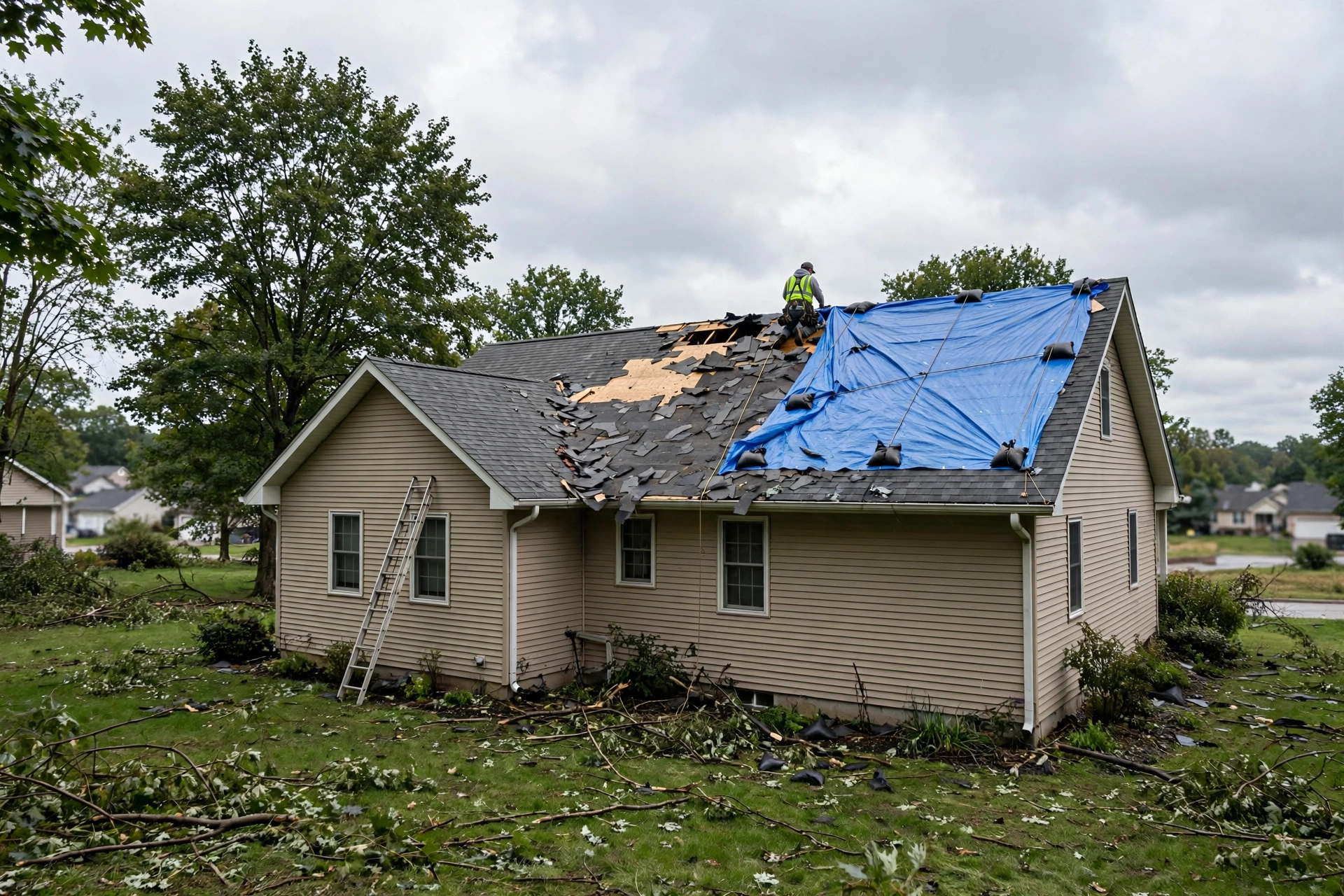
If water is actively coming in, the first job is to cover the breach. A heavy-duty polyethylene tarp, secured properly, can keep a roof watertight for weeks while you arrange permanent repairs.
- Use a tarp large enough to extend at least 4 feet past the damaged area on all sides, running over the ridge if possible so water cannot run underneath.
- Never nail through the tarp into good shingles if you can avoid it; sandwich the tarp edges between 2×4 battens screwed through the tarp into the roof instead.
- Do not go on a wet, steep, or storm-damaged roof yourself. Roofing contractors and some restoration companies offer emergency tarping for $300 to $800, and it is money well spent.
Inside, place buckets under drips, move furniture, and poke a small hole in any bulging ceiling section to let trapped water drain in a controlled way rather than collapsing the drywall. Our first-hour water damage checklist covers the interior triage steps in detail.
Step 2: Find the real entry point
Water rarely enters where it appears inside. It runs down rafters and decking, sometimes traveling many feet before dripping onto your ceiling. Finding the actual breach takes some detective work:
- Attic inspection during rain is the gold standard. Follow the water uphill with a flashlight; look for wet decking, stained wood, and daylight shining through.
- Common culprits: failed flashing around chimneys, vents, and skylights (the number one cause), cracked or missing shingles, ice dams forcing water under shingles, and clogged gutters overflowing back under the eaves.
- Hose test: on a dry day, have someone spray sections of the roof with a hose while another person watches from the attic. Work from low to high so you isolate the entry point.
Flashing failures cause more roof leaks than shingle failures, especially on roofs over 15 years old. If your leak is near a chimney or vent, start there.
Step 3: Dry everything before you repair
This is the step impatient homeowners skip, and it is the one that causes mold six months later. Wet insulation, decking, and framing must be dried to normal moisture levels before they get sealed up behind new drywall.
- Remove soaked insulation; fiberglass batts lose their R-value when wet and rarely dry cleanly in place. Wet cellulose should also come out.
- Run fans and a dehumidifier in the attic or affected rooms for several days. A pin-type moisture meter ($30 to $60) tells you when wood is back under 16 to 18 percent moisture content.
- Treat framing and decking with an antimicrobial if water sat for more than a day or two.
- Do not install new drywall or paint over anything that still reads wet. Paint traps moisture and guarantees a mold problem behind a fresh-looking ceiling.
The EPA’s 24 to 48 hour drying guidance applies here too: mold can begin growing on damp building materials within two days (EPA mold and moisture guide). If drying was delayed, read up on black mold health effects so you know what prolonged exposure can mean.
Step 4: Repair the roof itself
Roof repair costs depend on the cause and the roofing material:
- Minor shingle repair (a few shingles): $200 to $600
- Flashing repair or replacement: $300 to $900 per location
- Partial re-decking (rotted plywood section): $500 to $1,500
- Skylight reseal or replacement: $400 to $1,500
- Full roof replacement (if the roof is at end of life): $8,000 to $20,000+ for asphalt shingles on a typical home
If your roof is over 20 years old and leaking in multiple spots, patching buys time but replacement is the honest fix. A roofer can tell you how much service life the shingles have left; spending $2,000 on patches for a roof that needs replacing next year is false economy.
Ice dam leaks deserve special mention: they are a ventilation and insulation problem as much as a roofing problem. Heat escaping into the attic melts snow, which refreezes at the eaves and backs water under the shingles. The lasting fix is air sealing and insulation, not just better shingles.
Step 5: Repair the interior damage
Once the roof is watertight and everything is dry, the interior rebuild is straightforward:
- Cut out and replace water-stained or soft drywall on ceilings and walls. Stains alone can sometimes be sealed with stain-blocking primer, but soft or sagging drywall must go.
- Replace damaged insulation with new batts of the correct R-value.
- Check framing for rot. Surface staining on rafters is usually cosmetic once dry, but soft or crumbling wood needs sistering or replacement.
- Prime stains with a shellac or oil-based stain blocker (latex primer will let brown stains bleed through).
- Repaint, re-texture, and finish to match.
Typical interior repair costs run $500 to $2,500 for a single-room ceiling, and $2,500 to $8,000 if multiple rooms, wall sections, or flooring are involved. Wall damage from roof leaks often appears far from the entry point, so review the signs of water damage in walls to make sure you have found it all.
What roof leak repair costs in total
Putting the roof and interior together, most single-leak incidents cost $1,500 to $6,000 all in. The distribution is usually one-third roof repair, one-third interior repair, and one-third drying and remediation if professionals handle it. Complex cases with structural rot, mold remediation, or full roof replacement can reach $15,000 to $30,000.
Insurance typically covers sudden roof leak damage (a storm tears flashing loose) but not wear-and-tear failures (20-year-old shingles finally giving up) or long-term leaks you ignored. The adjuster will look for maintenance history, so keep records of roof inspections and repairs.
Preventing the next roof leak
- Get the roof inspected every 2 to 3 years, and after every major storm. Many roofers do this free hoping for the repair work.
- Keep gutters and downspouts clear so water cannot back up under the eaves.
- Trim overhanging branches that drop debris and abrade shingles.
- Check attic ventilation and insulation; a cool, dry attic prevents ice dams and extends shingle life.
- Reseal exposed nail heads and check flashing sealant every few years; a $10 tube of roofing sealant prevents $5,000 leaks.
- After any wind or hail event, do a ground-level visual check for missing shingles or damaged flashing before the next rain.
Roof leaks share a root cause with many interior water problems: water getting where it should not be and staying there. The same vigilance applies to plumbing; our appliance leak guide covers the indoor equivalent. For storm readiness in general, Ready.gov and the EPA’s flooding resources are useful references.
Frequently Asked Questions
How long can I leave a tarp on my roof?
A properly secured heavy-duty tarp can last 2 to 3 months, but treat it as strictly temporary. UV breaks down the plastic, wind works the fasteners loose, and insurers expect prompt permanent repair.
Can I repair a roof leak myself?
Minor shingle replacement on a walkable roof is DIY-able for experienced homeowners. Flashing work, steep roofs, structural repairs, and anything during wet weather belong to professionals. Falls are the leading cause of DIY roofing injuries.
How do I know if the leak caused mold?
Musty odor in the attic or upstairs rooms, visible growth on the back of drywall or on framing, and allergy-like symptoms that improve away from home are all indicators. If drying was delayed more than 48 hours, assume mold is possible and inspect.
Will insurance pay for a new roof if it leaks?
Insurance pays for sudden, accidental damage (storm damage), not for replacing a worn-out roof. If a storm damages a 10-year-old roof, you typically get the damaged section repaired; a 25-year-old roof near end of life may only get depreciated value.
Why does my ceiling stain keep coming back after painting?
Either the leak is still active, or moisture is still trapped above. Paint and primer cannot fix an ongoing leak. Verify the roof repair held and the cavity is dry before repainting, and always use stain-blocking primer.
How much does emergency tarping cost?
Professional emergency tarping typically costs $300 to $800 depending on roof size, pitch, and timing. After-hours storm response runs higher.
Bottom line
Tarp it, find the true entry point, dry everything completely, then repair the roof and the interior in that order. Rushing the cosmetic fix before the drying is done is how a $2,000 leak becomes a $10,000 mold job. Budget $1,500 to $6,000 for a typical single leak, maintain the roof on a schedule, and treat every ceiling stain as a message from above worth reading promptly.