

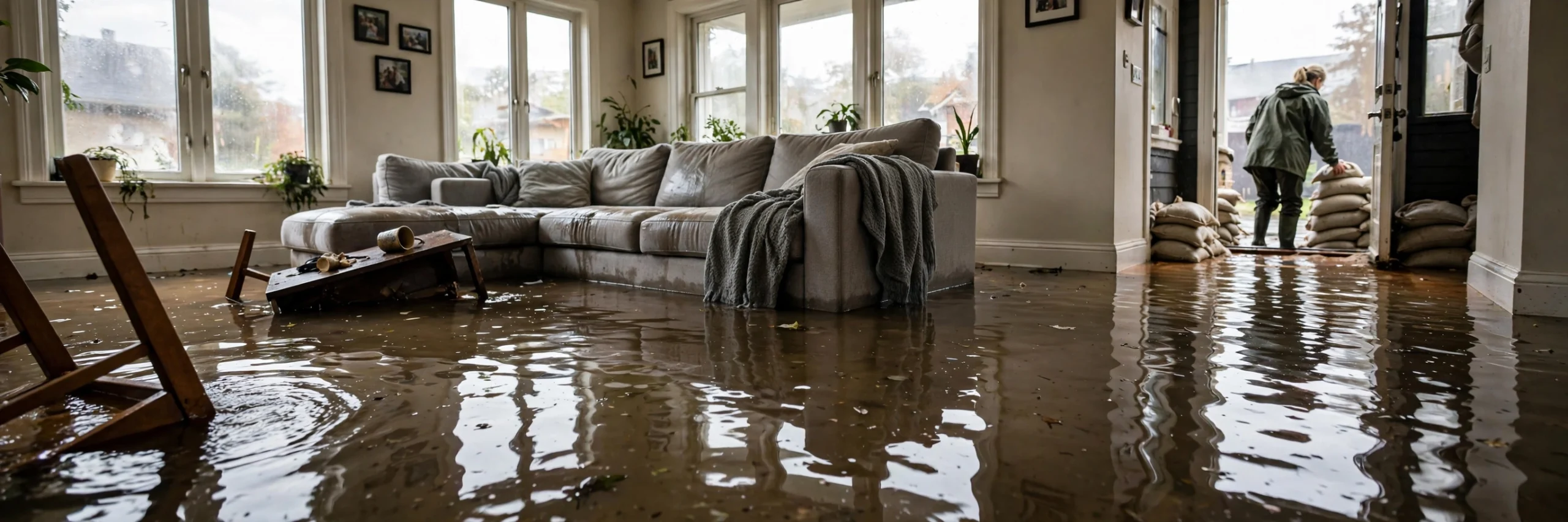
You walk into the laundry room and your socks are wet. Or you wake up to the sound of dripping that should not be there. However you discover it, water damage has a way of turning a normal day upside down in minutes.
Here is the good news: what you do in the first hour matters more than anything else. Fast, calm action can be the difference between a quick cleanup and a five-figure repair bill. This checklist walks you through exactly what to do, in order, so you protect your family, your home, and your insurance claim.
1. Make safety your first move
Before you grab a mop, stop and look around. Water and electricity are a dangerous pair. If water is near outlets, appliances, or your breaker panel, do not step into it. Go to your electrical panel and shut off power to the affected area first. If you cannot reach the panel safely, call an electrician before doing anything else.
Think about where the water came from. Clean water from a supply line is one thing. Water from a backed-up drain, a toilet overflow, or flooding from outside can carry bacteria and contaminants. If the water looks dirty or smells bad, keep kids and pets away and avoid touching it with bare skin. Floodwater from outdoors is never safe to wade through, and Ready.gov’s flood guidance is clear that even six inches of moving water can knock an adult down.
Also check the ceiling. A sagging, bulging ceiling full of water can collapse without warning. If you see one, stay out from under it and call a professional.
2. Stop the water at its source
Once everyone is safe, your next job is to stop more water from coming in. Every minute counts here.
- Burst pipe or leaking supply line: turn off the main water shutoff valve. It is usually near where the water line enters your house, in a basement, crawl space, or utility closet. Turn it clockwise until it stops.
- Leaking appliance: shut off the valve behind the washing machine, dishwasher, or fridge. Then unplug the appliance if you can do so safely.
- Roof leak during rain: you cannot fix the roof in a storm. Place a bucket under the drip and move valuables away. A tarp goes on only after the rain stops and it is safe to get on the roof.
- Toilet or drain overflow: turn the shutoff valve behind the toilet clockwise. Do not keep flushing to test it.
- Water coming from outside: sandbags or towels at doorways can slow it, but if flooding is rising, leave and call for help instead of fighting it.
If you have never touched your main shutoff valve, find it today, before you need it. Valves that sit unused for years can seize up, and discovering that during an emergency is a bad surprise.
3. Document everything before you clean up
This step feels wrong when water is spreading, but it protects your wallet. Insurance adjusters need to see the damage as you found it. Take photos and video of every affected room: walls, floors, ceilings, furniture, and the source of the water if you can identify it. Capture wide shots and close-ups. Narrate what you are filming so the timeline is clear.
Write down the time you discovered the damage and what you did about it. Save receipts for anything you buy in response, like fans, tarps, or a wet vacuum. Most policies require you to take reasonable steps to prevent further damage, and they reimburse those emergency costs, but only if you can show them.
Do not throw away damaged items yet. Move ruined carpet padding or soggy boxes aside, but keep them until the adjuster has seen them or given you written permission to dispose of them.
4. Call your insurance company
Call sooner rather than later, even if you are not sure the damage is covered. Most policies have strict deadlines, and waiting can give the insurer a reason to deny the claim. When you call, stick to the facts: when you found the damage, where the water came from, and what areas are affected.
Ask three specific questions and write down the answers: What is my claim number? What is my deductible? Do you need me to use a preferred restoration contractor, or can I choose my own? Some policies let you hire anyone; others penalize you for going outside their network.
Do not agree to a recorded statement about fault or cause until you have had time to think. Just report the damage. If the damage looks major, this is also the moment to start thinking about professional help, since water damage restoration costs climb fast when drying is delayed.
5. Start removing water and drying things out
Standing water needs to go now. For small amounts, towels, a mop, and a wet/dry vacuum do the job. For several inches of water, you will want a pump or a professional extraction crew. The goal is simple: the less time water sits, the less damage it does.
Once the bulk water is up, start airflow immediately. Open windows if the outside air is dry, point fans at wet walls and floors, and run a dehumidifier if you have one. Pull up wet area rugs and move them outside or to a dry room. If carpet is soaked through the padding, peel back a corner to check; padding acts like a sponge and usually needs to go. For a realistic sense of the timeline ahead, read our guide to how long the full restoration process takes, from first call to final walkthrough.
There is a clock running here. The EPA notes that mold can begin growing on damp materials within 24 to 48 hours, and their guide to mold and moisture stresses that fast drying is the single best prevention. Anything still damp after two days is a mold risk.
6. Move and protect what you can
While things dry, rescue your belongings. Move furniture off wet carpet onto dry flooring, or put aluminum foil or wood blocks under the legs to prevent staining and swelling. Roll up dry rugs from adjacent rooms before moisture migrates. Carry important papers, electronics, and sentimental items to a dry area upstairs or in another room.
For walls, check how far the water wicked upward. Drywall absorbs water like a wick, and damage often extends higher than it looks. If you are unsure how bad it is behind the paint, read our guide to the signs of water damage in walls so you know what to look for in the coming days.
Prop up wet cushions and mattresses so air circulates around them. Open closet and cabinet doors in affected areas. The theme is airflow everywhere.
7. What not to do in the first hour
Panic leads to mistakes. A few things to avoid:
- Do not use a regular household vacuum on standing water. It is an electrocution risk and will destroy the vacuum.
- Do not turn on ceiling fans or lights in rooms with wet ceilings until an electrician clears them.
- Do not assume the damage is minor because the surface looks dry. Water hides inside walls and under floors.
- Do not start tearing out drywall or flooring before documenting and calling your insurer, unless it is needed to stop active water flow.
- Do not ignore a musty smell that shows up days later. That is often the first sign of mold growing where you cannot see it.
Frequently Asked Questions
Should I call a restoration company or my insurance first?
Call your insurance first to open the claim and learn your coverage, then call a restoration company. In a true emergency with active flooding, do both: call a 24/7 restoration crew while a family member calls the insurer. Most reputable companies work directly with insurance and know the documentation adjusters want.
How fast do I need to act to prevent mold?
As fast as possible. Mold can start growing within 24 to 48 hours on wet drywall, wood, and fabric. That does not mean you will see mold in two days, but the process starts that quickly. Thorough drying within the first day or two is your best defense.
Will my homeowners insurance cover this?
It depends on the cause. Sudden and accidental damage, like a burst pipe or an appliance failure, is usually covered. Gradual leaks you neglected, and flooding from outside, are typically not covered by standard policies. When in doubt, file the claim and let the adjuster decide; the call itself costs you nothing.
Can I handle water damage cleanup myself?
Small, clean-water incidents, like a minor supply line leak you caught quickly, are often fine to DIY with a wet vacuum, fans, and a dehumidifier. Call professionals for contaminated water, flooding, large areas, or anything involving drywall that stayed wet for more than a day or two.
What should I do if water is coming through my ceiling?
Place a bucket underneath, move furniture and electronics away, and poke a small hole in the center of any bulge with a screwdriver to let trapped water drain in a controlled way. Then shut off the water source above if you can find it. Do not stand directly under a sagging ceiling.
What to do next
You made it through the first hour. Over the next 24 to 48 hours, keep the drying equipment running, check in with your adjuster, and get at least two quotes if you are hiring a restoration company. Watch walls and ceilings for new stains or bubbling paint, which signal moisture is still trapped inside.
If the bill worries you, our full breakdown of water damage restoration costs will help you understand what is reasonable before you sign anything. Fast action now saves money later, and you have already done the hardest part: starting.