

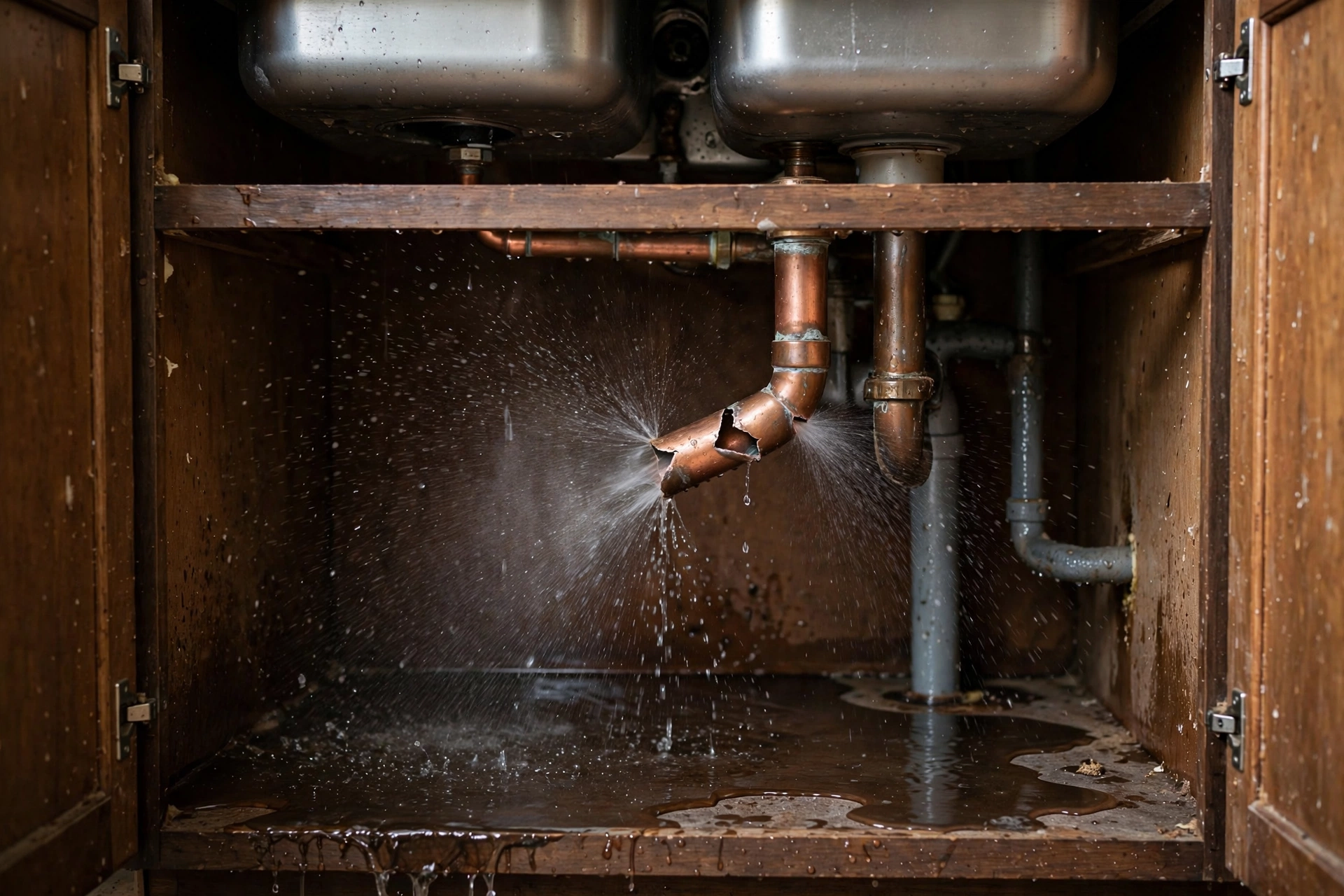
It is 2 a.m. in January, you hear rushing water inside a wall, and by morning the hallway carpet squishes under your feet. A pipe burst overnight. As the plumber works, the bigger question surfaces: does insurance cover a burst pipe, or is this entire mess coming out of your savings?
For most homeowners, the news is good. A sudden burst pipe is one of the clearest examples of the sudden and accidental damage that standard homeowners policies are built to cover. But the fine print has exceptions, and a few common situations can shrink or sink your claim. Here is what policies actually say.
The short answer
Yes, standard homeowners insurance almost always covers the water damage caused by a burst pipe, as long as the burst was sudden and accidental. That means soaked drywall, ruined flooring, damaged cabinets, and the cost of drying everything out are generally covered, minus your deductible.
There is an important split to understand, though. The policy covers the damage the water caused, but it usually does not pay to replace the burst pipe itself if the pipe failed from age or wear. Think of it this way: insurance pays for the flood in your kitchen, not for the ten feet of corroded pipe that started it. Our overview of standard water damage coverage explains this sudden-versus-gradual logic in more detail.
What sudden and accidental really means
Insurance policies use the phrase sudden and accidental to separate covered events from maintenance problems. A pipe that bursts without warning during a cold snap is sudden. A pipe that dripped for eight months, stained the ceiling, and finally gave way is not, at least in the insurer’s eyes.
Adjusters look for clues about timing. Fresh water staining with sharp edges suggests a recent event. Layered stains, warped wood, and musty odors suggest a long-term leak. This is why your own timeline matters so much. Note when you first heard or saw water, when you shut off the main, and when you called for help. Same-day action on a genuine surprise is the strongest position you can be in.
The pipe itself vs. the damage it caused
This is the distinction that confuses the most homeowners. A typical policy has two relevant parts. The dwelling and personal property coverage pays for water damage to your home and belongings. A separate exclusion for wear and tear means the insurer will not pay to replace the failed pipe or fitting itself when age or corrosion caused the failure.
In practice, the pipe is the cheap part. Replacing a section of copper or PEX might cost $200 to $500. Repairing everything the water touched can run $5,000 to $25,000 or more. So even though the pipe itself is usually excluded, the claim is still very much worth filing. Just do not be surprised when the adjuster’s estimate includes drywall, flooring, and drying, but not the plumbing repair.
Common exclusions that can sink a burst pipe claim
Several situations can turn a normally covered claim into a denial:
- Frozen pipes and negligence: if a pipe froze because you left the heat off or the home was vacant without winterization, the insurer may argue you failed to protect the property. Most policies require you to maintain heat or drain the system when temperatures drop.
- Vacant homes: many policies limit or exclude water damage if the home was vacant for 30 to 60 days. A burst pipe in an empty house is one of the most commonly denied scenarios.
- Known issues ignored: if a plumber warned you about corroded pipes last year and you did nothing, the insurer can frame the burst as a maintenance failure.
- Gradual leaks: a pinhole leak that sprayed inside a wall for months before bursting looks sudden at the end but was gradual in reality, and adjusters are trained to spot the difference.
If any of these apply, do not assume the claim is hopeless. Get a plumber’s written opinion on the cause and timeline, review the exact exclusion language, and push back in writing. Denials based on thin evidence get reversed more often than people think.
Your duty to prevent frozen pipes
Policies generally expect reasonable care during cold weather. That means keeping the thermostat at a minimum temperature, usually around 55 degrees, even when you travel. Open cabinet doors under sinks on exterior walls during deep freezes, let faucets drip slightly in extreme cold, and know where your main shutoff valve is before you need it.
For winter trips, the safest move is shutting off the main water supply and draining the lines, or having someone check the house every couple of days. A $20 smart water sensor near the water heater and under sinks can alert your phone the moment water appears. Insurers look kindly on these steps, and they cost far less than a deductible.
How to file a burst pipe claim
Speed and documentation win these claims. Shut off the water first, then photograph everything before cleanup begins: the burst location, standing water, soaked materials, and damaged belongings. Call your insurer the same day and ask about emergency mitigation coverage, which pays for water extraction and drying while the claim is processed.
Get a plumber out quickly and ask for a written statement describing what failed and why, in plain terms. Keep every receipt, from the plumber to the restoration crew to the hotel if you had to leave. Do not throw away the failed pipe section until the adjuster has seen it or photographed it. Our step-by-step guide to filing a water damage claim walks through the whole process.
Mold after a burst pipe
Mold can start growing on damp drywall within 24 to 48 hours, which means a burst pipe claim often includes a mold component. When mold follows a covered sudden event like a burst pipe, remediation is usually covered as part of the same claim, subject to your policy’s mold sublimit. Read our breakdown of mold remediation coverage to understand the caps, which commonly range from $1,000 to $10,000.
One related gap to know about: if water backs up through a floor drain while the pipe incident is happening, that is a separate peril. Standard policies exclude sewer backup unless you carry an endorsement, so check our explainer on sewer backup coverage if drains are involved.
Note: This is general information, not legal or insurance advice. Coverage depends on your specific policy and state rules, so check with your insurer or agent.
Frequently Asked Questions
Will insurance pay to replace the burst pipe itself?
Usually not, if the pipe failed due to age, corrosion, or wear. Policies cover the resulting water damage but exclude the cost of repairing the failed system itself. If the pipe burst because of a covered event, like freezing despite reasonable precautions, some policies are more generous, so read your exclusions.
What if the pipe burst while I was on vacation?
Short trips are generally fine as long as you maintained heat. Longer absences can trigger vacancy exclusions, often after 30 to 60 days. Having someone check the home regularly and keeping the heat on strengthens your position considerably.
Does insurance cover a burst pipe in a rental property I own?
A landlord policy (DP-3) typically covers burst pipe water damage to the structure similarly to a homeowners policy. Tenant belongings are not covered under your policy. The same sudden-versus-gradual rules apply, so document the timeline carefully.
How fast do I need to report a burst pipe?
As soon as reasonably possible, ideally the same day. Policies require prompt notice, and delays give the insurer room to argue the damage worsened unnecessarily. If you are dealing with a major flood event, flood safety resources and the EPA’s flooding guidance cover immediate safety steps while you sort out the claim.
Can a burst pipe claim be denied?
Yes, most often for vacancy, negligence during freezing weather, or evidence the leak was gradual. If you believe the denial is wrong, request it in writing with the cited policy language and consider an independent plumber’s opinion. FEMA may also offer assistance if the damage came from a federally declared disaster.
What to do next
A burst pipe is one of the most straightforward claims in homeowners insurance: sudden failure, clear cause, covered water damage. Protect your position by acting fast, documenting everything, and getting the cause in writing from your plumber. Then file with confidence using our guide to filing a water damage insurance claim, and check your policy’s mold sublimit while you are at it, since fast drying in the first 48 hours is what keeps a pipe claim from becoming a mold claim too.