

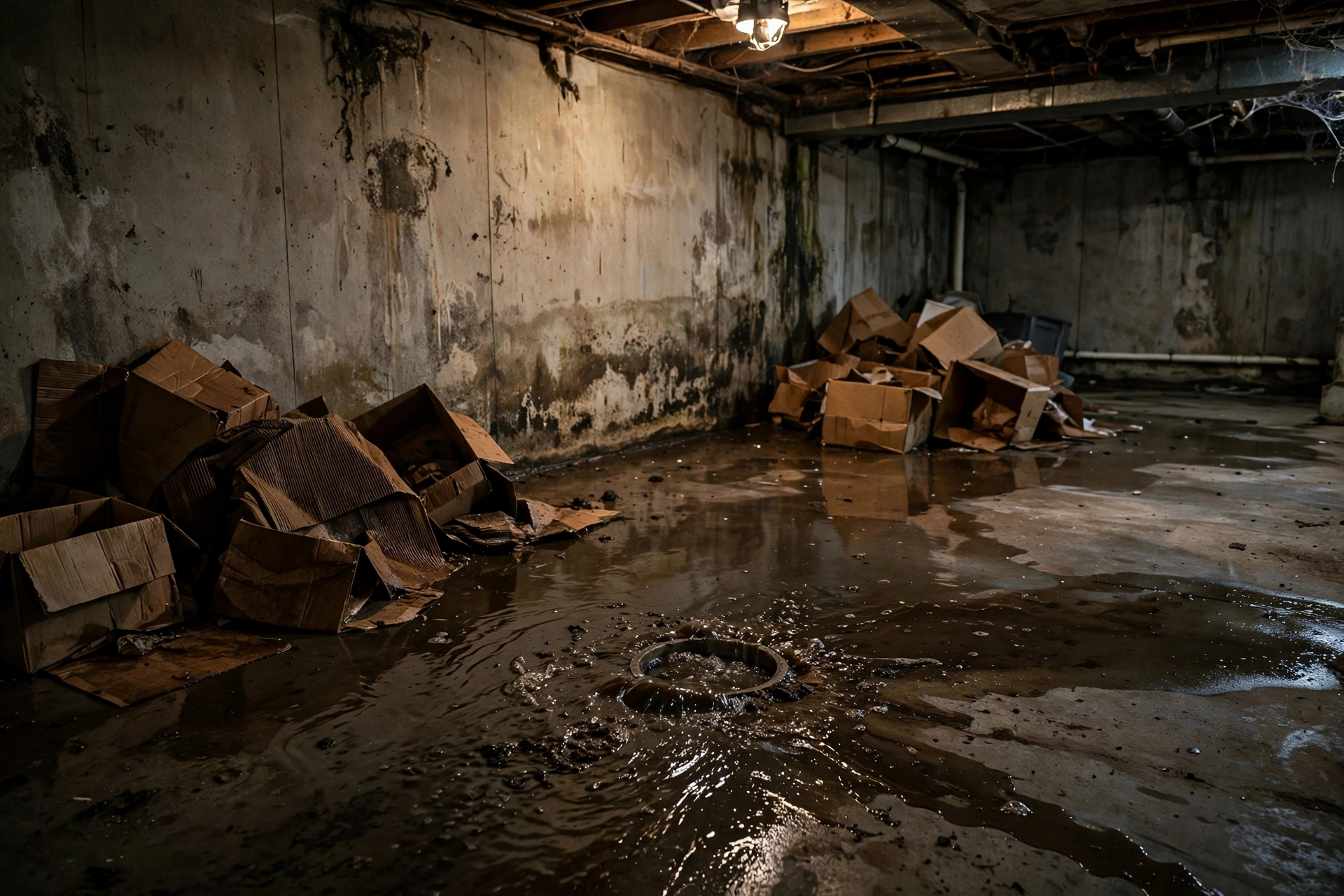
You hear gurgling from the basement drain, then dark water starts rising through the floor drain and the shower. It smells awful, it is spreading fast, and it is the kind of damage most homeowners assume their insurance covers. Usually, it does not. Sewer backup is one of the most common exclusions in standard homeowners policies, and discovering that after the fact is a brutal surprise.
The good news is that coverage is available as an inexpensive add-on, and if you already have it, the claims process is straightforward. This guide explains how sewer backup endorsements work, what they cost, what they will and will not pay for, and exactly what to do in the hours after a backup.
The short answer
No, a standard homeowners insurance policy does not cover sewer backup. The water that backs up through sewers, drains, or sump pump overflows is excluded under the standard water damage exclusions. Coverage only exists if you added a water backup and sump overflow endorsement, sometimes called a sewer backup rider, to your policy.
This exclusion surprises people because the damage looks like any other water loss. But insurers classify it separately from both plumbing leaks and flooding. A burst pipe claim is covered because the water came from your plumbing system. A sewer backup is excluded because the water came up through the drainage system, which is a different peril in the policy’s eyes. Our overview of standard water damage coverage maps out these distinctions.
What the sewer backup endorsement covers
The endorsement, which most insurers sell as “water backup and sump pump overflow coverage,” adds back protection for damage caused by water backing up through sewers, drains, or sumps. It typically covers:
- Damage to walls, flooring, and finishes in the affected area
- Damaged personal property, like furniture, electronics, and stored belongings
- Cleanup and sanitizing costs, which run high for sewage because it is Category 3 black water
- Damage from sump pump failure or overflow during the same event
Coverage limits usually range from $5,000 to $25,000, though some insurers offer up to $50,000 or allow you to match higher limits. That sounds modest until you compare it to the alternative, which is paying the entire bill yourself. A moderate sewage backup cleanup with restoration commonly costs $3,000 to $10,000, and severe cases with finished basements can exceed $20,000.
What the endorsement costs
This is one of the cheapest add-ons in homeowners insurance. Most homeowners pay $40 to $100 per year for $5,000 to $10,000 of backup coverage, with higher limits costing proportionally more. Compared to the average claim, which runs into the thousands, it is among the best value endorsements you can buy.
Price and availability vary by insurer, state, and your home’s risk factors. Homes in areas with aging municipal sewer systems or a history of backups may pay more, and a few insurers cap the limit in high-risk zip codes. When you call your agent, ask specifically for the water backup endorsement by name and confirm the limit in writing. Do not assume it was included because you asked for “full coverage,” a phrase that means nothing in policy language.
What is NOT covered, even with the endorsement
The endorsement has its own boundaries. It generally does not cover:
- The cost to repair or replace the failed sewer line itself, which is a maintenance issue
- Damage from flooding, meaning rising exterior water, which needs separate flood insurance
- Backups caused by your own negligence, like flushing items that clog the line
- Mold remediation beyond the endorsement’s limit, since the cap applies to the whole event
- Damage that happened before the endorsement was added, even if you discover it later
Note the interaction with flood coverage. If heavy rain both floods your street and backs up your sewer, you could need both a flood policy and the backup endorsement, with each covering its portion. Sorting that out after the fact is painful, which is why understanding both policies before storm season matters.
What to do in the hours after a backup
Sewage is Category 3 black water, meaning it can carry bacteria, viruses, and parasites. Safety comes before paperwork:
- Stay out of the water. Keep children and pets away, shut off power to the affected area if water nears outlets, and wear waterproof boots and gloves if you must enter.
- Stop the source if you can do so safely. Avoid running water, flushing toilets, or using drains until a plumber confirms the line is clear.
- Call a plumber and a restoration company. Sewage cleanup requires professional sanitizing, not just a wet vacuum. Ask whether they handle insurance claims.
- Document everything. Photograph the water line on walls, damaged items, and the affected rooms before anything is removed.
- Call your insurer the same day. Confirm your backup endorsement and limit, ask about emergency mitigation coverage, and get a claim number. Keep claim filing deadlines in mind, since waiting weakens your position.
Do not try to save porous materials like carpet padding, upholstered furniture, or cardboard boxes that soaked up sewage. They cannot be reliably sanitized and most adjusters will not pay to clean them twice. Our guide to filing a water damage insurance claim covers the documentation that gets these claims paid.
Preventing the next backup
A backwater valve is the single best investment against repeat backups. Installed on your main sewer line, it lets wastewater flow out but slams shut when flow reverses, keeping municipal surges out of your basement. Installation typically costs $1,500 to $3,500, and some insurers offer discounts for homes that have one. Some municipalities even offer rebates.
Other smart steps: never pour grease down drains, install a sump pump with battery backup if your basement is prone to water, and consider a smart water sensor near floor drains that alerts your phone at the first sign of rising water. If your neighborhood has a history of backups, ask your city about the age and capacity of the local sewer mains. For broader flood readiness, Ready.gov’s flood pages and the EPA’s flooding resources are worth bookmarking, and FEMA outlines assistance options when disasters overwhelm local systems.
Note: This is general information, not legal or insurance advice. Coverage depends on your specific policy and state rules, so check with your insurer or agent.
Frequently Asked Questions
How do I know if I already have sewer backup coverage?
Check your policy’s declarations page and endorsements for terms like water backup, sewer backup, or sump overflow. If you do not see it, you almost certainly do not have it. A five-minute call to your agent will confirm, and adding it mid-policy is usually possible.
Is a sump pump failure covered without the endorsement?
No. Sump pump overflow and failure fall under the same exclusion as sewer backup. The water backup endorsement is what covers both. If your basement depends on a sump pump, this endorsement is close to essential.
Does the endorsement cover the cost of fixing the sewer line?
No. It covers the damage the backup caused to your home and belongings, not the repair of the failed line itself. Separate service line coverage, another inexpensive endorsement, covers buried pipes between your home and the street.
Can I add the endorsement right after a backup happened?
You can add it for the future, but it will not cover damage that already occurred. Insurers also impose waiting periods in some states, so the best time to add it is before you ever need it.
What if the backup was caused by the city’s sewer main?
You may have a claim against the municipality, but those are difficult and slow, with many cities protected by notice requirements and damage caps. Your endorsement pays first and lets your insurer pursue the city through subrogation if it chooses.
What to do next
Sewer backup is the coverage gap most likely to blindside an otherwise well-insured homeowner. Check your policy today for the water backup endorsement, and if it is missing, call your agent this week. Forty to one hundred dollars a year is a small price to avoid a five-figure sewage cleanup paid from savings. And if a backup has already happened, start with our guide to filing a water damage insurance claim so every photo, receipt, and phone call works in your favor.