

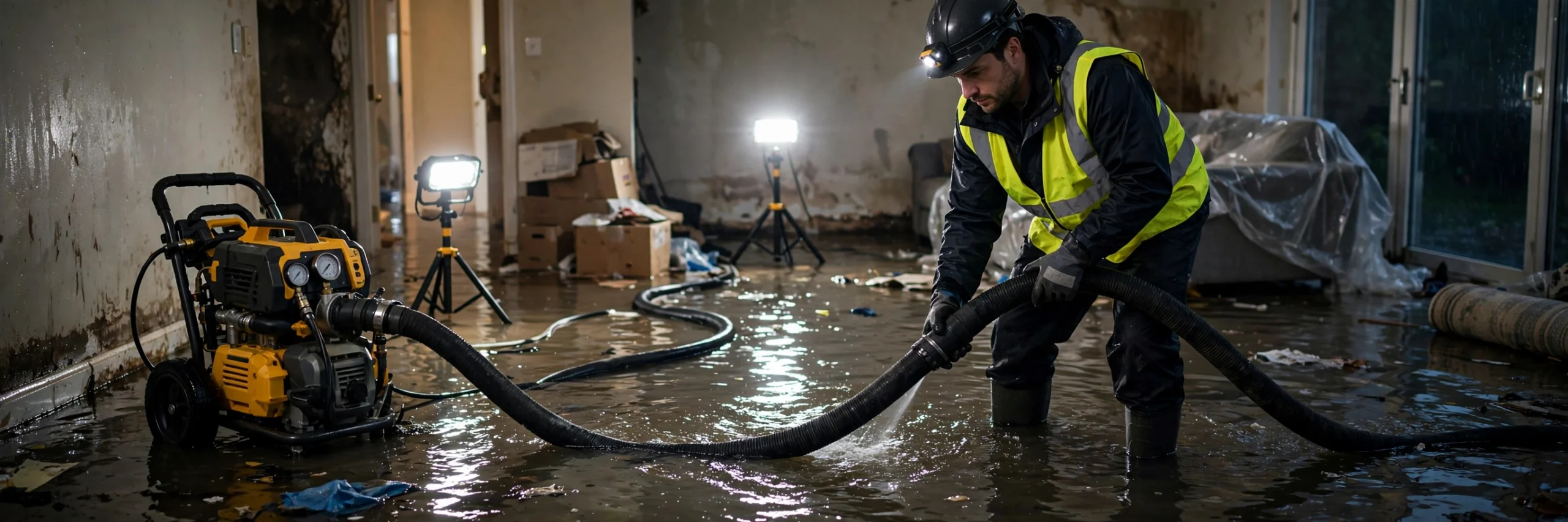
Water is rising and you need it gone now. Emergency water extraction is the first paid step in almost every water damage job, and it is the one most worth paying for quickly. Every hour of standing water means deeper absorption into floors, walls, and framing, and a bigger bill for everything that follows.
Professional water extraction typically costs $1,000 to $4,000, with most homeowners paying around $2,000 for a standard job. Simple pump-outs start near $500. Large or contaminated jobs run past $5,000. This guide explains how pump-out services price their work, what raises the bill, and when you can handle it yourself. For what comes after the water is gone, see our full restoration cost breakdown.
How extraction companies price the job
Most companies use one of three pricing models, sometimes blended:
- Flat emergency rate: $500 to $1,500 for the initial visit, covering the first hour or two of extraction. Common for after-hours calls.
- Per square foot: $3 to $7 per square foot for extraction from carpeted or hard floors. A 500 square foot area runs $1,500 to $3,500.
- Hourly: $150 to $300 per hour per crew, with most jobs taking 2 to 6 hours of active extraction.
On top of the base, expect an emergency or after-hours surcharge of $150 to $400 if you call at night or on a weekend. Nobody likes the surcharge, but waiting until morning to save $250 while water soaks into subflooring is false economy.
What raises or lowers your bill
- Water volume and depth. Two inches across a basement costs far less to extract than two feet. Depth matters more than most people expect because it dictates pump size and time.
- Water category. Clean water is the baseline. Gray water adds disinfection steps. Black water (sewage, floodwater) adds protective equipment, special disposal, and often doubles the price.
- Flooring type. Hard surfaces extract fast. Carpet and pad hold gallons per square yard and take longer, and the pad usually gets removed rather than dried.
- Access. A walk-out basement with a straight shot for hoses is cheap. A third-floor condo with elevator-only access is not.
- How fast you called. Water migrates into walls and under flooring within hours. Same-day extraction is a smaller job than extraction after three days of soaking.
Extraction vs drying: what you are actually buying
This distinction matters because quotes often blur it. Extraction removes standing and absorbed water using pumps and vacuums. Drying (technically “structural drying”) is the multi-day follow-up with dehumidifiers and air movers that brings moisture levels in materials back to normal.
A $1,500 extraction quote might not include the 3 to 5 days of drying equipment rental and monitoring that follows, which can add $500 to $1,500. Always ask whether the quote covers extraction only or extraction plus drying. Reputable firms follow IICRC standards that define both phases and verify dryness with meters rather than touch.
The equipment pros use (and why it beats rentals)
Truck-mounted extraction units pull far more water per pass than any rental. Weighted extraction tools compress carpet and squeeze water from the pad. Submersible trash pumps move thousands of gallons per hour for deep flooding. Thermal imaging cameras find water trapped behind walls and under floors that no visual inspection catches.
None of this means DIY extraction never works. For a clean-water incident caught early, a rented submersible pump and a big wet-vac can handle the standing water. What rentals cannot do well is verify the job: without a moisture meter and knowledge of drying science, DIYers routinely leave wall cavities and subfloors damp. The EPA’s guidance gives 24 to 48 hours before mold starts, which is exactly the window where professional speed pays for itself.
Truck-mounted vs portable extraction units
When a company says “truck-mounted,” it means the extraction power comes from the van parked outside, with hoses run into your house. These units pull significantly more water per pass than anything portable, which matters on saturated carpet where each pass removes a fraction of what is held. Truck-mounts also run hotter water for cleaning, though heat matters less for pure extraction than for the sanitizing step after.
Portable extractors are self-contained machines rolled into the room. They are weaker per pass but can reach places hoses cannot: upper floors, tight condos, buildings where parking a van close enough is impossible. A good company carries both and chooses based on your layout. If a contractor shows up with only a shop vac for a whole-house flood, that is a sign to call someone else.
For deep standing water, neither extractor is the first tool. Submersible trash pumps move thousands of gallons per hour and handle debris that would choke an extractor. Expect the crew to pump first, extract second, in that order.
Questions to ask before the crew arrives
You will probably make this call stressed and in a hurry. Ask these five things before anyone rolls a truck:
- What is your response time right now, and is there an after-hours surcharge?
- Do you charge flat rate, per square foot, or hourly for extraction?
- Does the quote include structural drying and monitoring, or is that billed separately?
- Do you document moisture readings and photos for insurance claims?
- Do you bill my insurer directly, or do I pay and get reimbursed?
The answers tell you almost everything about how the company operates. Vague pricing, no documentation process, and cash-only demands are all reasons to keep dialing. While you wait, move valuables and electronics to dry ground, lift curtains and furniture skirts, and take photos of everything. Do not wade into water that may have reached electrical outlets.
DIY extraction: costs and limits
DIY pump-out costs $100 to $300 total: a submersible pump rental at $40 to $75 per day, a wet-vac, and disposal bags. It is reasonable when the water is clean, shallow (a few inches), and you start within hours.
Stop and call pros when the water is contaminated, deeper than 6 inches across a large area, has been sitting more than a day, or has wicked into walls. Also call when the source is still active and you cannot stop it. Pumping a basement while water keeps flowing in is an expensive treadmill.
What happens after extraction
Extraction is step one of four. After the water is out: technicians remove unsalvageable materials (pad, wet drywall, swollen particleboard), set drying equipment for several days with daily moisture readings, then clean and disinfect. Only then does repair begin: new drywall, paint, flooring.
Ceiling jobs follow the same sequence from above. If your extraction call involves an upstairs leak raining into the floor below, our upstairs leak ceiling guide walks through the repair-or-replace decision, and our ceiling repair cost guide prices the rebuild.
Insurance and extraction costs
Most homeowners policies cover emergency extraction for sudden events like burst pipes, minus your deductible. Insurers actually like fast extraction because it limits the total claim. Call your insurer’s emergency line before or right after the extraction company arrives, document everything with photos and video, and keep every receipt. If mold develops later because drying was incomplete, our mold remediation pricing guide shows what that second phase costs.
While you wait for the crew
Response times run 1 to 4 hours depending on the hour and the weather. Use that window productively. Move electronics, important papers, and valuables to dry rooms. Lift furniture onto blocks or foil-wrapped wood pieces to prevent staining and wicking. Pull up the edges of area rugs. Take timestamped photos and video of every affected room for your records and your insurer.
Do not run your heating or air conditioning if water may have entered the ductwork, since the system will spread contaminated air and moisture through the house. Do not use a household vacuum on standing water. If the water is rising near electrical outlets or the breaker panel, stay out of the water entirely and wait for professionals. Your safety is worth more than anything the water is touching.
Frequently Asked Questions
How much does emergency water extraction cost?
Typically $1,000 to $4,000, averaging around $2,000. Small jobs start near $500, while large or sewage-contaminated extractions exceed $5,000. After-hours surcharges add $150 to $400.
How long does water extraction take?
Active extraction takes 2 to 6 hours for most residential jobs. Deep flooding in a large basement can take a full day. Structural drying afterward takes another 3 to 5 days.
Can I pump out my basement myself?
For shallow clean water caught early, yes, with a rented submersible pump. Never pump a basement where the water is above electrical outlets, and never DIY sewage or floodwater. If the foundation is surrounded by saturated soil, pumping too fast can cause structural pressure problems, another reason deep floods belong to pros.
Will extraction alone prevent mold?
No. Extraction removes liquid water, but materials stay damp enough for mold without the drying phase. The EPA’s 24 to 48 hour mold window counts from when materials got wet, not from when standing water was removed.
Do extraction companies work with insurance?
Most established firms do. They document moisture readings and take photos that support your claim, and many bill the insurer directly. Confirm this before work starts, not after.
Bottom line
Budget $1,000 to $4,000 for professional water extraction, call fast rather than shopping around for hours, and make sure the quote separates extraction from drying. Speed is the real discount here: every hour of standing water you eliminate is money you do not spend on the repairs that follow.