

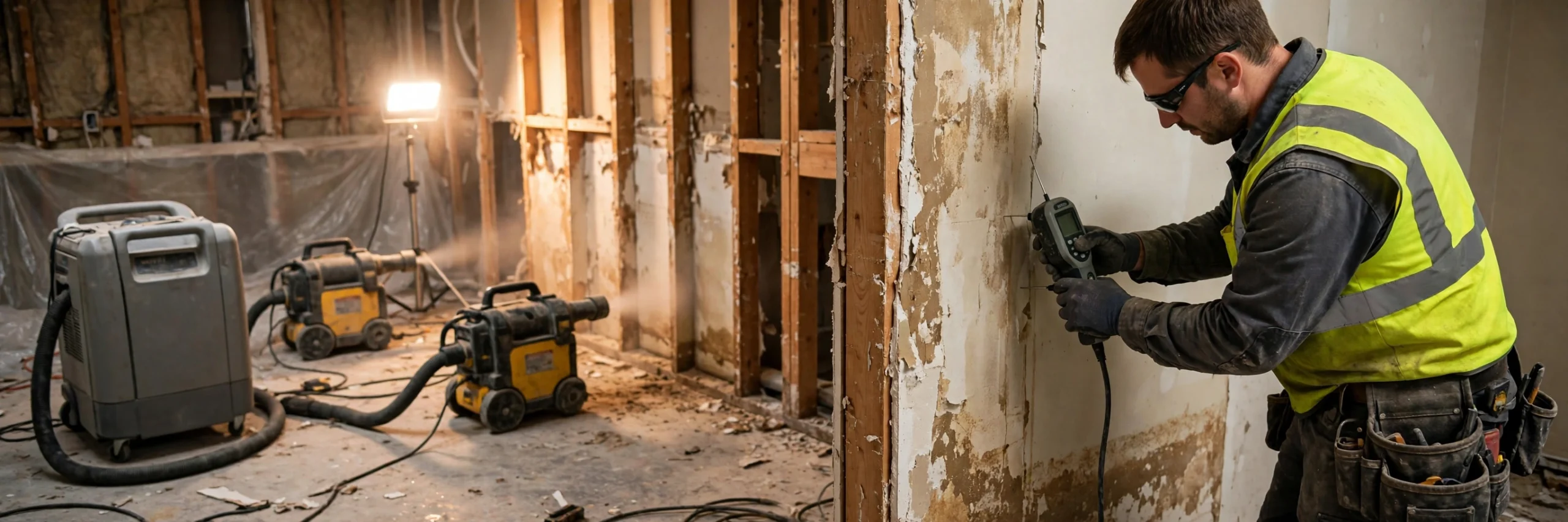
“How long will this take?” is one of the first things homeowners ask after water damage, and it is a fair question. You want your home back. The frustrating answer is that timelines vary widely, but there are realistic ranges for every type of job, and understanding the phases helps you plan.
Most professional restorations take between 3 and 14 days from the first call to a fully dry home, with reconstruction adding more time after that. Here is how that breaks down and what can speed things up or slow them down.
The short answer: typical timelines by scenario
- Minor clean-water leak (caught fast): 2 to 4 days. Extraction, a few days of drying, done.
- Moderate damage (one or two rooms): 5 to 10 days including drying and minor repairs.
- Major flooding or sewage: 1 to 3 weeks for dry-out and remediation, plus reconstruction time.
- Whole-house flooding: 3 to 6 weeks or more before the home is fully livable.
- Reconstruction after dry-out: adds 1 to 4 weeks depending on how much was demolished.
These assume professionals with commercial equipment. DIY drying with household fans takes significantly longer, which is one reason pros are worth it for anything beyond a minor spill.
Phase 1: Emergency response (hours)
A good restoration company answers 24/7 and typically arrives within 1 to 4 hours of your call. The first visit is about stopping the damage: shutting off water, extracting standing water, and setting up initial equipment.
What you do before they arrive matters. If you just discovered the damage, follow our first-hour checklist to handle safety, documentation, and initial water removal. Every hour of standing water adds drying time later.
Phase 2: Inspection and assessment (a few hours)
Technicians map the full extent of the damage using moisture meters and thermal cameras. This is when hidden damage gets found: water inside wall cavities, under flooring, or wicked up behind baseboards. You cannot plan a timeline until you know the real scope, which is why this step cannot be skipped.
Expect this assessment to take 1 to 3 hours for an average home. The crew should explain their findings and give you a written plan before major work begins. If your walls already showed warning signs, our guide to the signs of water damage in walls explains what the meters are confirming.
Phase 3: Water extraction (hours to a day)
Standing water comes out fast with the right equipment. Portable extractors handle small jobs in an hour or two. Truck-mounted units and submersible pumps clear flooded basements in half a day to a full day. Learn what this phase involves for the toughest common scenario in our flooded basement drying guide.
Extraction speed depends on depth and access. Two inches across a basement floor goes quickly. Water trapped under cabinets, inside walls, or beneath flooring takes longer to reach.
Phase 4: Drying and dehumidification (3 to 7 days)
This is the longest phase and the one homeowners underestimate. Commercial air movers and dehumidifiers run 24 hours a day, typically for 3 to 5 days for moderate damage and up to a week or more for severe saturation.
Technicians return daily to take moisture readings. Materials are not considered dry until readings hit target levels, not just when surfaces feel dry to the touch. Hardwood floors, thick plaster, and concrete take longer than drywall. Cool or humid weather slows the process; the EPA recommends keeping indoor humidity between 30 and 50 percent for healthy indoor air, and drying equipment works toward exactly that.
This phase cannot be rushed without consequences. Pulling equipment early leaves trapped moisture that becomes a mold problem weeks later. The EPA’s mold and moisture guidance is built around one core idea: thorough drying now prevents mold later.
Phase 5: Cleaning, sanitizing, and mold prevention (1 to 3 days)
Once dry, affected surfaces get antimicrobial treatment. If mold already started growing during the wet period, this phase becomes full mold remediation, which adds 2 to 5 days. The 24 to 48 hour mold growth window means delays in the earlier phases often show up as extra work here. Our article on how fast mold grows after water damage explains that clock in detail.
Phase 6: Reconstruction (1 to 4 weeks)
Dry-out companies and rebuild contractors are often different crews. Reconstruction replaces whatever was demolished: drywall, insulation, flooring, baseboards, paint. A single room might take a week. Multiple rooms or a finished basement can take a month.
This phase is where most timeline frustration happens, because it depends on contractor scheduling, material availability, and insurance approvals. Get the reconstruction plan in writing before demolition starts so you are not waiting on decisions mid-project.
What causes delays
- Late discovery. Water that sat for days before anyone noticed means deeper saturation and often mold, adding days to every phase.
- Contaminated water. Sewage and floodwater require extra disinfection steps and more demolition.
- Insurance approvals. Waiting on adjuster sign-off before demolition or reconstruction can stall a job for a week or more.
- Hidden damage found mid-job. Opening a wall and finding soaked insulation behind it resets the drying clock for that area.
- Weather. Humid conditions slow drying; storms can delay reconstruction crews.
- Specialty materials. Hardwood floors, plaster walls, and custom cabinetry dry slower and repair slower than standard drywall.
How to keep your project on schedule
- Call a restoration company immediately, not after the weekend. The drying clock starts at discovery.
- Approve the work plan quickly once the assessment is done.
- Keep the equipment running 24/7. Do not turn off dehumidifiers at night to save electricity.
- Stay out of the drying area so technicians can work and readings stay accurate.
- Decide on reconstruction materials early so ordering does not cause gaps.
- Respond to your adjuster’s requests the same day.
How the insurance claim timeline overlaps
While the physical work follows the phases above, your insurance claim runs on a parallel track. The adjuster usually visits within a few days of filing, then takes one to two weeks to issue a decision and initial payment. Contractors often start emergency work immediately and bill as the claim progresses, but reconstruction sometimes waits for the adjuster’s written approval.
You can keep both tracks moving by sending the adjuster your photos, receipts, and the contractor’s line-item estimate the same day you receive them. Delays in paperwork cause more project stalls than delays in drying ever do. If your policy includes loss-of-use coverage, ask about it early so temporary housing is arranged before you need it.
Frequently Asked Questions
Can I stay in my home during water damage restoration?
Usually yes for minor to moderate jobs, though the equipment is loud and the area will be sectioned off. For sewage contamination, major flooding, or whole-house jobs, temporary relocation is often necessary. Ask the crew directly; they assess this on every job.
Why does drying take so many days if the water is gone?
Because water soaks into porous materials. Drywall, wood framing, and concrete hold moisture deep inside long after surfaces look dry. Commercial dehumidifiers pull that deep moisture out gradually, and moisture meters verify it. Rushing this step causes mold.
How long does it take to dry out a flooded basement?
Extraction takes hours; thorough drying takes 5 to 10 days for a typical basement. Finished basements with drywall and carpet take longer than unfinished ones with concrete floors.
Does insurance cover temporary housing during restoration?
Many homeowners policies include “loss of use” coverage that pays for hotel or rental costs if your home is uninhabitable during repairs. Check your policy or ask your adjuster; this is separate from the repair coverage.
What happens if I stop the drying equipment early?
Trapped moisture remains in walls and floors, which almost always leads to mold growth within weeks and can cause wood rot over months. You would end up paying for remediation on top of the original restoration.
What to do next
Plan on 3 to 14 days for the dry-out and remediation, plus reconstruction time if walls or floors were removed. The single biggest factor you control is speed: fast response in the first hours shortens every phase that follows.
If you are staring at standing water right now, start with our first-hour checklist. And if the damage involves a basement, our flooded basement drying guide walks through that specific scenario step by step.