

Two homeowners can suffer identical water damage and receive very different payouts. The difference is rarely luck. It comes down to documentation, timing, and knowing how the claims process actually works. Insurance companies are not charities; their adjusters are trained to settle claims for the smallest defensible amount.
That sounds adversarial, but it does not have to be. Maximizing your payout legally is about being thorough, organized, and persistent. These tips come from how successful claims actually play out, and none of them involve anything dishonest. If you have not filed yet, start with our step-by-step filing guide, then use these strategies to strengthen your position.
Document like your payout depends on it (because it does)
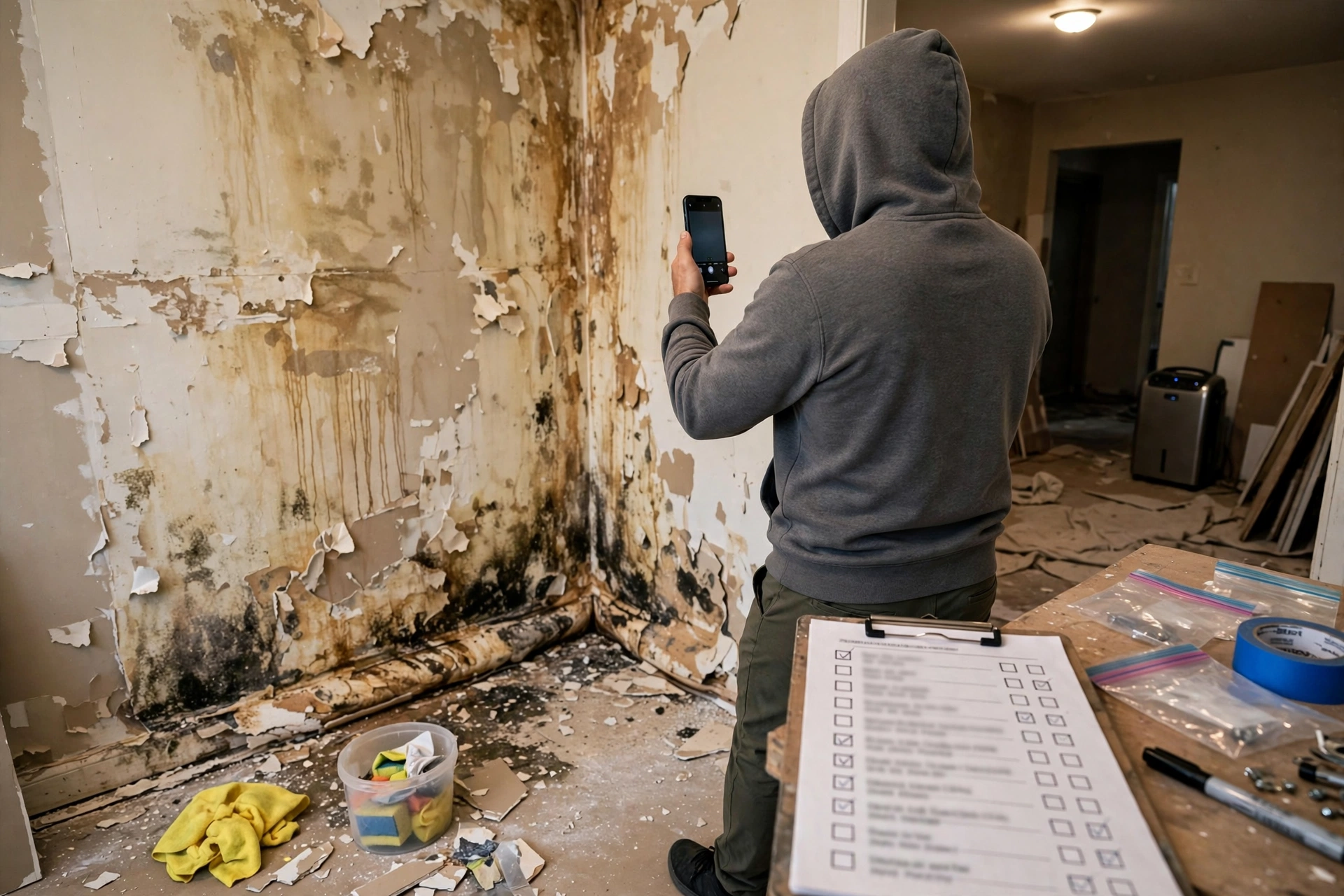
The single biggest factor in claim outcomes is evidence. Adjusters pay for what they can see and verify. Build a documentation package that leaves nothing to imagination:
- Shoot video walkthroughs of every affected area before moving anything, narrating what you see
- Take close-up photos of damage to walls, floors, ceilings, and belongings, with a ruler or coin for scale where helpful
- Photograph the water source itself: the burst pipe, failed hose, or roof damage
- Create a room-by-room inventory listing each damaged item, its age, purchase price, and current replacement cost
- Save receipts for emergency mitigation: tarps, fans, plumber visits, hotel stays
- Log every conversation with your insurer: date, name, and what was said
Store copies offsite or in the cloud. If your phone is damaged or lost, your evidence should survive. This level of documentation takes an hour or two and routinely adds thousands to settlements, because it prevents the adjuster from minimizing or missing items.
Read your policy before the adjuster arrives
Most people have never read their homeowners policy. The adjuster has. That knowledge gap costs claimants money. Before the inspection, find these specifics in your policy documents:
- Covered perils: confirm sudden water damage is covered and note any relevant exclusions
- Mold sub-limit: many policies cap mold remediation at $1,000 to $10,000
- Additional living expenses (ALE): daily and total limits if your home is uninhabitable
- Deductible: know the exact number so you can evaluate offers
- Replacement cost vs actual cash value: this determines whether depreciation is recoverable
- Endorsements: sewer backup, sump overflow, or enhanced water coverage you may have purchased
Understanding what your policy covers before the adjuster explains it to you changes the dynamic completely. You can ask informed questions instead of accepting characterizations at face value.
Mitigate damage immediately and keep every receipt
Your policy obligates you to prevent further damage, and fulfilling that obligation protects your claim. Shut off water, tarp openings, extract standing water, and start drying. Every dollar you spend on reasonable emergency mitigation is typically reimbursable, but only if you can prove it.
Keep receipts for everything: emergency plumber calls, water extraction services, dehumidifier rentals, tarps, cleaning supplies, and temporary lodging. Photograph the emergency work in progress. Insurers reimburse documented mitigation readily; undocumented spending becomes an argument.
One caution: mitigate, do not renovate. Emergency drying and temporary repairs are expected. Permanent repairs before the adjuster’s inspection can reduce your payout, because the insurer cannot verify the original damage. Document first, repair later.
Put everything in writing
Phone calls are convenient and forgettable. After every call with your insurer or adjuster, send a brief email summarizing what was discussed and agreed. This creates a paper trail that matters if disputes arise later.
When the adjuster makes verbal promises (“we’ll cover the hardwood refinishing”), confirm them in writing. When you submit estimates or additional documentation, do it by email so you have delivery proof. If your state allows one-party recording consent, consider recording important calls as well, but written confirmation is the gold standard.
This habit also keeps you organized. Claims can stretch for weeks or months, involving multiple adjusters and contractors. A written record means you never have to rely on memory about who promised what.
Get independent estimates and compare line by line
Never accept the insurer’s estimate as the final word without checking it. Hire two or three licensed restoration contractors for independent written estimates. Insurer estimates are often generated with standardized pricing software that can undervalue local labor or omit scope items.
Compare the estimates against the adjuster’s report line by line. The most commonly missed items include:
- Mold remediation inside wall cavities where water sat beyond 48 hours
- Full drying equipment time (dehumidifiers and air movers for the correct duration)
- Subfloor and insulation replacement, not just surface repairs
- Matching materials: if one wall of a room is replaced, the whole room may need repainting to match
- Code-required upgrades triggered by the repair work
Submit discrepancies in writing with your contractor’s estimate attached. Frame it as a request for correction, not an accusation. Adjusters revise estimates routinely when presented with solid evidence.
Understand how adjusters evaluate claims
Knowing the other side’s playbook helps you prepare. Adjusters look for reasons to reduce payouts that are legitimate from their perspective: pre-existing damage, wear and tear, maintenance neglect, and damage outside the policy period. Your job is to make none of those apply.
Maintenance records help enormously. If you have receipts for a recent roof replacement, plumbing updates, or appliance installations, gather them. They counter any suggestion that the damage resulted from neglect. Photos of your home’s condition before the incident, even casual ones, can establish that the damage is new.
Be honest and consistent. Exaggeration destroys credibility, and insurers share fraud indicators. But do not volunteer damaging speculation either. “I noticed the stain last month but didn’t think much of it” can trigger a neglect exclusion. Stick to facts you know.
Do not overlook hidden damage and living expenses
Water travels. Damage visible on a ceiling may extend into wall cavities, insulation, and subflooring. Ask the adjuster specifically about moisture testing behind walls and under floors. If water sat for more than a day or two, mold remediation may be necessary, and it should be in the estimate. Our guide on flood vs homeowners coverage is worth reviewing if any of the water came from outside.
If your home is uninhabitable during repairs, your additional living expenses (ALE) coverage pays for hotels, meals above normal, and sometimes laundry and pet boarding. Many claimants forget to claim these costs or fail to keep receipts. Track every expense from day one; ALE claims are straightforward when documented and nearly impossible when reconstructed from memory.
Know when and how to escalate
If negotiations stall, you have options beyond accepting a low offer. First, request a reinspection or a supervisor review in writing, specifying what you dispute and why. Many claims resolve at this stage.
If that fails, most policies include an appraisal clause: each side hires an appraiser, and the two choose an umpire. The resulting decision is generally binding. It costs money (you pay your appraiser), but for large disputes it is often worth it.
A public adjuster is another route. Unlike the insurer’s adjuster, a public adjuster works for you, typically for 5 to 15 percent of the settlement. They are worthwhile for large or complex claims where their expertise meaningfully increases the payout. Finally, every state has a department of insurance that accepts complaints about unfair claim practices. Filing one costs nothing and gets the insurer’s attention.
If your claim was already denied, do not assume that is final. Our guide on what to do after a denial walks through appeals, reapplications, and your options step by step.
After major disasters, federal help may supplement insurance. (Source: FEMA assistance programs) Flood recovery resources are also available at ready.gov.
Note: This is general information, not legal or insurance advice. Coverage depends on your specific policy and state rules, so check with your insurer or agent.
Frequently Asked Questions
Can I negotiate with the insurance adjuster?
Yes, and you should. The initial estimate is a starting point. Submit your own contractor estimates, document discrepancies in writing, and request revisions. Polite, evidence-based negotiation is a normal part of the process and frequently increases settlements.
Should I hire a public adjuster?
Consider one for large claims (typically $25,000-plus) or when negotiations have stalled. They charge 5 to 15 percent of the settlement but often recover more than that difference through expertise. For small straightforward claims, the fee usually is not justified.
How long does a water damage claim take to settle?
Simple claims can settle in two to four weeks. Complex claims involving mold, structural drying, or disputes can take two to six months. Responding promptly to every insurer request and keeping documentation organized shortens the timeline considerably.
What is recoverable depreciation?
Under replacement cost policies, the insurer first pays the depreciated (actual cash value) amount, then reimburses the depreciation once you complete repairs and submit receipts. Many policyholders do not realize a second payment is coming. Track your repair spending to claim it.
Can my insurer drop me for filing a water damage claim?
A single claim rarely causes non-renewal by itself, but multiple claims within three to five years can trigger premium increases or non-renewal depending on your state and insurer. This is why weighing small claims against your deductible matters.
Bottom line
Maximizing a water damage claim legally comes down to fundamentals: document everything before cleaning, know your policy’s specifics, mitigate and keep receipts, communicate in writing, verify estimates independently, and escalate through proper channels when needed. The homeowners who recover the most are not the pushiest; they are the most prepared. Pair these tactics with our filing walkthrough and you will navigate the process from a position of strength.