

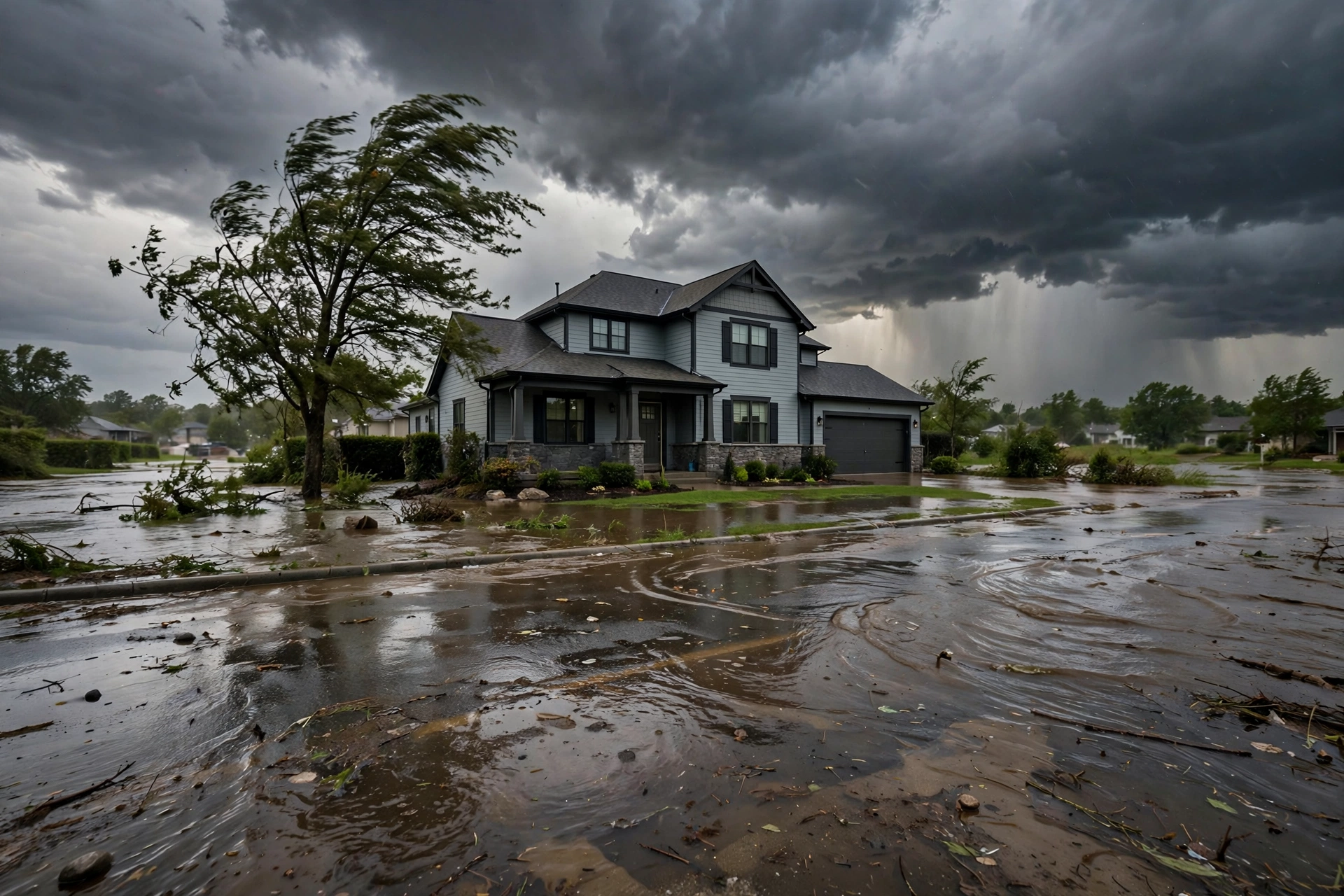
Water is pooling across your floor, and once the shock wears off, one question takes over: will insurance pay for this? The answer depends on a distinction that trips up millions of homeowners every year, the difference between flood insurance and homeowners insurance.
These two policies sound like they should overlap, but they cover very different kinds of water damage. This guide breaks down exactly what each policy covers, where the gray areas are, and how to make sure you are protected before the next storm hits.
Why this question confuses so many homeowners
Most people buy homeowners insurance and assume the word water anywhere in a claim means they are covered. Insurance companies see it differently. In the insurance world, water damage is not one thing. It is a set of categories defined by where the water came from and how it entered your home.
Homeowners insurance generally covers water damage that is sudden and accidental, like a burst pipe or a failed washing machine hose. Flood insurance covers damage from rising water that touched the ground outside first, like storm surge, an overflowing river, or heavy rain that floods the street and then your home. The source of the water decides which policy responds, not the amount of damage.
This distinction matters because standard homeowners policies exclude flood damage almost universally. If your basement fills with three feet of river water, your homeowners insurer will point to the flood exclusion and deny the claim. That denial is one of the most painful surprises in property insurance, and it is exactly what our guide to does homeowners insurance cover water damage walks through in detail.
What homeowners insurance covers
A standard HO-3 homeowners policy, the most common type in the United States, covers water damage from sudden and accidental plumbing events. That includes burst pipes, a failed water heater, an overflowing appliance, and rain that enters through a wind-damaged roof. The key idea is that the event was unexpected and you did not cause it through neglect.
What it does not cover is just as important. Typical exclusions include:
- Flood damage from rising exterior water, storm surge, or overflowing bodies of water
- Gradual leaks and seepage that happened over weeks or months, which insurers classify as maintenance issues
- Sewer backup, unless you bought a specific endorsement
- Groundwater seeping through foundation walls
- Damage from unresolved maintenance problems, like a roof you knew was failing
There is also a timing factor. If a pipe bursts and you shut off the water and call for help the same day, you are in good shape. If a slow leak sat behind a wall for six months, the insurer may call the damage gradual and deny part or all of the claim. Fast action protects both your home and your coverage.
What flood insurance covers
Flood insurance is most commonly purchased through the National Flood Insurance Program (NFIP), run by FEMA, though private flood insurers also sell policies. It covers direct physical damage from flooding, which the NFIP defines as a general and temporary condition where two or more acres of normally dry land, or two or more properties, are inundated by water or mudflow.
In plain terms, flood insurance responds when water rises from the ground up. That includes overflowing rivers and streams, storm surge, heavy rainfall that overwhelms drainage, and even mudflow. A building coverage policy pays to repair the structure itself: foundation, electrical, plumbing, HVAC, drywall, and built-in appliances. A separate contents policy covers your belongings.
Flood insurance has its own limits and quirks. NFIP residential building coverage maxes out at $250,000, with contents up to $100,000, and a typical 30-day waiting period before a new policy takes effect. Basements get limited coverage too. The NFIP covers structural elements and essential systems in basements but not finished walls, flooring, or personal property stored there. FEMA publishes the full details of flood insurance coverage through the NFIP, and it is worth reading before you buy.
Side-by-side: which policy pays for what
Here is how common scenarios split between the two policies:
- Burst pipe floods the kitchen: homeowners insurance, because the water came from inside the plumbing system.
- River overflows and fills the first floor: flood insurance, because the water rose from outside.
- Heavy rain floods the street, then your basement: flood insurance. Even though it was just rain, the water touched the ground first.
- Wind tears off shingles and rain pours in: homeowners insurance, because the water entered through a covered wind peril.
- Sewer backs up into the basement: neither, unless you added a sewer backup endorsement to your homeowners policy.
- Water heater ruptures: homeowners insurance for the resulting damage, though the heater itself may not be covered if it simply wore out.
Notice the pattern. Insurers care about the water’s journey, not its destination. Our water damage insurance claim tips explain how to document that journey with photos and notes, which is often what decides a claim.
The gray areas that cause denied claims
Real life is messier than the lists above. During hurricanes, for example, a home can suffer wind damage and flood damage in the same storm. Insurers then argue over which peril caused which damage, a dispute sometimes called concurrent causation. After major storms, these fights have led to lawsuits and years of delays for affected homeowners.
Another gray area is groundwater. If heavy rain saturates the soil and water seeps through your foundation, most homeowners policies exclude it as groundwater intrusion, and flood insurance may not cover it either unless it meets the NFIP’s definition of a flood. Sump pump failures sit in a similar gap. A dead pump during a storm can leave you with no coverage under either policy unless you carry specific endorsements.
The lesson is not to memorize every exclusion. Read your own policy’s exclusions section once a year and ask your agent direct questions about the scenarios that worry you most. If you are unsure where to start, Ready.gov’s flood pages are a solid starting point for understanding your local flood risk.
How to figure out which coverage you actually need
Start with your flood risk, not your insurance bill. FEMA flood maps show whether you are in a high-risk zone, but remember that a large share of flood claims come from outside mapped high-risk areas. If you live near any body of water, in a low-lying area, or somewhere with poor drainage, get a flood quote even if your mortgage lender does not require it.
Next, look at your homeowners policy endorsements. Two add-ons close the most common gaps:
- Water backup and sump overflow endorsement: typically $5,000 to $25,000 of coverage for sewer backup and sump failures, often for under $100 a year.
- Service line coverage: pays for buried water and sewer lines between your home and the street, which standard policies exclude.
Finally, document your home before anything happens. Walk through with your phone and video every room, open closets and the attic, and store the video somewhere offsite. If you ever need to file, that inventory becomes powerful evidence. Our step-by-step guide on how to file a water damage insurance claim covers the full process from first call to settlement.
What to do when a claim is already in dispute
If water has already damaged your home and the insurer is pushing back, do not accept the first denial as final. Ask for the denial in writing with the specific policy language cited. Review that language yourself, get an independent contractor’s assessment of the damage cause, and consider a public adjuster if the amount at stake is large. Our article on what to do when a water damage claim is denied lays out five concrete moves in order.
Note: This is general information, not legal or insurance advice. Coverage depends on your specific policy and state rules, so check with your insurer or agent.
Frequently Asked Questions
Does homeowners insurance cover flood damage at all?
Almost never. Standard homeowners policies exclude damage from rising exterior water, which is the definition of a flood. You need a separate flood insurance policy, through the NFIP or a private insurer, for that protection.
Is flood insurance required?
It is required by mortgage lenders if your home sits in a FEMA-mapped high-risk flood zone and you carry a federally backed mortgage. Outside those zones it is optional but still worth considering, since a large share of flood claims come from moderate and low-risk areas.
How much does flood insurance cost?
NFIP premiums vary widely by zone, elevation, and coverage amount, but many homeowners outside high-risk zones pay a few hundred dollars a year. Get a quote through an agent who sells NFIP policies. The 30-day waiting period means you cannot buy it the week a storm is forecast.
Does flood insurance cover basements fully?
No. NFIP building coverage in basements is limited to structural elements and essential systems like furnaces and water heaters. Finished drywall, flooring, and personal belongings in a basement have little or no coverage, which is one reason to think carefully before finishing a basement in a flood-prone area.
Can I buy flood insurance if I do not live in a flood zone?
Yes. Anyone in a participating community can buy NFIP flood insurance, and private flood insurers often compete for lower-risk properties. The EPA’s flooding resources explain how flood risk extends well beyond mapped zones.
What to do next
The bottom line is simple. Homeowners insurance and flood insurance are partners, not substitutes. One handles water from inside your home, the other handles water rising from outside it, and the gap between them is where the most expensive surprises hide. Pull out both policies this week, or get a flood quote if you have never had one, and close the gaps with endorsements where you can. If a claim ever lands on your desk, start with our guide to how to file a water damage insurance claim so the paperwork works in your favor from day one.