

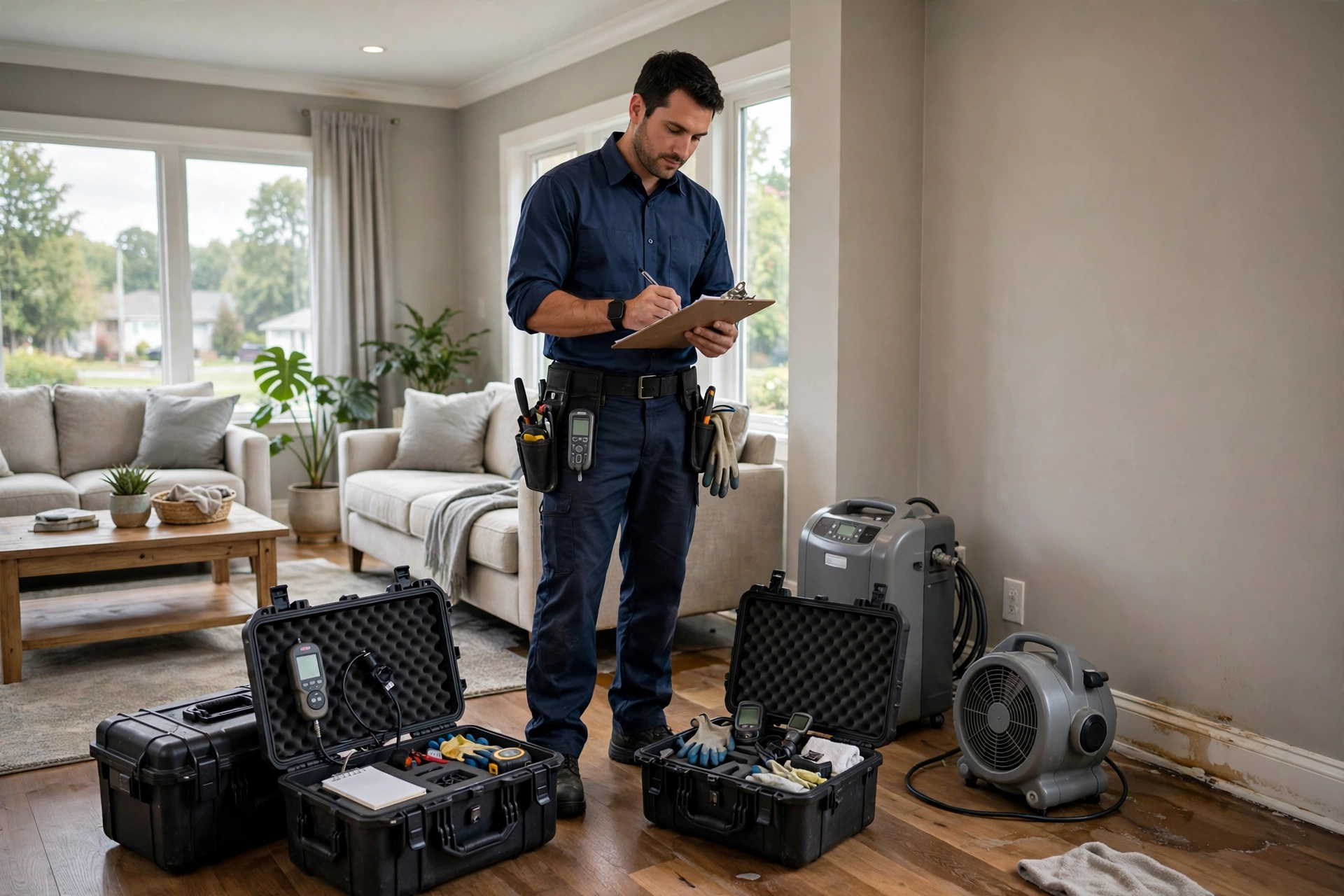
After water damage, the first decision is who handles it: you, or a restoration company. Choose wrong in either direction and you lose. Hire a pro for a minor spill and you pay thousands for work you could have done with a rented dehumidifier. DIY a serious intrusion and you leave hidden moisture that becomes a mold problem months later.
The good news is that the line between the two is clearer than most people think. Clean water, caught fast, in a limited area, is genuinely DIY-able with rented equipment. Several common situations, though, make DIY risky, ineffective, or outright unsafe.
This guide draws that line: the scenarios where DIY is the right call, the red flags that demand a professional, what pros bring that you cannot easily rent, typical costs, how to vet a company fast, and what to do in the first hour either way.
When DIY is the right call
DIY works when four conditions line up: the water is clean, the area is limited, you caught it fast, and nothing structural or electrical is involved. Think supply-line leaks to a toilet or sink discovered within hours, a dishwasher leak caught the same day, or a minor roof leak spotted during the storm. One room, clean water, quick response.
The equipment is rentable and the math is friendly. A wet vacuum or extractor, two or three air movers, and a 50-pint dehumidifier typically rent for 150 to 300 dollars for a long weekend, and a pin moisture meter costs 25 to 40 dollars to buy. Follow a proper sequence of extraction, air movement, dehumidification, and meter-verified dryness, and you can match professional results on a clean-water job. Start with our first-hour water damage checklist so the critical early steps happen in the right order.
Red flags that mean call a professional
Any one of these moves the job out of DIY territory:
- Sewage or outdoor floodwater. Category 3 water carries bacteria and pathogens. This is a health hazard requiring professional extraction, sanitation, and usually removal of affected porous materials. Floodwater safety guidance from Ready.gov treats all floodwater as contaminated.
- Water stood for more than 48 hours. Mold growth is likely underway, and materials may need removal rather than drying.
- Visible mold over about 10 square feet. At that size you need containment and proper remediation procedure, not a spray bottle.
- Water inside walls, ceilings, or insulation. You cannot verify dryness behind drywall without meters and possibly opening the wall.
- Structural damage. Sagging ceilings, buckled or cupped flooring, swollen subfloors, or crumbling drywall.
- Electrical hazards. Water in outlets, panels, or around major appliances. Do not enter until power is cut.
- Musty odor with no visible source. Hidden moisture is the classic DIY trap: the visible area dries while the wall cavity grows mold.
- HVAC involvement. Water or mold in ductwork spreads contamination through the whole house when the system runs.
What professionals bring that rentals cannot match
It is not the fans. You can rent air movers. What you cannot easily replicate is measurement, capacity, and containment. Pros carry pin and pinless moisture meters plus thermal imaging cameras to map exactly how far water traveled, which is routinely a foot or two beyond the visibly wet area. They size commercial dehumidifiers to the actual moisture load rather than guessing, and they monitor with daily readings instead of declaring the job done when surfaces feel dry.
Containment is the other gap. When mold or sewage is involved, pros seal the work area and run negative air so the cleanup does not contaminate the rest of the house. And there is documentation: a professional job produces moisture logs, photos, and invoices that make insurance claims dramatically smoother. To see how these capabilities fit together, read what the full water damage restoration process looks like from assessment to rebuild.
What professional restoration typically costs
Costs scale with water category, area, and how long materials stayed wet. As typical ranges, not quotes: emergency inspection runs 0 to 300 dollars and is often free. Water extraction alone runs 300 to 800 dollars. A single-room clean-water drying job often lands between 1,200 and 3,000 dollars. Multi-room jobs or anything involving sewage or mold commonly run 3,000 to 8,000 dollars or more, with full rebuild costs on top of that.
Those numbers sting, which is exactly why the DIY-or-pro decision matters: spending 200 dollars on rentals for a job you can handle beats a 2,000 dollar invoice, but a 2,000 dollar invoice beats a 10,000 dollar mold remediation six months later. Our water damage restoration cost breakdown goes deeper into what drives these prices.
How to vet a restoration company in 15 minutes
When water is standing in your home, you do not have days to research. Run this quick screen:
- Check for IICRC certification, the industry standard for restoration training.
- Read recent reviews, looking specifically at how they handled surprises and pricing changes.
- Ask for a written scope and a line-item estimate before authorizing work.
- Ask how they verify dryness. The right answer involves moisture meters and documented readings, not touch.
- Confirm they document everything for insurance: photos, moisture logs, and detailed invoices.
- Avoid storm-chasing door knockers, demands for large upfront deposits, and anyone offering to “handle your deductible.”
Your first hour: what to do while waiting
Whether you DIY or call a pro, the first hour follows the same playbook. Stop the source: shut the main water valve for plumbing leaks, or contain the entry point for weather events. Kill power to affected areas at the breaker if water is near outlets or appliances. Move valuables, rugs, and furniture out of the water’s path.
Then document everything before anything gets moved or torn out: photos and video of the water, the source, and every affected room, plus notes on when you discovered it. Call your insurer to open a claim, and if you have standing water, start removing it with anything available. For disaster-scale flooding, FEMA’s recovery resources cover assistance programs beyond what insurance handles.
Frequently Asked Questions
How fast do I need to make the DIY-or-pro decision?
Start mitigating immediately either way: stop the water, remove standing water, and get air moving. Mold can start within 24 to 48 hours, so you can stabilize the situation yourself today and still call a professional tomorrow. Delaying the call while hoping it dries on its own is the expensive option.
Will insurance still pay if I do the work myself?
Usually yes for sudden, covered events, but documentation becomes your job. Photograph everything before and during the work, keep all rental and supply receipts, and log your moisture meter readings. Insurers reimburse reasonable mitigation costs, DIY or pro, when the damage itself is covered.
Can I hire a pro just for drying and do repairs myself?
Yes, and it is a common split. Many homeowners hire the restoration company for extraction, drying, and verification, then handle drywall patching, painting, and flooring themselves or with their own contractor. Just make sure the drying company signs off on verified dry readings before you close up any walls.
How long does professional drying take?
The drying phase typically runs 3 to 5 days for a standard residential job with proper equipment. Larger areas, dense materials like concrete, and jobs started late take longer. Repairs and rebuild after drying are a separate timeline measured in weeks.
What happens if the company finds mold during the job?
A good company stops, shows you what they found, and discusses the change in scope and price before proceeding. Mold remediation is a separate line item with its own containment and procedure. Be cautious of any contractor that quietly folds a major mold finding into the existing invoice without discussion.
The decision in one paragraph
Clean water, one room, caught within hours, no structural or electrical involvement: DIY with rented equipment and a moisture meter. Sewage, floodwater, hidden moisture, mold beyond a small patch, structural damage, or anything wet longer than two days: call a professional. When you are genuinely unsure, get a free assessment: most reputable companies inspect at no charge, and an expert with a meter beats guessing.
If you decide to hire, do not pick the first truck that shows up. Read our guide to choosing a water damage restoration company before you sign anything.