

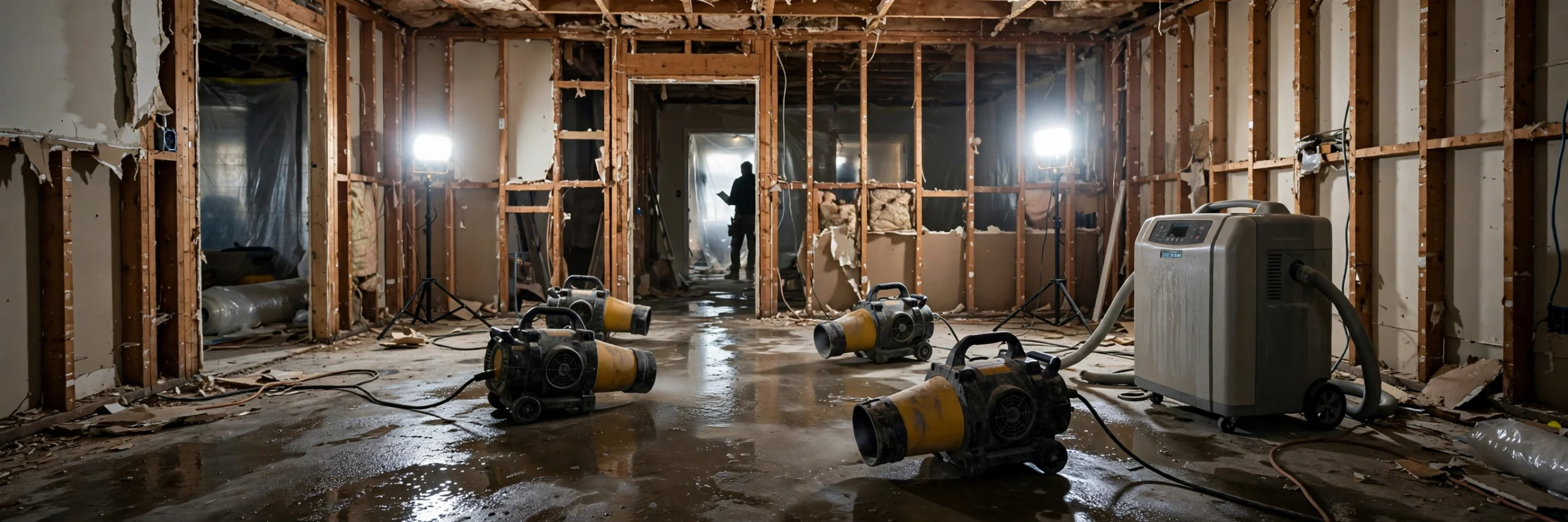
When water damages your home, the first question after “is everyone okay” is usually “what is this going to cost me?” The honest answer: it depends a lot. A small leak caught early might run a few hundred dollars. A flooded basement with contaminated water can climb past $10,000.
This guide breaks down realistic 2026 prices so you know what is fair before you sign a contract. These are U.S. market ranges based on typical contractor pricing, not quotes. Your actual bill depends on your region, the water type, and how long the water sat.
Average water damage restoration cost in 2026
Most homeowners pay between $1,300 and $5,600 for professional water damage restoration, with a national average around $3,200. Minor jobs, like drying a small area from a supply line leak, can cost as little as $500. Major jobs involving sewage, structural drying, and rebuild work routinely exceed $8,000.
Restoration companies usually price by combining several line items: emergency water extraction, drying and dehumidification, mold prevention treatment, demolition of unsalvageable materials, and reconstruction. Understanding each piece helps you read a quote with confidence.
Cost by water category
The IICRC, the industry’s main standards body, classifies water into three categories, and the category drives the price more than almost anything else. You can read more about the IICRC standards that most reputable contractors follow.
Category 1: clean water ($500 to $2,500)
Clean water comes from supply lines, a burst pipe, or rainwater that has not touched contaminants. It is the cheapest to remediate because porous materials like carpet and drywall can often be dried in place rather than removed.
Category 2: gray water ($1,000 to $4,500)
Gray water comes from washing machines, dishwashers, or toilet overflows without solids. It carries enough contaminants that carpet padding usually must be discarded and surfaces need antimicrobial treatment, which pushes the price up.
Category 3: black water ($2,000 to $10,000+)
Black water includes sewage backups and floodwater from outside. Everything porous it touches generally has to be removed and discarded, and the remaining structure needs thorough disinfection. This is the most expensive category by far.
Cost by room and area
- Bathroom: $500 to $2,000. Small space, but plumbing access issues can add labor.
- Kitchen: $1,000 to $4,000. Cabinets and appliances complicate drying.
- Basement: $1,500 to $8,000+. Large square footage and frequent Category 3 water drive costs up.
- Living room or bedroom: $800 to $3,000, mostly carpet, drywall, and baseboards.
- Whole-house flooding: $8,000 to $25,000+, depending on depth and contamination.
- Crawl space: $1,500 to $6,000, often bundled with encapsulation or drainage work.
What the line items actually cost
Here is what contractors typically charge for each phase of the work:
- Emergency water extraction: $150 to $500 for the visit, or $3 to $7 per square foot for large pump-outs
- Drying and dehumidification equipment rental: $200 to $600 per week if you DIY; pros bundle it into the job
- Moisture inspection with meters and thermal imaging: $200 to $600 standalone, often free with a hired job
- Antimicrobial treatment: $200 to $600
- Drywall removal and replacement: $2 to $4 per square foot
- Carpet removal: $1 to $2 per square foot; replacement $3 to $8 per square foot installed
- Baseboard replacement: $1 to $3 per linear foot
- Hardwood floor drying: $500 to $1,500; replacement $8 to $15 per square foot
If mold has already started, remediation is a separate line item. Our mold remediation cost guide breaks down per-square-foot pricing, and black mold removal costs room by room.
Factors that push the price up
Two identical leaks can produce very different bills. The biggest cost drivers:
- How long the water sat. Water discovered in an hour is a drying job. Water discovered after a weekend away is a demolition job.
- What got wet. Tile over concrete dries cheaply. Hardwood, carpet, and drywall do not.
- Contamination level. Category 3 water roughly doubles or triples the cost versus clean water.
- Accessibility. Water inside wall cavities, under cabinets, or in crawl spaces takes more labor to reach.
- Your region. Labor rates in major metros run 30 to 50 percent higher than in rural areas.
- Emergency timing. Nights, weekends, and holidays often carry an emergency surcharge of $200 to $500.
DIY vs hiring a professional
You can handle minor clean-water damage yourself if the affected area is small (under about 10 square feet), you caught it fast, and no drywall stayed wet. A wet/dry vacuum, fans, and a rented dehumidifier will run you $150 to $400.
Hire a professional when the water is contaminated, the area is large, water wicked up inside walls, or anything stayed wet more than 48 hours. Pros bring commercial dehumidifiers, moisture meters, and the experience to find hidden water you would miss. The EPA’s mold and moisture guide is blunt about one thing: materials that stay damp become mold problems, and pros know how to verify things are truly dry.
If you just discovered damage, start with our first-hour checklist before you decide. What you do right now affects the final bill more than who you hire.
Where you live moves the numbers more than most homeowners expect. Labor rates in high-cost metro areas can run 30 to 50 percent above the national average, while rural areas and smaller markets often come in below it. Contractor availability matters too: after a major storm or regional flooding, demand spikes and prices follow, so collecting multiple written estimates matters even more in those windows. Local building codes play a role as well. Some jurisdictions require permits for drywall replacement or electrical work after water damage, which adds a few hundred dollars and a day or two to the timeline. When you compare quotes, make sure each one covers the same scope: extraction, drying, demolition, and rebuild. A cheaper bid that skips the rebuild phase is not really cheaper.
How to keep the bill under control
- Get at least three written quotes with line items, not lump sums.
- Ask whether the quote includes reconstruction or just dry-out. Many companies do one or the other.
- Do not authorize demolition beyond the visibly damaged area without photo documentation.
- Check that the company is IICRC-certified and carries liability insurance.
- File your insurance claim promptly; most policies cover sudden water damage minus your deductible.
Understanding your out-of-pocket cost after insurance
The quote is not what you pay. If your claim is covered, your out-of-pocket cost is usually your deductible plus anything beyond your policy limits. With a $1,000 deductible on a $4,000 job, you pay $1,000 and insurance covers the rest.
Watch for two gotchas. First, some policies have separate, higher deductibles for water damage. Second, mold coverage often has its own cap, commonly $1,000 to $10,000, which may not cover full remediation on a large job. Read the declarations page of your policy before the adjuster visit so you can ask informed questions. Anything the policy excludes, like gradual damage or floodwater, comes entirely out of your pocket.
Frequently Asked Questions
Does homeowners insurance cover water damage restoration?
Usually yes for sudden and accidental causes like burst pipes or appliance failures, minus your deductible. Gradual leaks and outside flooding are typically excluded. Always file the claim and let the adjuster make the call.
How much does it cost to dry out a house after a flood?
Dry-out alone (extraction plus commercial drying equipment) typically runs $1,000 to $4,000 for an average home. Full restoration including repairs and mold prevention is where totals climb into the $5,000 to $25,000 range.
Why do quotes vary so much between companies?
Scope differences explain most of it. One company quotes dry-out only while another includes demolition and rebuild. Equipment quality, certification, and regional labor rates also matter. Always compare line-item quotes, not bottom lines.
Can I negotiate a restoration quote?
You can ask for clarification and competitive adjustments, especially with multiple quotes in hand. Be cautious of bids far below the others; they often skip steps like antimicrobial treatment or proper moisture verification.
How long before I get the bill?
Most companies bill after the work is complete, though emergency services may require a deposit. If insurance is involved, the contractor often bills the insurer directly for the covered portion.
Bottom line
Budget $1,300 to $5,600 for a typical professional restoration job, less for minor clean-water incidents and much more for sewage or whole-house flooding. The cheapest job is the one you prevent: fast action in the first hours keeps drying simple and demolition unnecessary.
Get multiple line-item quotes, verify certification, and document everything for your insurer. And if mold is part of the picture, check our mold remediation cost breakdown so you can budget for the full job, not just the water.