

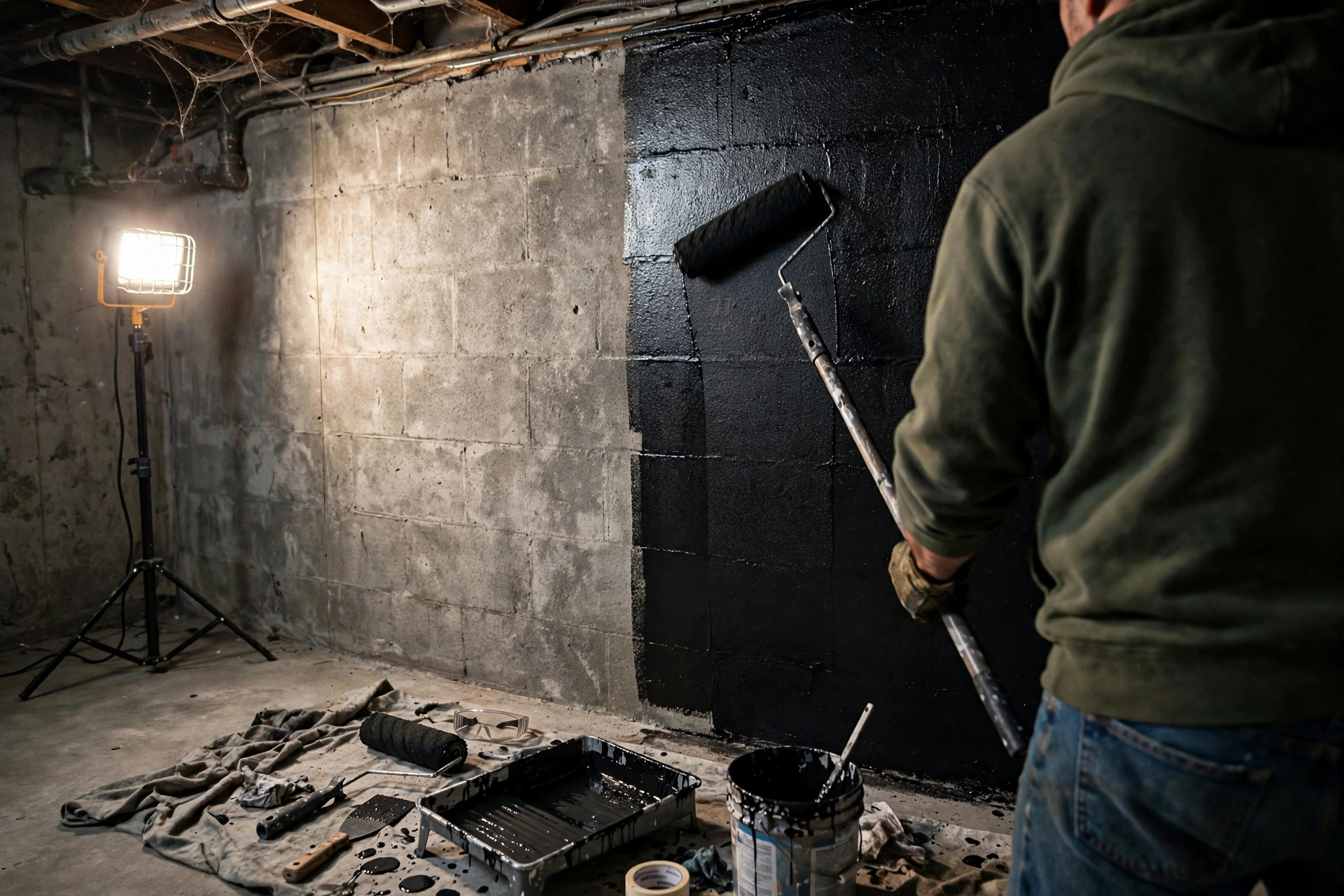
Water in the basement is not a nuisance, it is a slow-motion demolition. Every wet season soaks framing, feeds mold, and erodes the value of your home. Waterproofing fixes it at the source, but quotes range from a few thousand dollars to more than a new car, and contractors push whichever system they happen to sell.
This guide gives you realistic 2026 cost ranges for interior versus exterior waterproofing, explains what each system actually does, lists the factors that move your price up or down, and helps you figure out which one your basement really needs.
Interior vs exterior: the core difference
Interior waterproofing manages water after it enters: drainage channels and sump pumps collect water at the foundation’s inside edge and pump it out. Exterior waterproofing stops water before it enters: excavation, waterproof membranes on the outside of the foundation, and exterior drain tile.
Neither is a scam and neither is magic. Interior systems are cheaper, less disruptive, and excellent at handling hydrostatic pressure (water pushing up under the slab). Exterior systems are the only true “keep water out” solution and the right answer for wall cracks, deteriorating foundations, and severe seepage. Most honest contractors will tell you that the right choice depends on where your water is coming from, which is why a diagnosis should come before a quote.
Interior waterproofing: cost and how it works
A typical interior system has three parts: a perimeter drainage channel (often called a French drain) cut into the slab edge, one or more sump pumps, and sometimes a wall vapor barrier directing seepage down into the channel.
Typical cost range
- Basic perimeter drain + sump pump: $3,000 to $7,000 for an average basement.
- Full system with wall membrane and battery backup: $7,000 to $12,000.
- Per linear foot pricing: $50 to $150 per linear foot of drainage channel, which is why larger basements cost more.
Interior work usually takes 2 to 4 days, does not disturb landscaping, and can be done any time of year. The catch: it does not stop water from reaching your foundation walls. Walls can still get damp, and in finished basements you need the wall membrane component or you are just managing floor-level water. Pairing the system with proper humidity control matters too; see our dehumidifier guide for keeping a waterproofed basement dry long-term.
Exterior waterproofing: cost and how it works
Exterior waterproofing means excavating down to the footing around the foundation, cleaning and repairing the wall, applying a waterproof membrane, installing exterior drain tile, backfilling with gravel, and restoring the grade. It is construction, not a weekend project.
Typical cost range
- Partial excavation (one or two walls): $8,000 to $15,000.
- Full perimeter excavation: $15,000 to $30,000+, depending on depth and access.
- Per linear foot pricing: $150 to $400 per linear foot excavated.
Exterior work takes one to three weeks, destroys landscaping along the dig line, and may require permits and utility locates. It is the definitive fix for cracked or porous foundation walls, and it is often the only option when water enters through wall defects rather than under the slab. On the other hand, it is overkill for a basement whose only issue is hydrostatic pressure under the floor, which an interior system handles for a third of the price.
What moves your price up or down
- Linear footage: the biggest driver. A 1,200 sq ft basement has roughly twice the perimeter of a 600 sq ft one.
- Foundation depth: deeper foundations mean deeper excavation and more membrane, which hits exterior pricing hardest.
- Access: tight lots, decks, patios, or additions built over the dig line add labor and restoration cost.
- Soil and water table: high water tables and clay soils complicate both excavation and drainage design.
- Sump pump specs: a basic pedestal pump versus a cast-iron submersible with battery backup can differ by $500 to $1,000 installed. Our sump pump installation cost guide breaks this down.
- Permits and engineering: some municipalities require permits or an engineer’s letter for exterior work, adding hundreds to low thousands.
- Interior finish restoration: quotes that include putting your finished basement back together cost more than drainage-only quotes. Compare like with like.
Which system does your basement actually need?
- Water coming up through floor cracks or the cove joint (where wall meets floor): interior drainage system. This is hydrostatic pressure, and interior collection is the standard fix.
- Water seeping through wall cracks: exterior membrane, or epoxy/Urethane crack injection for isolated non-structural cracks at a fraction of full excavation cost.
- Damp walls with no visible entry point: start with grading, downspouts, and humidity control. Do not buy a $20,000 excavation for a $200 downspout problem.
- Finished basement you want to protect long-term: interior system with wall membrane plus battery backup sump, the best value protection per dollar.
- Buying or selling, or foundation visibly deteriorating: exterior waterproofing, because it addresses the structure itself.
And keep perspective on total cost of ownership: repeated water damage and mold remediation dwarf waterproofing prices fast. Compare these numbers with our water damage restoration cost breakdown and the per-square-foot cost of mold remediation to see why prevention usually wins the math.
Red flags in waterproofing quotes
- One system for every basement: a contractor who only sells interior systems will diagnose every problem as needing an interior system. Get at least three quotes from companies that install both.
- Lifetime warranty with no company history: a “lifetime” warranty from a two-year-old company is marketing. Ask what the warranty covers, whether it transfers to buyers, and who honors it if the company closes.
- Pressure to sign today: waterproofing is a five-figure decision. Any “today only” discount is a sales tactic.
- No mention of grading and gutters: if the quote ignores the cheap exterior fixes, the diagnosis is incomplete.
- Vague scope: the quote should specify linear feet, pump model, membrane type, and what finish restoration is included.
Look for contractors familiar with industry standards; the IICRC sets the widely used standards for water damage restoration that reputable waterproofing work should align with.
Frequently Asked Questions
How much does basement waterproofing cost on average?
Interior systems average $5,000 to $8,000 for a typical basement; exterior excavation averages $15,000 to $25,000 for a full perimeter. Most homeowners pay somewhere in the $5,000 to $12,000 range for interior work, which solves the majority of cases.
Is interior or exterior waterproofing better?
Neither is universally better. Exterior stops water at the wall and is the definitive fix for wall problems; interior manages water that gets in and is the standard, cost-effective fix for hydrostatic pressure under the slab. The water source determines the right answer.
Can I waterproof my basement myself?
You can handle the contributing fixes: grading, downspout extensions, crack sealing, and sump pump replacement. Full interior drainage channels and any exterior excavation are professional jobs involving concrete cutting, structural considerations, and heavy equipment.
Does waterproofing add home value?
A dry basement with a transferable warranty is a genuine selling point and removes a common buyer objection. It rarely returns 100 percent of its cost at resale, but it prevents the value destruction that chronic water and mold cause.
How long does basement waterproofing last?
A properly installed interior drainage system lasts decades; sump pumps need replacement every 7 to 10 years. Exterior membranes typically last 20 to 30+ years. Warranties vary widely, so read the terms, not just the headline.
Will waterproofing stop mold in my basement?
It stops the water that enables mold, which is most of the battle. You still need humidity control afterward, since basements can stay damp from condensation alone. The EPA’s mold and moisture guide explains why moisture control has to be ongoing.
Bottom line
Get three quotes, make at least one of them from a company that does both interior and exterior work, and fix grading and downspouts before you sign anything. For most basements, a well-designed interior system with a quality sump pump solves the problem for well under $10,000. Reserve exterior excavation for wall failures and severe seepage. And remember the EPA’s core mold guidance: dry buildings do not grow mold, so whatever you spend on keeping water out pays you back in damage you never have to repair.