

Walls hide water damage well. By the time you notice a problem on the surface, moisture has often been working behind the paint for weeks or months. The good news is that walls do leave clues, if you know what to look for.
Learning these signs lets you catch leaks early, when the fix is a plumber’s visit instead of a wall rebuild. Walk through your home with this list every few months, especially in bathrooms, kitchens, laundry rooms, and anywhere below a bathroom.
1. Discolored patches or water stains
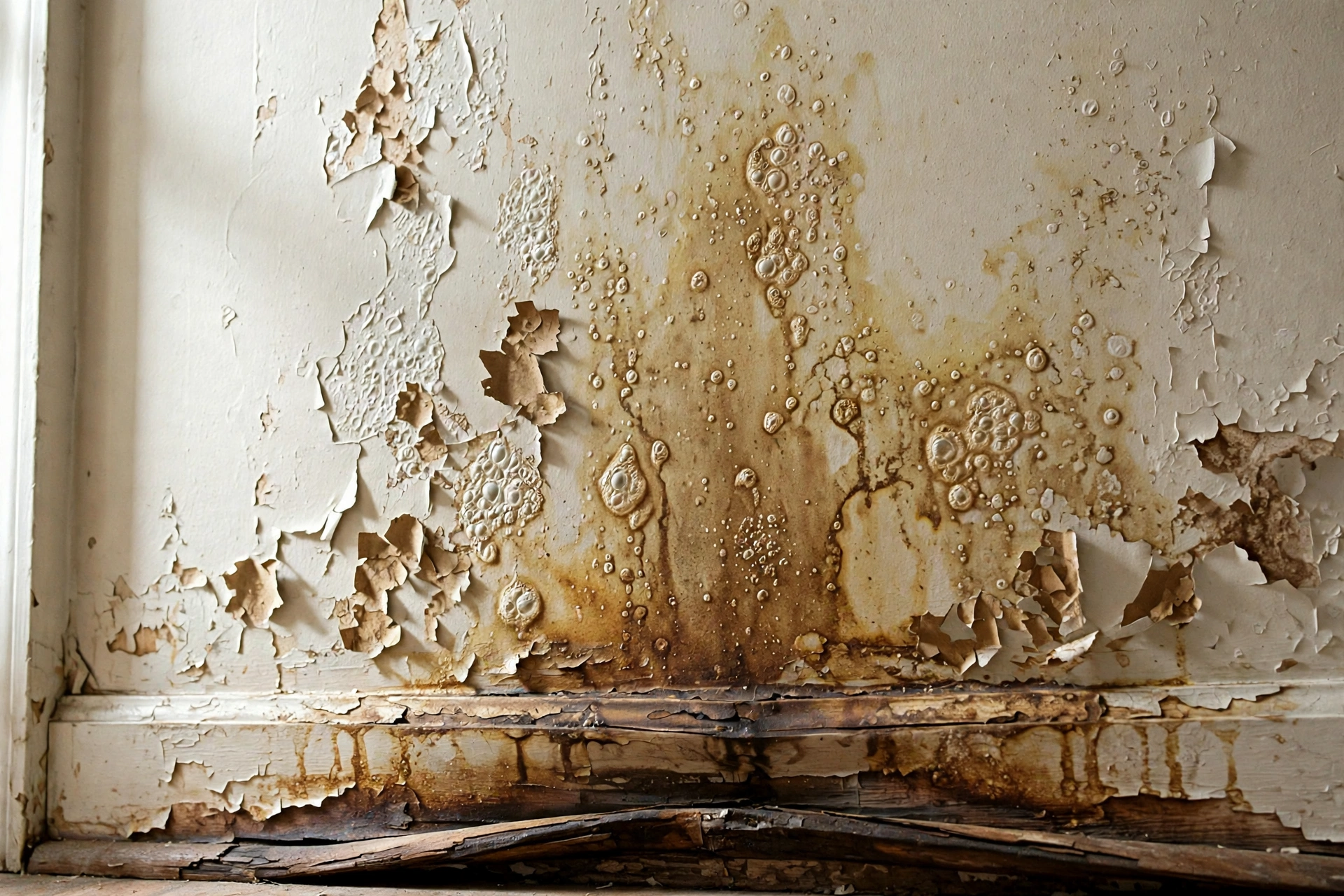
The classic sign. Look for yellow, brown, or copper-colored stains on walls and ceilings. Fresh stains often have darker edges with a lighter center; older ones fade to a dull yellow-brown. Even a small stain deserves attention, because the visible mark is usually just the edge of a larger wet area inside the wall.
Stains that grow, darken after rain, or reappear after painting are telling you water is still getting in. Paint covers the symptom, not the cause.
2. Bubbling, peeling, or cracking paint
When drywall absorbs water, it swells and pushes paint outward. You will see bubbles, blisters, or flakes lifting off the surface. Wallpaper does the same thing, peeling at seams or forming air pockets underneath.
Run your hand along suspect walls. Paint that feels loose or crinkly under your palm is a strong indicator of moisture behind it, even if you cannot see an obvious stain yet.
3. Soft or warped drywall
Press gently on the wall with your fingertips. Healthy drywall feels firm and solid. Water-damaged drywall feels soft, spongy, or crumbly. In bad cases you can push a finger through it with little effort.
Also look at the shape of the wall. Drywall that bows outward or baseboards pulling away from the wall suggest swelling from prolonged moisture. Warping near the floor often points to water wicking up from below.
4. A musty or damp smell
Your nose often finds wall damage before your eyes do. A persistent musty, earthy, or damp smell in a room, especially one that gets stronger in humid weather, usually means moisture is trapped somewhere out of sight.
Sniff along baseboards and inside closets on exterior walls. These are common hiding spots. The EPA’s mold and moisture guide notes that musty odors are one of the most reliable early warnings of a hidden moisture problem.
5. Visible mold spots
Mold on walls shows up as black, green, gray, or even white fuzzy patches. It loves corners, areas behind furniture, and the wall behind toilets and sinks where condensation collects.
Surface mold on tile or glass wipes away easily. Mold growing on or through painted drywall is a different story; it usually means the drywall itself is wet and colonized, not just dirty. Do not just bleach the surface and move on. Find out why the wall is wet in the first place.
6. Unexplained humidity or condensation
If one room always feels damper than the rest of the house, or windows in that room fog up regularly, moisture may be evaporating from inside the walls. A cheap hygrometer can confirm it: indoor humidity consistently above 60 percent invites trouble, and the EPA recommends keeping it between 30 and 50 percent for healthy indoor air quality.
Check for condensation on walls themselves, especially exterior walls in winter. That moisture feeds mold directly on the drywall surface.
7. Sounds and subtle clues
Dripping or rushing water sounds inside walls when no fixture is running are an obvious red flag. Less obvious: a sudden spike in your water bill with no change in usage, which often means a hidden supply leak. Warm spots on floors can indicate a hot water line leak under the slab or in a wall.
Also watch for pest activity. Insects and rodents are drawn to damp wall cavities, so a new pest problem near a suspicious wall is worth investigating as a moisture issue too.
Where to check first
Some spots deserve regular inspection because leaks love them:
- Under and behind sinks, toilets, and tubs
- Around washing machine hookups and water heaters
- Walls below upstairs bathrooms
- Exterior walls under windows, especially older ones
- Basement walls where they meet the floor
- Behind the refrigerator’s water line
Take a flashlight and look at these areas from a low angle; raking light across a wall surface reveals bulges and stains that overhead lighting hides.
Tools that help you find hidden wall moisture
You do not need professional gear to get an early read on a suspect wall. A pin-type moisture meter costs $30 to $50 at any hardware store and tells you in seconds whether drywall is holding excess moisture. Readings above 17 percent on wood or elevated readings on drywall warrant a closer look.
An infrared thermometer, or a thermal camera attachment for a phone, can reveal cold spots where evaporation is happening inside the wall. These tools do not replace a professional inspection, but they turn a vague worry into data you can act on or show a contractor. If readings confirm moisture and you cannot find the source, that is the point to call a plumber or restoration company rather than keep guessing.
What to do when you find a sign
First, find the water source. Check the obvious: plumbing above or nearby, roof leaks after rain, or condensation from poor ventilation. If you cannot find it, a plumber with a moisture meter can trace it in minutes.
Small, recent damage from a fixed leak can sometimes be handled by drying the area thoroughly and repainting with a stain-blocking primer. But if drywall is soft, mold is growing through it, or the area is larger than a dinner plate, call a professional. Our restoration timeline guide explains what happens after you make that call.
Document what you find with photos before repairs begin, and if the damage came from a sudden event like a burst pipe, act fast. Our first-hour checklist covers the immediate steps that protect both your home and your insurance claim.
Frequently Asked Questions
Can water damage in walls go away on its own?
No. Wet drywall does not recover; it stays weakened and becomes a mold habitat. Small amounts of surface moisture can dry, but once drywall is saturated, it needs to be cut out and replaced after the leak is fixed.
How can I tell if mold is growing inside my walls?
Musty smells, allergic symptoms that improve when you leave the house, and visible mold at wall edges or outlets are common clues. A professional inspection with a moisture meter or borescope camera gives a definitive answer without tearing the wall open blindly.
Will my insurance cover wall water damage?
It depends on the cause. Sudden events like burst pipes are usually covered; slow leaks that went unrepaired for months often are not, because policies expect homeowners to maintain their property. Document the damage and report it promptly.
How much does it cost to repair water-damaged drywall?
Minor repairs run $200 to $500. Replacing larger sections costs $2 to $4 per square foot including finishing and painting. If mold remediation is needed too, see our mold remediation cost guide for what that adds.
Should I poke a hole in the wall to check for moisture?
A tiny test hole behind furniture or inside a closet is reasonable for a homeowner, but be careful: you could hit wiring or plumbing. A non-invasive moisture meter ($30 to $50 at hardware stores) is a safer first step.
What to do next
Do a slow walk through your home this weekend with a flashlight and this list. Check the high-risk spots, sniff the baseboards, and press on any wall that looks even slightly off. Catching wall damage at the stain stage instead of the collapse stage can save you thousands.
If you find something concerning, document it, find the water source, and decide whether it is a DIY drying job or a call to the pros. And if the damage is fresh, our first-hour checklist will get you through the critical first steps.