

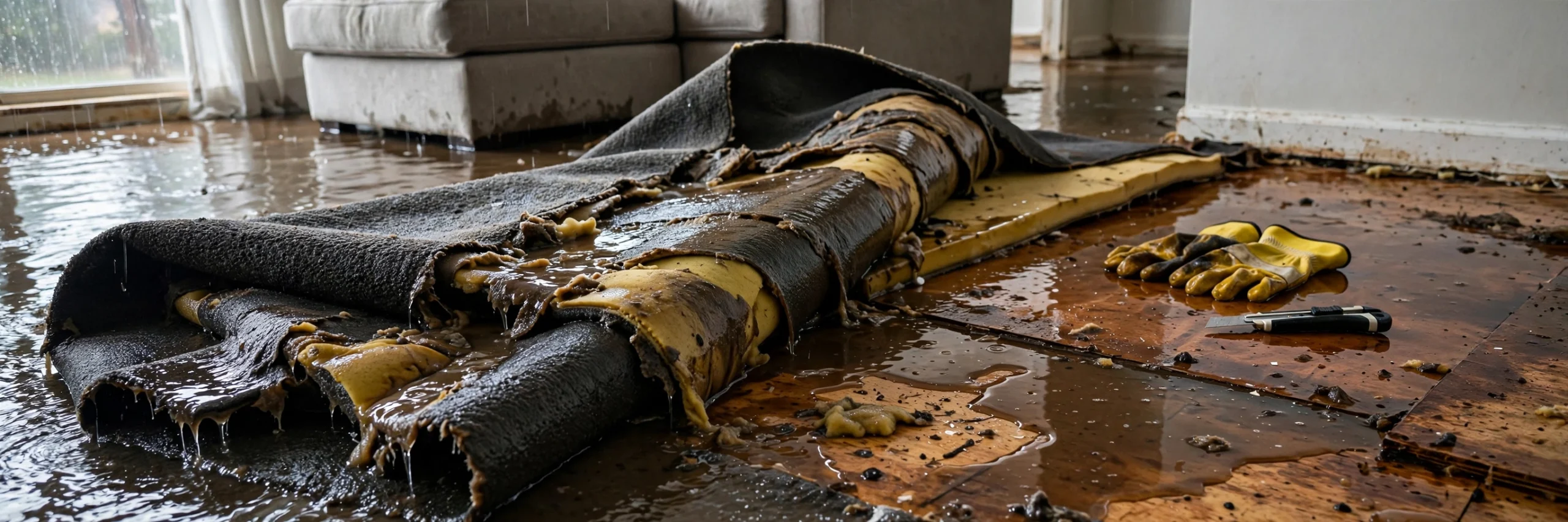
You walk into a room and your socks squish. The carpet is soaked, and the first question in your head is the right one: can this carpet be saved, or am I ripping it out? The answer depends less on how wet it is and more on what kind of water did the soaking.
Carpet is one of the most forgiving floor coverings when the water is clean, and one of the least forgiving when it is not. Get it right and you save hundreds of dollars. Get it wrong and mold hides under a carpet that looks fine.
This guide explains how restoration pros make the dry-versus-replace call, what real drying involves, and the mistakes that turn salvageable carpet into a total loss. If the water just arrived, start with our first-hour water damage checklist before reading on.
The one question that decides everything: what kind of water is it?
Restoration pros classify water into three categories, and the category decides whether the carpet even gets a chance.
Clean water comes from a broken supply line, burst pipe, rainwater, or an overflowing sink with no contaminants. Carpet soaked by clean water can usually be saved if drying starts within 24 to 48 hours. This is the best case and the most common one for indoor leaks.
Gray water comes from washing machines, dishwashers, shower drains, and aquariums. It carries some contaminants but no sewage. Carpet exposed to gray water can sometimes be saved, but the pad underneath almost always has to go, and disinfection becomes mandatory.
Black water is sewage, outdoor floodwater, or any water that has contacted the ground. Carpet soaked by black water cannot be saved, period. Floodwater carries bacteria, chemicals, and sewage deep into fibers and pad. The EPA’s guidance on mold, moisture, and your home treats flood-soaked porous materials as a health risk, and no reputable pro will try to restore them. Tear it out wearing proper protective gear.
When wet carpet can be saved
Assume clean water and a fast response. Carpet is salvageable when these conditions line up:
- The source was clean (supply line, rain intrusion, appliance supply hose) and the carpet was wet for less than 48 hours.
- The carpet is synthetic (nylon, polyester, olefin), which covers most wall-to-wall carpet installed in the last 30 years. Synthetics do not absorb water into the fiber.
- No sewage, chemical, or outdoor floodwater contamination.
- No delamination: the backing layers are still firmly bonded, not bubbling apart.
- You can get professional-grade drying equipment on it quickly, or hire someone who has it.
Even when the carpet survives, the pad is a separate question. Pad acts like a sponge and is far harder to dry in place. Most restorers replace the pad as a matter of course while saving the carpet, since new pad is cheap compared with mold growing under carpet that feels dry on top.
When replacement is the only safe option
Do not try to save carpet in these situations. The health risk and the near-certainty of mold outweigh any savings.
- Any contact with sewage or outdoor floodwater, no matter how clean the water looks.
- Wet for more than 48 to 72 hours without active drying, especially in warm weather. By then mold is likely established in pad and backing.
- Soaked wool or natural-fiber carpet. Natural fibers absorb water, shrink, and are extremely hard to dry without damage.
- Delaminated carpet, with backing layers separating or bubbling.
- A persistent musty or sewage odor after drying. Smell is evidence of microbial growth you cannot see.
- Previous water damage in the same carpet. Once pad has been wet and dried, its structure is compromised.
For perspective, replacement carpet for a standard 12×12 room runs $400 to $1,200 installed for mid-range carpet and pad. Professional mold remediation under a “saved” carpet that grew mold anyway costs far more.
The carpet pad question
The pad is the hidden variable in every wet-carpet decision. Standard rebond foam soaks up water and dries far slower than the carpet above it. A carpet can feel dry to the touch while the pad underneath is saturated, and that trapped moisture is a perfect mold incubator.
Pros usually pull the carpet back, remove the wet pad, and dry carpet and subfloor separately. New pad costs roughly $0.50 to $1.50 per square foot installed, which makes replacement the obvious call. Drying it yourself? At minimum, pull the carpet back from the tack strips in the wet area, remove the pad, and aim airflow at both the carpet backing and the exposed subfloor.
Also watch for signs of water damage beyond the carpet. Water wicks up drywall fast, and baseboards plus the bottom inches of wall often need attention too. A ceiling stain in the room below means water traveled further than the floor; our guide on repairing a water-stained ceiling covers that companion repair.
What professional carpet drying actually involves
When a restoration company saves carpet, the process is more thorough than most homeowners expect:
- Water extraction first. A weighted extractor or truck-mounted unit pulls bulk water from carpet and pad. This one step removes more water than days of air drying.
- Carpet is pulled back. It is detached from tack strips in the affected area so the pad can come out and the subfloor is exposed.
- Pad is removed and discarded in most cases, then the subfloor is cleaned and disinfected.
- Antimicrobial treatment goes on the carpet backing and subfloor to inhibit mold and bacteria.
- Structural drying with air movers and dehumidifiers, with moisture readings taken daily until everything hits dry standards.
- Carpet is reinstalled over new pad, re-stretched, and cleaned.
DIY drying follows the same logic with smaller gear: extract with a wet vacuum, pull the carpet back, remove the pad, and run fans plus a dehumidifier for several days. Our walkthrough on how to dry wet carpet after a leak covers equipment and timing step by step.
Cost comparison: drying versus replacing
Professional extraction and drying for one room typically costs $300 to $800, plus $150 to $400 for new pad if the carpet is saved. Full replacement runs $400 to $1,200 for carpet and pad, plus $150 to $300 for removal and disposal of the old material.
The math favors saving the carpet when the water was clean and the response was fast. It flips the moment contamination or delay enters the picture. Paying $600 to dry a carpet that then needs $400 of mold remediation underneath is the worst possible outcome.
Federal guidance consistently treats time as the critical factor: porous materials like carpet and pad that cannot be thoroughly dried within 24 to 48 hours should be assumed to be mold risks, not drying projects.
The EPA’s broader mold guidance for homeowners reinforces the same point: dry water-damaged areas and items within 24 to 48 hours to prevent mold growth, or remove what cannot be dried.
What about area rugs?
Area rugs follow the same rules, with one advantage: you can take them outside. A clean-water-soaked synthetic rug can often be saved by extracting water with a wet vacuum, then draping it over sawhorses outdoors on a dry, breezy day so air reaches both sides. Hose it down first if it picked up dirt from the floor.
Do not put a damp rug back on the floor until both the rug and the floor meter dry. A wet rug on a damp floor traps moisture between the two, creating exactly the conditions mold needs. Wool and handmade rugs deserve professional cleaning after any real soaking, since improper drying causes shrinkage, dye bleed, and lingering odor.
Frequently Asked Questions
How long does it take for mold to grow in wet carpet?
Mold can start growing on wet carpet and pad within 24 to 48 hours in warm, humid conditions. The drying clock starts the moment water hits the floor, not when you get around to it. Carpet wet for three days with no active drying should be treated as a mold risk.
Can I just let wet carpet air dry on its own?
Air drying alone is too slow to beat the mold clock in most cases. A wet vacuum removes far more water in an hour than evaporation removes in a day. At minimum: extract, pull the carpet back, remove the pad, and run fans and a dehumidifier.
Does homeowners insurance cover wet carpet replacement?
It depends on the cause. Sudden, accidental damage like a burst pipe is typically covered, including carpet replacement when needed. Gradual leaks and floodwater are generally excluded. Photograph everything before you tear anything out.
Will the carpet smell after drying?
A properly dried and disinfected carpet should not smell. Lingering musty odor after drying means microbial growth in the pad, backing, or subfloor that drying did not resolve. Then the carpet and pad need to come out and the subfloor needs treatment.
Can carpet be saved after a sewage backup?
No. Carpet exposed to sewage or any black water must be removed and discarded, pad included. Sewage contains pathogens that cannot be reliably removed from porous materials. There is no judgment call here.
The bottom line
Clean water plus fast action equals a carpet worth saving. Contaminated water or more than a couple of days of delay equals replacement. The pad is almost always a loss, and that is fine, because new pad is cheap insurance against mold growing silently underneath.
Decide early, photograph everything for insurance, and when in doubt, remove rather than rescue. A new carpet is a known cost; hidden mold is an unknown one, and unknowns always cost more. For the hands-on process once you commit to drying, follow our step-by-step guide to drying wet carpet with fans, dehumidifiers, and proper timing.