

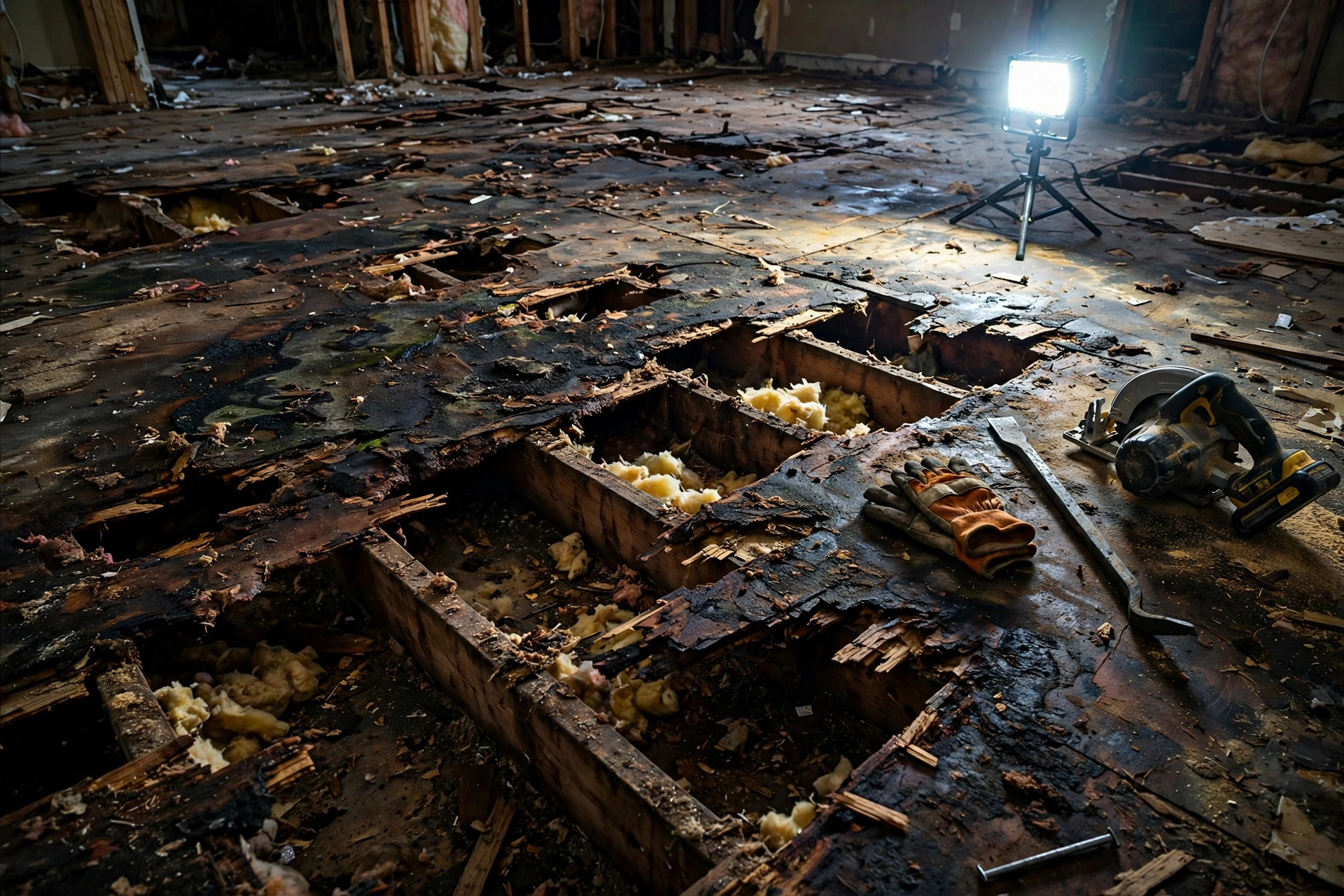
The subfloor is the unsung hero of your home: the plywood or OSB layer between the joists and your finished flooring that you never see until water finds it. By the time a subfloor shows symptoms, the damage is usually well underway, which is why professionals assess the subfloor separately from the visible floor above.
A compromised subfloor is not just a flooring problem: it affects structural integrity, creates a hidden mold reservoir, and will destroy any new flooring installed over it. Refinishing hardwood or laying new carpet over a damaged subfloor is like repainting a car with a rusted frame. The surface looks better briefly, then everything fails again.
This guide explains how restoration professionals assess subfloor damage, decide between drying, partial repair, and full replacement, and what replacement actually involves, so you can hire or DIY with confidence. If water just arrived, start with our first-hour water damage checklist.
What a subfloor is and why water hurts it
Most modern homes use plywood or oriented strand board (OSB) for subflooring, typically 3/4 inch thick over floor joists. Plywood handles occasional wetting well because its cross-laminated veneers resist swelling. OSB is more vulnerable: its compressed strands swell significantly when wet and rarely return to original thickness, leaving a permanently uneven surface.
Water damages subfloors in three ways. First, saturation swells the panel and breaks down its adhesives, causing delamination and loss of stiffness. Second, prolonged moisture feeds wood rot fungi that digest the wood fibers, destroying structural strength. Third, a damp subfloor sandwiched between joists and flooring becomes a dark, unventilated mold habitat. The EPA’s mold resources emphasize that hidden moisture in building cavities is a leading source of persistent indoor mold.
Signs your subfloor is damaged
Subfloor problems announce themselves indirectly, through the finished floor above:
- Spongy or bouncy spots when you walk, especially near plumbing fixtures, exterior doors, or past leak locations.
- New squeaking in areas that were quiet before, as swollen or shrunken panels move against fasteners.
- Visible sagging or unevenness in the finished floor that was not there previously.
- Musty odors rising from the floor, particularly in humid weather.
- Tile grout cracking or tiles loosening without an obvious cause.
- Staining on the ceiling below, which often means water passed through the subfloor entirely.
Any of these after a known leak deserves investigation, not monitoring: subfloor damage does not stabilize on its own, and rot and mold progress as long as moisture remains. Check surrounding walls too, since the signs of water damage in walls frequently accompany subfloor issues from the same event.
How pros assess subfloor damage
Professional assessment follows a deliberate sequence that maps the full extent of damage before any repair decisions.
Moisture mapping
The inspector starts with a pin or pinless moisture meter, taking readings across the floor in a grid and comparing them to known-dry areas. Moisture almost always spreads further than the visible damage suggests, and readings are recorded so drying progress can be tracked. Thermal imaging cameras often supplement the meter to spot cold, damp areas inside the floor assembly.
Physical probing
Next comes the awl test: pressing a sharp awl or screwdriver into the subfloor in suspect areas. Sound wood resists; rotted wood lets the probe sink in with little resistance, almost like pushing into cork. Pros probe around toilets, tubs, dishwashers, refrigerators with ice makers, and anywhere readings were elevated.
Inspection from below
With basement or crawl space access, the underside of the subfloor tells the real story: dark staining, white or black fungal growth, sagging between joists, and water marks on the joists. This view often reveals damage far beyond what the finished floor suggested.
Determining the water category
Clean water damage to a subfloor is a drying and repair problem. Gray or black water changes the calculus entirely, because porous subflooring cannot be reliably disinfected: sewage-affected subfloor is removed, not dried, as a health matter.
When drying is enough
A structurally sound subfloor that got wet briefly can often be saved, but the criteria are strict: clean water, exposure under 48 hours, meter readings dropping steadily with active drying, firm wood on the awl test throughout, and no visible mold growth or delamination.
Drying a subfloor means exposing it: finished flooring comes up, and air movers plus dehumidifiers run until readings hit dry standards. The EPA’s 24 to 48 hour guidance applies here with full force. An antimicrobial treatment after drying is standard professional practice, as insurance against what the eye cannot see.
When partial replacement makes sense
Localized damage, a rotted section around a toilet flange or under a dishwasher, can be cut out and replaced without redoing the entire floor. The damaged section is cut back to the center of the nearest joists on all sides so the replacement panel bears fully on solid framing. New plywood of matching thickness goes in glued and screwed, with seams staggered from the original layout where possible.
Partial replacement works when the damage is truly contained, the surrounding subfloor tests solid and dry, and the finished flooring can be patched or was already slated for replacement. It fails when “localized” damage is the visible tip of a larger moisture problem, which is why thorough moisture mapping comes before any cutting.
When full replacement is necessary
Full replacement is the right call when damage is widespread, rot has compromised stiffness across large areas, OSB has swollen and will not flatten, or contamination makes drying unsafe. It is a significant project: finished flooring comes out, old subfloor is removed panel by panel, joists are inspected and treated, and new subfloor goes down before the finished floor is reinstalled.
Joist inspection during replacement is critical and often skipped by budget contractors. If rot or mold reached the joists, sistering new lumber alongside them or treating them may be necessary; a new subfloor on compromised joists just resets the clock. If the finished floor above was distressed hardwood, our guide on hardwood floor water damage explains how to evaluate whether those boards are worth reinstalling over the new subfloor.
What subfloor replacement costs
Costs vary by region and scope, but realistic U.S. ranges help set expectations. Partial replacement typically runs $500 to $1,500 for a localized section including labor. Full replacement in a single room runs $1,500 to $4,000 depending on size, while whole-house replacement can reach $8,000 to $15,000 or more.
These figures cover the subfloor work itself, not the finished flooring, which is separate. Subfloor replacement almost always means the finished floor comes out too, so budget for both. Insurance generally covers damage from sudden, accidental water events but not long-term leaks or maintenance failures, so documentation and prompt reporting matter.
Restoration industry practice treats any subfloor that remains above dry-standard moisture readings after a reasonable drying effort, or that shows structural softening, as a replacement candidate rather than a drying project.
Mold and the subfloor: the hidden risk
A damp subfloor is one of the most common hidden mold reservoirs in a home. Mold on the underside of subflooring or on joists can release spores into wall cavities and living spaces for years without ever being visible. If your subfloor got wet and you notice persistent musty odors, allergy-like symptoms that improve when you leave the house, or visible growth during floor work, treat it as a mold investigation.
Small areas of surface mold on sound subfloor can be cleaned following established remediation practices, but mold combined with rot means replacement. Our guide on hidden mold behind drywall covers the broader pattern of concealed mold, since subfloor mold rarely exists in isolation.
Frequently Asked Questions
How can I tell if my subfloor is rotted without tearing up the floor?
Walk the floor feeling for spongy spots, new squeaks, and unevenness. Check from below in a basement or crawl space for staining and fungal growth. A moisture meter and the awl test through a small inspection hole give the most definitive answers short of opening the floor.
Can a wet subfloor dry out on its own?
Surface drying happens, but a subfloor sandwiched under finished flooring dries extremely slowly without active intervention, and the mold clock runs out in 24 to 48 hours. Passive air drying is not a plan: extraction, exposure, airflow, and dehumidification are.
Is OSB or plywood better if my subfloor needs replacement?
For moisture-prone areas, plywood is the better choice: it tolerates occasional wetting and dries with less permanent swelling. OSB is cheaper and fine when it stays dry, but less forgiving of future water exposure. In bathrooms, kitchens, and laundry areas, plywood is worth the premium.
Do I need to replace the subfloor if only the hardwood above is damaged?
Not necessarily, but you must verify: probe and meter the subfloor once the hardwood is up. If it is firm, dry, and flat, it stays. Many homeowners discover subfloor damage only because they lifted damaged hardwood, which is the ideal time to catch it.
Will insurance pay for subfloor replacement?
When the damage comes from a covered sudden event like a burst pipe, yes, typically including both subfloor and finished flooring. Damage from long-term seepage, wear, or maintenance issues is generally excluded. Report promptly and document everything before repairs begin.
The bottom line
Subfloor damage rewards thorough assessment and punishes assumptions. Map the moisture, probe the wood, look from below, and let the findings dictate whether you dry, patch, or replace. The finished floor gets all the attention, but the subfloor decides whether the repair lasts.
Never install new flooring over a subfloor you have not verified as dry, firm, and flat. Proper assessment costs a fraction of doing the flooring job twice, and a sound subfloor is the foundation every lasting floor repair is built on.