

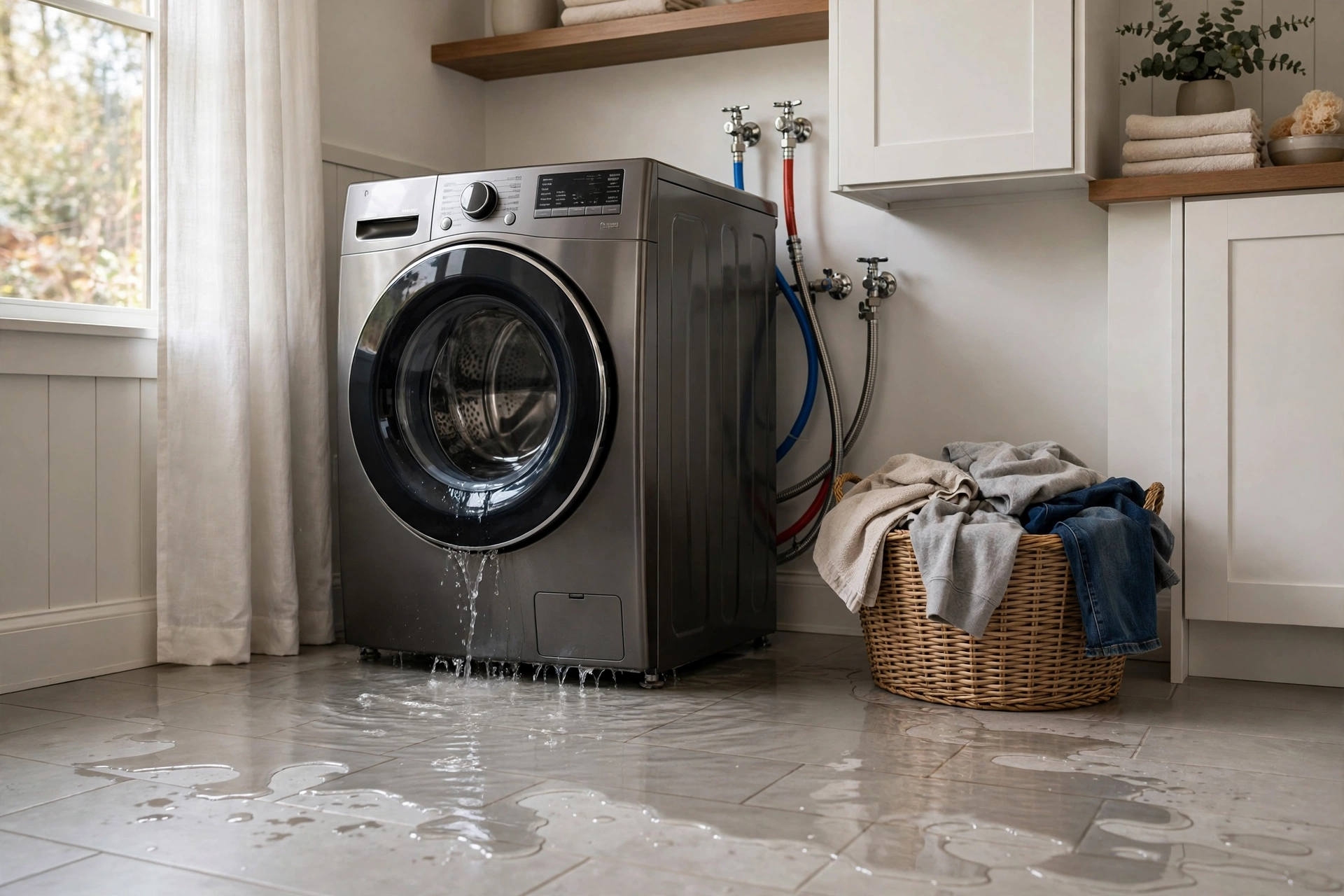
Appliances are the quietest source of water damage in most homes. A washing machine supply hose does not announce itself before it splits. A dishwasher seeps a little with every cycle for months. An ice maker line drips behind the fridge where nobody looks. By the time you notice, the subfloor is soft and the repair bill has tripled.
Appliance failures are among the top causes of residential water damage claims, and most are preventable with cheap parts and five minutes of attention. Here is how each major appliance leaks, what to watch for, and what the damage costs.
Washing machines: the number one offender
Washing machine failures cause more appliance-related water damage than any other single source. The usual culprit is the supply hose: standard rubber hoses weaken with age, and when one bursts, it releases the full force of your home’s water pressure until someone shuts it off.
Warning signs
- Bulging, cracking, or discoloration on the rubber supply hoses
- Water on the floor after a cycle, even a small amount
- A musty smell in the laundry room (water trapped under the machine)
- The machine walking or shaking violently, which stresses hose connections
Prevention that actually works
Replace rubber supply hoses with braided stainless steel hoses ($15 to $30 for the pair) and replace them every 5 years regardless of appearance. Turn the water supply valves off when you leave town for more than a day. Better yet, install an automatic shutoff valve with a floor sensor ($150 to $400); it closes the supply the moment it detects water.
Also check the drain hose: if it is shoved too far down the standpipe, the machine can siphon or overflow. And clean the lint filter and drain pump filter regularly, since clogs cause backups that spill onto the floor.
Dishwashers: the slow seep
Dishwasher leaks are sneakier than washing machine bursts. A worn door gasket, loose water line connection, or cracked tub lets a little water escape each cycle. It runs under the unit, into the subfloor and the cabinet bases on either side, where it can sit for months.
Warning signs
- Warped or discolored flooring in front of the dishwasher
- Cabinet bases that feel soft or show water staining
- A persistent damp or sour smell when you open the dishwasher
- Water visible under the unit when you pull off the kick plate
What to do
Inspect the door gasket yearly and replace it if it is brittle or torn ($20 to $60 for the part). Check the water supply connection under the sink for drips. If the dishwasher is more than 9 or 10 years old and leaking from the tub itself, replacement usually beats repair. When you install the new one, put a dishwasher leak pan or a water sensor underneath; a $30 sensor that screams when wet is the cheapest protection available.
Refrigerators with ice makers and water dispensers
The thin plastic or copper line feeding your ice maker runs behind the fridge, often across the floor to a saddle valve on a nearby pipe. Saddle valves are notorious leakers, and the plastic lines get brittle. Because the fridge hides everything, these leaks commonly run for weeks.
Pull the fridge out twice a year and look: any moisture on the floor, mineral crust on the line, or green corrosion on a copper line means trouble. Replace plastic lines with braided stainless steel ($15 to $25) and swap saddle valves for a proper quarter-turn shutoff valve. While you are back there, check that the defrost drain is not clogged, which causes water to pool inside the fridge and leak out the front.
Water heaters: the ticking tank
Technically not a kitchen appliance, but the water heater deserves a mention because tank failures are catastrophic. A 50-gallon tank that ruptures dumps its entire contents plus continuous supply flow. Most tanks last 8 to 12 years; after that, the risk climbs fast.
Check the manufacture date on the rating plate. Flush sediment yearly, test the temperature-pressure relief valve, and look for rust streaks or moisture at the base. A leak pan with a drain ($30 to $60) or a water sensor buys crucial early warning. When a tank passes 10 years, start budgeting for replacement ($1,000 to $2,500 installed) rather than waiting for it to choose the moment.
What to do when you find an active appliance leak
- Shut off the appliance’s water supply. Every appliance has a local shutoff: valves behind the washing machine, under the sink for the dishwasher, and at the wall or saddle valve for the fridge. If you cannot find it fast, shut the main.
- Unplug the appliance if water is near any electrical connection, and do not touch wet plugs with wet hands.
- Remove standing water with towels, a mop, or a wet vacuum, then get air moving with fans.
- Pull the appliance out if you safely can, to expose the wet floor and wall behind it.
- Document the damage with photos before cleanup goes too far, for the insurance claim.
These are the same first moves as any water emergency; our first-hour water damage checklist walks through the full sequence.
What appliance leak damage costs to repair
- Caught early (surface drying, minor floor damage): $500 to $2,000
- Moderate (subfloor drying, cabinet base repair): $2,000 to $6,000
- Severe (subfloor replacement, mold remediation, new flooring): $6,000 to $15,000+
- Appliance repair or replacement itself: $150 to $600 for repairs; $500 to $2,000 for a new appliance
The pattern is consistent: the longer a leak runs undetected, the more the cost shifts from the appliance to the house. A $20 hose that fails catastrophically while you are at work can cause as much damage as a burst pipe, because the failure mode is identical: full-pressure water with nobody home.
Hidden moisture also shows up in walls adjacent to laundry rooms and kitchens. If you see staining or bubbling paint nearby, read our guide to signs of water damage in walls before it spreads further.
Insurance and appliance leaks
Sudden appliance failures (a hose that bursts) are typically covered like other sudden water damage. Slow leaks that ran for months are often denied as maintenance issues, which is the painful version of “you should have noticed.” Insurers distinguish sharply between the two, so the inspection habits in this guide are not just good housekeeping; they protect your coverage.
Keep receipts for hose replacements and any leak detection devices you install. If you ever file a claim, that paper trail shows you maintained the appliances responsibly.
A 15-minute annual inspection routine
- Washing machine: check both supply hoses, the drain hose, and the valves. Look behind and under the unit with a flashlight.
- Dishwasher: inspect the door gasket, run a cycle and check under the sink connection afterward, pull the kick plate and look for moisture.
- Fridge: pull it out, inspect the supply line and valve, check the floor.
- Water heater: look for rust, moisture at the base, and check the relief valve discharge pipe.
- Everywhere: confirm water sensors have fresh batteries and test them with a damp cloth.
Fifteen minutes a year against a five-figure repair bill is the best trade in home maintenance. The EPA’s guidance on controlling indoor moisture (EPA mold and moisture guide) reinforces the same principle: find water fast, dry it fast, and mold never gets its chance. General emergency preparedness resources at Ready.gov and the EPA’s flooding page are worth bookmarking too.
Frequently Asked Questions
How often should washing machine hoses be replaced?
Every 5 years for rubber hoses, and every 5 to 7 years even for braided stainless steel. The calendar matters more than appearance; hoses fail from the inside.
Are water leak sensors worth it?
Absolutely. Basic sensors cost $25 to $40 each and shriek when they get wet. Place them behind the washing machine, under the dishwasher, behind the fridge, and near the water heater.
Does homeowners insurance cover slow appliance leaks?
Often not. Sudden bursts are typically covered, but long-term seepage is usually classified as a maintenance issue and denied. Fast detection is your coverage strategy.
Can I run the dishwasher or washing machine while away?
Do not. Appliance manufacturers and insurers alike recommend against running water-using appliances when nobody is home. A failure with no one to shut it off is how small leaks become disasters.
What is the lifespan of a dishwasher supply line?
The braided supply line itself can last 10+ years, but the connection points and inlet valve wear sooner. Inspect yearly and replace the line whenever you replace the dishwasher.
Should I file an insurance claim for minor appliance water damage?
Compare the repair estimate against your deductible and consider your claims history. For damage under $2,000 to $3,000, many homeowners pay out of pocket to avoid a claim on their record.
Bottom line
Appliance leaks reward the boring habits: replace hoses on schedule, look behind the machines twice a year, and put cheap sensors where water would hide. The appliances themselves are replaceable; it is the floors, cabinets, and walls around them that get expensive. If a leak has already reached the structure, compare notes with our roof leak repair guide, since the drying and repair sequence is nearly identical once water is inside the building envelope.