

If you are paying thousands of dollars to get rid of mold, the obvious question deserves a straight answer: does mold remediation work? The short answer is yes, it does, but only when two conditions are met. The moisture feeding the mold has to be stopped, and the job has to remove the mold physically instead of just covering it up.
This matters because not all “mold treatment” is real remediation. Some companies spray chemicals or paint over stains and call it done, which explains why so many homeowners say their mold came back months later. Understanding what proper remediation does, and what it cannot do, helps you judge whether your money will actually solve the problem.
This guide covers what remediation accomplishes, why some jobs fail, how to verify the work, and realistic costs and timelines.
The short answer: yes, if the moisture problem is solved
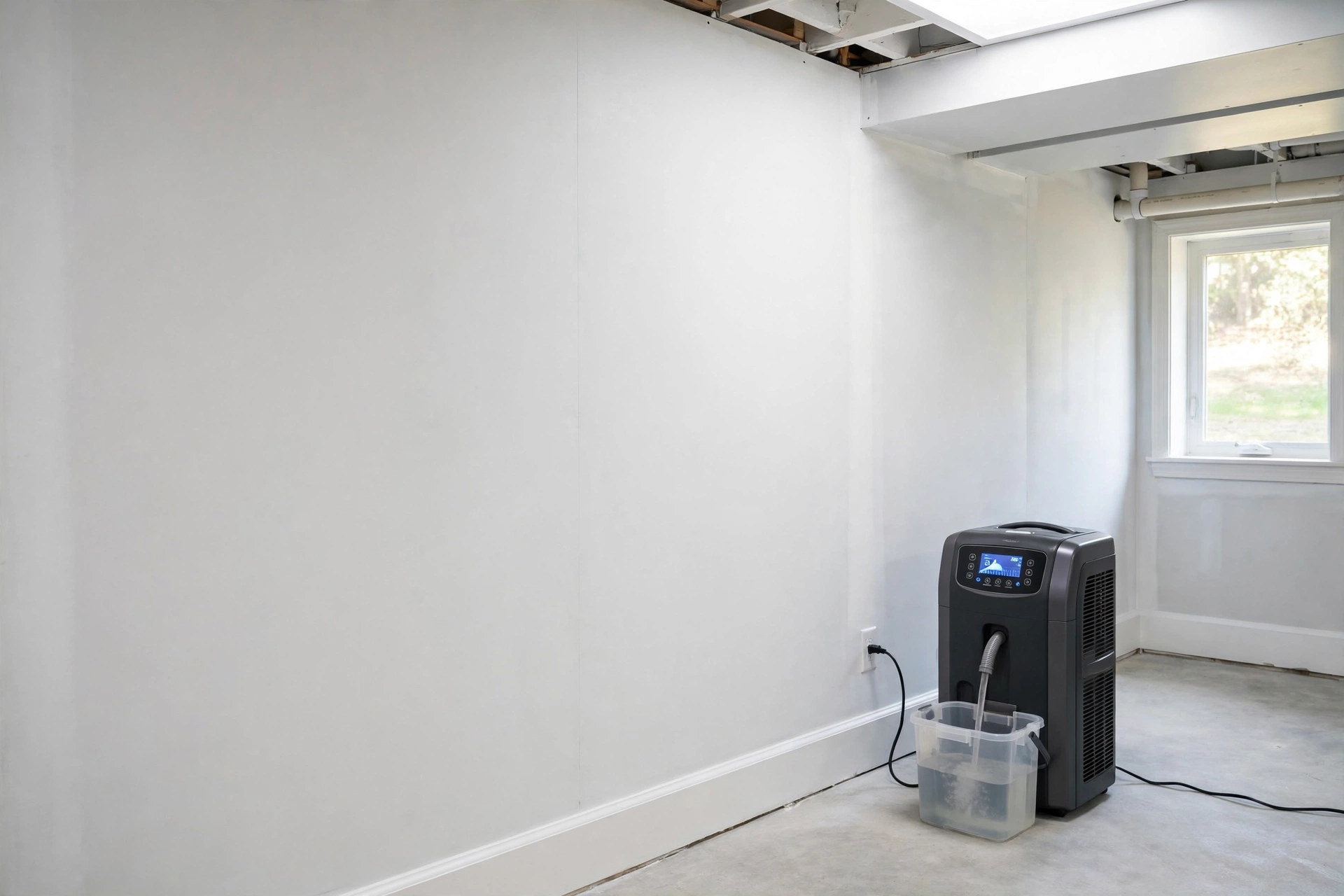
Mold is a symptom of moisture, not an independent disease of your house. Remediation removes the mold colonies and the contaminated materials, but if the pipe is still leaking or the humidity is still sitting at 65 percent, new mold will colonize the same spot. Professional remediation works because it treats both sides: it eliminates the water source and then removes the mold that the water fed.
Think of it like drying out a flooded room. You can run fans for a week, but nothing stays dry while water is still pouring in. The moisture fix comes first, always. Once the area is truly dry, removing the mold has lasting effect because mold cannot regrow on dry materials.
What remediation actually removes
Proper remediation is a removal process, not a killing process. Dead mold spores can still trigger allergic reactions and respiratory symptoms, so a treatment that “kills” mold but leaves it in place has not solved anything. Real remediation takes moldy porous materials out of the building, scrubs and HEPA vacuums the framing that stays, and filters the air so disturbed spores do not settle elsewhere in your home.
This distinction is why surface treatments fail. Bleach changes the color of a stain on wood, which looks like progress, but the colony’s roots stay inside the material. Wiping a surface does not touch the colony inside drywall or under flooring. For a full breakdown of each step, see our guide to the mold remediation process, which walks through inspection, containment, removal, and cleaning in order.
The EPA’s guidance on mold cleanup in homes echoes this: the agency emphasizes removing mold rather than killing it with chemicals, and notes that porous materials with extensive growth generally cannot be cleaned and should be discarded.
Why some remediation jobs fail
When people say remediation did not work, the cause is almost always one of three things. The moisture source was never fixed, so mold returned to the same wet materials. The work only addressed visible growth while hidden mold stayed inside walls or under floors. Or the contractor did cosmetic work, spraying an antimicrobial or painting over stains without removing contaminated material.
A credible sign of a weak job is a quote given without moisture readings. A real professional maps the affected area with a moisture meter before quoting, because visible mold is rarely the full footprint. If a company never found the leak, your problem was never really treated. Mold can start growing within 24 to 48 hours of water exposure, and it colonizes hidden cavities just as fast, as we explain in our article on how fast mold grows.
Another failure point is skipped containment. Disturbing mold releases millions of spores into the air. Without sealed barriers and negative air pressure, the cleaning process itself spreads contamination to clean rooms, and homeowners end up with mold problems in rooms that were fine before the job started.
How professionals verify the job worked
A professional job does not end with “it looks clean.” Containment barriers stay up while a third party performs clearance testing, typically air samples compared against outdoor control samples, to confirm spore counts are back to normal levels. In some states, the law actually requires an independent assessor to handle the inspection and testing, separate from the company doing the removal.
You should receive documentation: moisture readings before and after, photos of removed materials, and clearance test results. A company that treats documentation as optional is treating verification as optional. Ask what proof of completion looks like before you hire anyone, and get the answer in writing.
During the work itself, household safety matters too. Containment keeps your family out of the work zone, and contractors should wear respirators and protective gear. Our guide to mold remediation safety covers what precautions a good crew takes and what you should expect as a homeowner.
What remediation cannot do
Even a perfect job has limits worth knowing. Remediation cannot make your home permanently mold-free, because mold spores are everywhere in outdoor and indoor air at all times. It returns the affected area to a normal background level; it does not sterilize your house. Ongoing humidity control after treatment is what keeps it that way.
It also cannot undo all damage. Framing and subflooring that stayed wet long enough to rot may need structural repair, and drywall or insulation that was removed must be replaced. Remediation handles the mold; reconstruction handles the building materials. Some companies do both, and some hand off after clearance.
Finally, health effects do not always vanish the moment treatment finishes. The CDC notes that mold exposure can cause respiratory symptoms and allergic reactions, and sensitive people may take time to recover even after the source is removed. If symptoms persist, that is a medical question, not a remediation failure, and it deserves a doctor’s input.
How long treatment takes and what it costs
A contained job for a single room typically takes 1 to 3 days of active work, plus time for clearance testing. Larger jobs, whole basements or multi-room water damage, can run a week or longer. Timelines stretch when reconstruction follows remediation, since drywall and flooring replacement happens after clearance.
Costs vary widely by region and scope, but homeowners commonly see quotes from about $500 for a small contained area to $6,000 or more for larger jobs with demolition and reconstruction. See our full mold remediation cost breakdown for what drives quotes up or down. These are typical market ranges, not a quote for your home; always get at least two or three written estimates.
Frequently Asked Questions
Does mold remediation remove all the mold in my house?
It removes the mold in the treated area and returns spore levels to normal background levels, which is the achievable goal. No company can or should promise a mold-free home, since spores are naturally present in all air. Be suspicious of any contractor who guarantees complete elimination.
Can mold come back after professional remediation?
Yes, if the moisture comes back. Remediation is not a waterproofing treatment. If the leak is repaired and indoor humidity stays in the recommended 30 to 50 percent range, the treated area should stay mold-free. If mold returns to the same spot, look for a moisture source first.
How long does mold remediation take?
Small contained jobs take 1 to 3 days. Larger jobs with demolition and reconstruction can take a week or more. Clearance testing adds a day or two after the work is complete. A company that promises to remediate your whole basement in a single afternoon is cutting corners.
Is it safe to stay in the house during remediation?
Usually yes, because proper containment and negative air pressure isolate the work zone from the rest of the home. Occupants with asthma, allergies, or compromised immune systems should ask the contractor whether they should relocate temporarily. Heavy demolition work is noisier and dustier, which is a separate consideration.
Why did my mold come back after treatment?
The three most common reasons are a moisture source that was never fixed, hidden mold that the job never addressed, and a cosmetic-only treatment that sprayed or painted over growth without removing it. A return visit should start with moisture readings and a search for the water source, not another round of surface treatment.
The bottom line
Mold remediation works when it is really remediation: find and fix the water, contain the area, remove contaminated materials, clean what stays, and verify with testing. That formula has a decades-long track record behind it. The failures you hear about are almost never failures of the method; they are failures to fix the moisture or failures to do the full job.
Your job as a homeowner is to hire a company that does all the steps, get the moisture fix handled first, and keep indoor humidity controlled afterward. Do that, and remediation is money well spent rather than a recurring expense.