

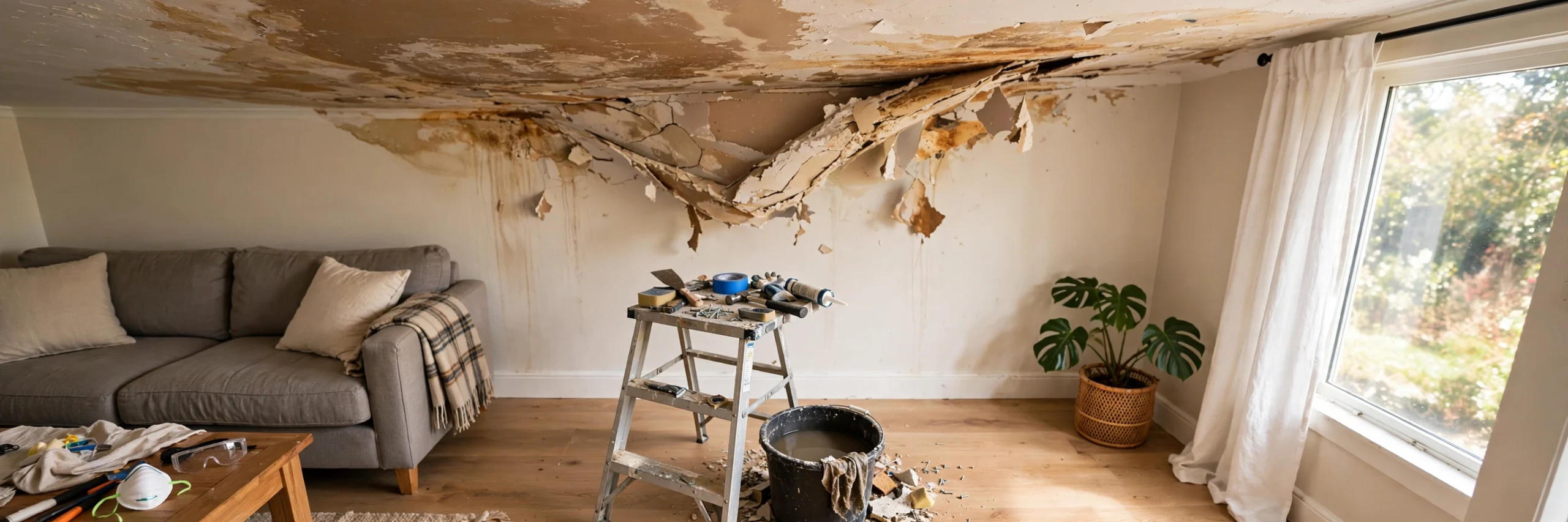
A brown stain spreads across the ceiling, or worse, the drywall starts to sag. Ceiling water damage looks minor at first and has a habit of getting expensive fast, because the visible stain is usually the smallest part of the problem. The water came from somewhere above, and the repair is not done until that source is fixed too.
Most homeowners pay between $350 and $1,500 for ceiling water damage repair, averaging around $700. Stain-only jobs sit at the low end; sagging or moldy drywall pushes toward $2,000 or more. This guide breaks down what moves your price up or down, so you can read a contractor quote with confidence. For the full-house picture, our water damage restoration cost breakdown covers every room.
The 6 factors that set your price
- Size of the damaged area. A 2-foot stain costs little. A 10-foot section of ruined drywall is a different job.
- Stain vs structural damage. Surface staining needs sealing and paint. Soft, sagging, or crumbling drywall needs cutting out and replacement.
- The water source. A fixed plumbing leak is one repair. An active roof leak means roofing work on top of ceiling work.
- Mold. If the ceiling cavity stayed wet, mold remediation gets added to the bill. Our mold remediation cost guide shows per-square-foot pricing.
- Ceiling texture and finish. Matching popcorn, knockdown, or orange-peel texture takes skill and time, and it shows in the quote.
- Access. High ceilings, tight attic access, or chandeliers and recessed lights in the work zone all add labor.
Cost by repair type
Here is what each level of repair typically costs in 2026:
- Stain sealing and repainting: $150 to $400. The drywall is solid, the leak is fixed, and only discoloration remains. A stain-blocking primer plus two finish coats handles it.
- Small drywall patch (under 4 square feet): $250 to $500. Cut out the damaged section, patch, tape, mud, texture, and paint.
- Large drywall replacement (one 4×8 sheet or more): $400 to $900 per sheet installed and finished, including texture matching.
- Sagging ceiling re-secure: $300 to $700. Screws and adhesive reattach loose drywall if the panels are still sound, though replacement is often the better call.
- Full ceiling section rebuild with mold remediation: $1,500 to $3,500+. Containment, removal, treatment, new drywall, and finishing.
Labor is the biggest variable. Drywall finishers charge $50 to $100 per hour, and texture matching is artisan work that commands the higher end. Two contractors can quote the same stain $400 apart based purely on how they handle the texture.
Why the leak source matters more than the stain
Every honest contractor asks one question first: is the leak fixed? Repairing a ceiling under an active leak is throwing money away. Common sources and their separate costs:
- Upstairs bathroom plumbing leak: $150 to $400 for the plumbing repair itself.
- Roof leak: $300 to $1,000+ depending on the roofing issue.
- HVAC condensate line: $100 to $300.
- Appliance supply line (upstairs laundry or ice maker): $150 to $350.
Add the source repair to your ceiling budget. A $500 ceiling job with a $300 plumbing fix is really an $800 project, and quotes that ignore the source are quotes you should question.
Texture matching: the hidden cost driver
Flat ceilings are cheap to repair. Textured ceilings are not. Popcorn texture is the worst case: in pre-1980s homes it often contains asbestos, which requires testing ($30 to $60 for a lab sample) and possibly abatement before anyone disturbs it. Even without asbestos, blending a popcorn patch invisibly is difficult and some contractors will recommend refinishing the whole ceiling.
Knockdown and orange-peel textures are easier to match but still add $100 to $300 to a patch job versus a flat finish. When getting quotes, ask specifically how the contractor plans to match your texture, and ask to see photos of previous matches. Vague answers here predict visible patches later.
Mold in the ceiling cavity
If the leak ran for weeks before anyone noticed, assume the cavity above the drywall needs attention. Warning signs include a musty smell when the room warms up, visible mold around the stain edges, and drywall that stays soft after the area dries. The EPA’s moisture guide stresses drying within 24 to 48 hours to prevent mold, a window that slow ceiling leaks almost always miss.
When mold is present, the damaged drywall gets cut out, the cavity gets HEPA-vacuumed and treated, and everything dries to verified moisture levels before new drywall goes up. This is where IICRC-trained technicians earn their keep, since proper containment keeps spores out of the rest of the house during demolition.
Regional price differences
Ceiling repair costs swing with local labor markets. In high cost metro areas, expect quotes 30 to 50 percent above the national ranges in this guide. In smaller Midwest or Southern markets, the same job often comes in 10 to 20 percent below average. Materials cost roughly the same everywhere; it is the hourly labor rate that moves.
Emergency timing matters everywhere. A repair scheduled two weeks out costs the standard rate; one needed tonight because the ceiling is sagging carries an emergency premium of $150 to $400. If the ceiling is stable and the leak is stopped, waiting for a scheduled slot saves real money over emergency rates.
Material choice plays a smaller role. Standard half inch drywall is inexpensive. If your ceiling uses five eighth inch fire-rated drywall (common in garages and between floors in some codes), material costs roughly double for the panels, though labor stays similar.
DIY vs hiring a pro
A simple stain seal-and-paint is a solid DIY job costing $40 to $80 in materials. Small drywall patches are doable for handy homeowners at $50 to $120 in materials, though the texture matching learning curve is real.
Hire a pro when the drywall sags, when mold is involved, when the ceiling is textured and you care about the result, or when the leak source is not yet identified. Also call an electrician, not a handyman, if water reached light fixtures or ceiling fans. Water and wiring is not a learn-as-you-go situation.
If the damage came from a sudden event like a burst pipe upstairs, check whether your policy covers it before paying out of pocket, and document everything first. Basement floods pair with ceiling issues more often than people expect, so our flooded basement cleanup cost guide is worth a look if water traveled downward too.
How to read a contractor quote
A good ceiling repair quote itemizes: leak source verification, demolition and disposal, mold treatment if needed, drywall materials and square footage, texture type and matching method, priming and paint coats, and cleanup. Red flags include a single lump sum with no breakdown, no mention of the leak source, and a promise to “just paint over it” when the drywall is soft. Get three quotes for anything over $1,000. The spread will teach you what the job should cost in your market.
On payment, be wary of anyone demanding full payment upfront. A reasonable structure is a modest deposit (10 to 25 percent) with the balance due on completion, or progress payments tied to milestones for larger jobs. Never make the final payment until you have inspected the texture match in daylight, checked that the paint blends, and confirmed the leak source repair holds.
When the stain keeps coming back
A stain that returns after repair means the diagnosis was wrong. The three usual culprits: the leak was never actually fixed (the most common), condensation is forming on cold pipes or ductwork inside the ceiling cavity, or water is traveling sideways from a source several feet away and dripping at the low point.
Recurring stains after a plumbing fix deserve a second look with a moisture meter, and if needed a thermal imaging scan of the ceiling ($150 to $300 as a standalone inspection). If condensation is the cause, the fix is insulation around the cold pipe or duct, not another coat of paint. Do not let a contractor repaint the same stain three times; after the second return, insist on opening the ceiling for a direct look.
Frequently Asked Questions
How much does it cost to fix a water-damaged ceiling?
On average $350 to $1,500. Simple stain repairs run $150 to $400, drywall replacement runs $400 to $900 per sheet installed and finished, and jobs involving mold remediation reach $1,500 to $3,500 or more.
Can I just paint over a water stain on the ceiling?
Only if the drywall is completely dry and solid and the leak is fixed. Use a shellac or oil-based stain-blocking primer first, because water stains bleed through regular paint. If the drywall is soft or sagging, paint is a waste of money.
How do I know if my ceiling will collapse?
Warning signs are visible sagging, bubbling paint, dripping water, and creaking sounds. A sagging section can hold gallons of water and fail suddenly, so do not stand under it and call a professional promptly. If water is actively pooling, a small controlled drain hole at the lowest point of the sag can relieve pressure, but this is a stopgap, not a fix.
Does homeowners insurance cover ceiling water damage?
Sudden and accidental leaks, like a burst pipe, are usually covered. Long-term seepage and wear-and-tear leaks typically are not. Document the damage with photos and video before any repairs, and report promptly.
How long does ceiling repair take?
A stain repaint takes a day. Drywall patch and texture matching takes 2 to 3 days with drying time between mud coats. Full section replacement with mold remediation takes 4 to 7 days.
Bottom line
Budget $350 to $1,500 for a typical ceiling water damage repair, fix the leak source first, and never paint over soft drywall. Texture matching is where quotes vary most, so compare itemized bids. And if the damage came from an emergency upstairs, our water extraction cost guide covers the pump-out side of the same disaster.