

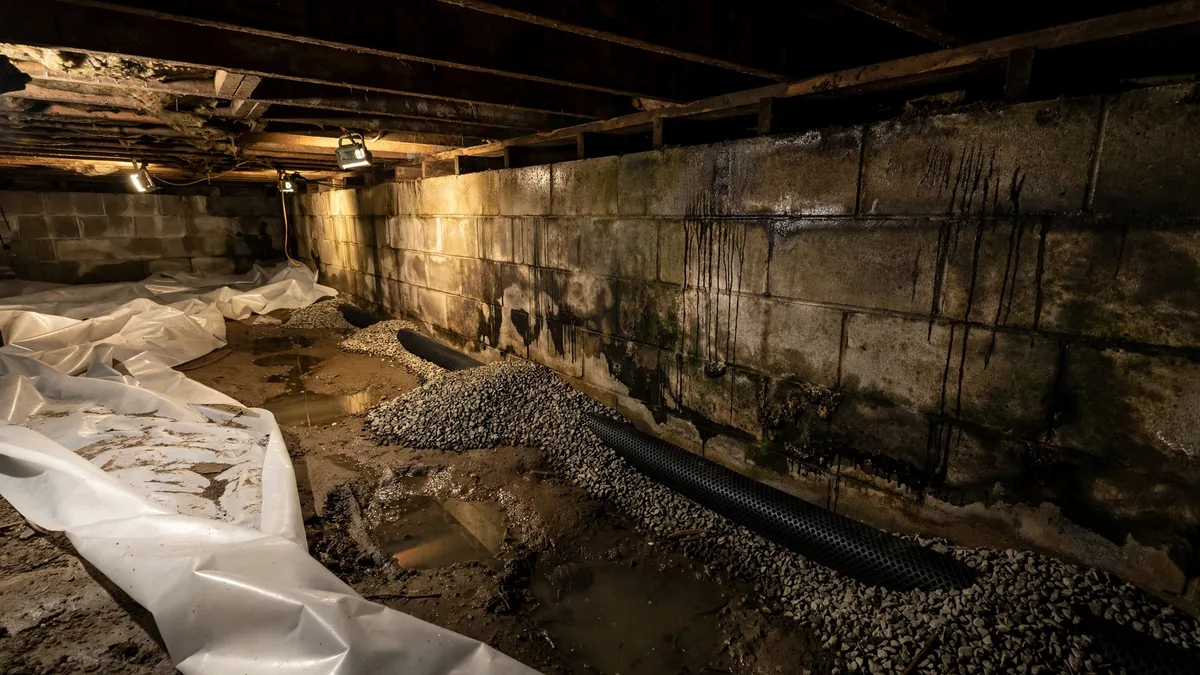
You rarely think about your crawl space until something goes wrong down there. Then you notice a musty smell drifting up through the floor vents, or a home inspector’s report comes back with photos of standing water and the words “recommend professional evaluation,” and suddenly the forgotten space under your house has your full attention.
Crawl space water damage repair cost ranges from about $1,500 for a straightforward professional dry-out to $15,000 or more for full encapsulation with new drainage and mold remediation. Most homeowners land in the middle, paying $3,000 to $8,000 depending on what the water did and what it takes to keep it out permanently.
This guide breaks down realistic U.S. pricing for each piece of the job: drying, drainage systems, sump pumps, and full encapsulation. You will learn what pushes quotes higher, when drainage alone is enough, and how to read a contractor’s proposal without being sold work you do not need.
What “crawl space water damage repair” actually includes
That single line item on a quote usually hides three or four distinct jobs. Water gets in, materials get wet, and then the space needs to be protected so it does not happen again. A typical repair sequence looks like this.
First comes water removal and structural drying: pumping out standing water, pulling up the old torn vapor barrier, and running commercial dehumidifiers and air movers until moisture readings in the joists and subfloor drop to safe levels. Second, damaged materials get removed: soaked insulation and any wood with deep fungal growth.
Third is the fix that prevents a repeat: an interior drainage system, a sump pump, regrading around the foundation, or a full encapsulation. The right choice depends on where the water is coming from, which is why a good contractor spends more time diagnosing the source than selling a system.
National cost ranges for each part of the job
Here is what homeowners typically pay for each component. These are ballpark U.S. ranges, not quotes, and labor rates vary widely by region. For context on how crawl space work fits into a larger project, see our full water damage restoration cost breakdown.
Professional dry-out and debris removal: $1,500 to $3,500. This covers pumping, removing the ruined vapor barrier and wet insulation, and running drying equipment for several days. Access matters a lot here; a crawl space you can walk into costs less to service than one a technician has to belly-crawl through.
Interior drainage system with sump pump: $2,500 to $7,000. This is the workhorse fix for groundwater seepage: a perimeter trench inside the crawl space, perforated pipe draining to a sump basin, and a pump with a battery backup that discharges water away from the foundation. Our French drain cost guide breaks down what drives this number.
A full encapsulation seals the crawl space from ground moisture entirely: a heavy-duty reinforced vapor barrier sealed across the floor and up the walls, sealed vents, and usually drainage and a sump pump underneath it all. Large crawl spaces and ones needing mold remediation first land at the high end.
Mold remediation add-on: $1,000 to $4,000. If mold has colonized the joists, subfloor, or old insulation, that gets remediated before anything is sealed up. Sealing mold inside an encapsulated crawl space just hides the problem.
Encapsulation vs drainage: which one do you actually need
This is the question that causes the most confusion, and the most overselling. Drainage and encapsulation solve different problems, and plenty of homes only need one of them.
Drainage is enough when the problem is liquid water
If water enters during heavy rain or seeps up through the soil in wet seasons, you have a liquid water problem. An interior perimeter drain tied to a sump pump handles it, keeping the space dry even in bad weather. Many crawl spaces with seasonal seepage are fully solved by drainage alone for a few thousand dollars.
Encapsulation is the answer when the problem is moisture, not just water
Some crawl spaces rarely flood but stay humid year round, with a persistent musty smell and high moisture readings in the wood. That is moisture vapor rising from bare soil and entering through open vents, and no drain will fix it. Encapsulation seals the space and controls the air inside it.
Be wary of any contractor who recommends encapsulation without first diagnosing the water source. Encapsulating over an active leak traps water inside a sealed space, which is worse than doing nothing. The honest sequence is: stop the water, dry the space, then decide whether encapsulation adds value.
Five factors that push your quote up
1. Mold on the joists and subfloor
Mold is the biggest cost multiplier in crawl space work. Surface growth on joists can sometimes be treated in place, but heavy colonization means HEPA vacuuming, antimicrobial treatment, and sometimes removing affected wood. The EPA’s guide on mold and moisture stresses that the moisture source must be fixed first, or the mold simply returns.
2. Structural damage to joists or subfloor
Wood that stayed wet long enough can rot or develop wood-decay fungi. Sistering a few joists adds hundreds of dollars; replacing sections of subfloor from underneath can add thousands. This is the hidden cost that turns a $4,000 drying job into a $9,000 project.
3. Tight or difficult access
Contractors price access explicitly. A crawl space with a full-size door and three feet of clearance is a normal job. One with an 18-inch scuttle hole and 16 inches of headroom is hazardous, slow work, and the quote reflects it, sometimes 20 to 40 percent higher.
4. The water source is outside, not inside
If the real problem is grading that slopes toward the house, gutters dumping at the foundation, or a high water table, the durable fix may include exterior work. Our basement waterproofing cost guide covers interior versus exterior pricing in detail.
5. Size and linear footage
Encapsulation and drainage are both priced partly by square footage and partly by perimeter feet. A 600-square-foot crawl space under a ranch costs far less to encapsulate than a 2,000-square-foot one under a two-story. Get quotes stated per scope, not per square foot alone, so you can compare what is actually included.
Mold remediation in the crawl space: what to expect
Dark staining on floor joists is the most common surprise in a crawl space inspection, but not all of it is active mold; some is old staining from a leak fixed years ago. A contractor should verify with moisture readings before quoting remediation.
When remediation is warranted, expect containment, HEPA-filtered negative air, removal of contaminated insulation and debris, HEPA vacuuming of joists, and an antimicrobial coating on the wood. For a typical residential crawl space this runs $1,000 to $4,000. If growth has spread to the walls as well, our guide to mold on basement walls explains how pros handle structural mold safely. The CDC’s mold prevention guidance reinforces the key point: cleanup without moisture control is temporary.
DIY vs hiring a professional
Homeowners can handle some crawl space tasks: laying a basic 6-mil vapor barrier on a dry crawl space, sealing small vent gaps, and extending downspouts away from the foundation. These are sensible weekend projects costing a few hundred dollars in materials.
Draw the line at standing water, electrical components near water, suspected mold beyond a tiny patch, or structural wood damage. Interior drainage installation requires trenching, proper pipe slope, and a correctly sized sump system, and encapsulation done wrong performs worse than the cheap barrier it replaced.
Will homeowners insurance cover crawl space water damage
Sometimes, but the odds are worse than for damage inside the living space. Insurance typically covers sudden and accidental water events, like a burst supply pipe, but not seepage, groundwater, or long-term moisture, which are the most common crawl space problems.
If a covered event caused the damage, document everything before cleanup: photos of standing water, the source, and damaged materials. For chronic moisture problems, the bill is almost always yours, which makes prevention the real money saver.
Porous materials that stay wet longer than 24 to 48 hours can develop mold growth, which is why fast drying matters far more in a crawl space than in any other part of the house, according to the EPA’s mold guidance.
Frequently Asked Questions
How much does it cost to dry out a crawl space after flooding?
A professional dry-out with water removal, debris clearing, and commercial drying equipment typically costs $1,500 to $3,500. Add $1,000 to $4,000 if mold remediation is needed, and more if joists or subfloor require structural repair.
Is crawl space encapsulation worth the money?
It is worth it when the problem is chronic humidity, musty odors, or moisture damaging wood and HVAC equipment. It is not worth it as a first step for active leaks; fix the water entry first, then decide.
How long does a crawl space encapsulation last?
A properly installed encapsulation with a 20-mil reinforced barrier, sealed seams, and a working dehumidifier typically lasts 15 to 20 years. The dehumidifier itself will need replacement sooner, usually every 5 to 10 years.
Why does my crawl space get wet every time it rains?
The usual suspects are gutters discharging at the foundation, soil grading that slopes toward the house, or a high water table pushing seepage up through the soil. An interior drain and sump pump manage the symptom; regrading and gutter extensions address the cause.
Does a vapor barrier alone stop crawl space water?
No. A vapor barrier slows moisture vapor rising from the soil, but it does nothing against liquid water entering during rain. Water will simply pool on top of or flow under the barrier. Pair barriers with drainage for liquid water problems.
The bottom line
Crawl space water damage repair runs from about $1,500 for a simple dry-out to $15,000 or more for full encapsulation with drainage and mold remediation, with most homeowners paying $3,000 to $8,000.
Your next moves, in order: find where the water comes from during the next rain, get moisture readings in the joists, and collect two or three quotes that separate drying, drainage, and encapsulation into distinct line items.