

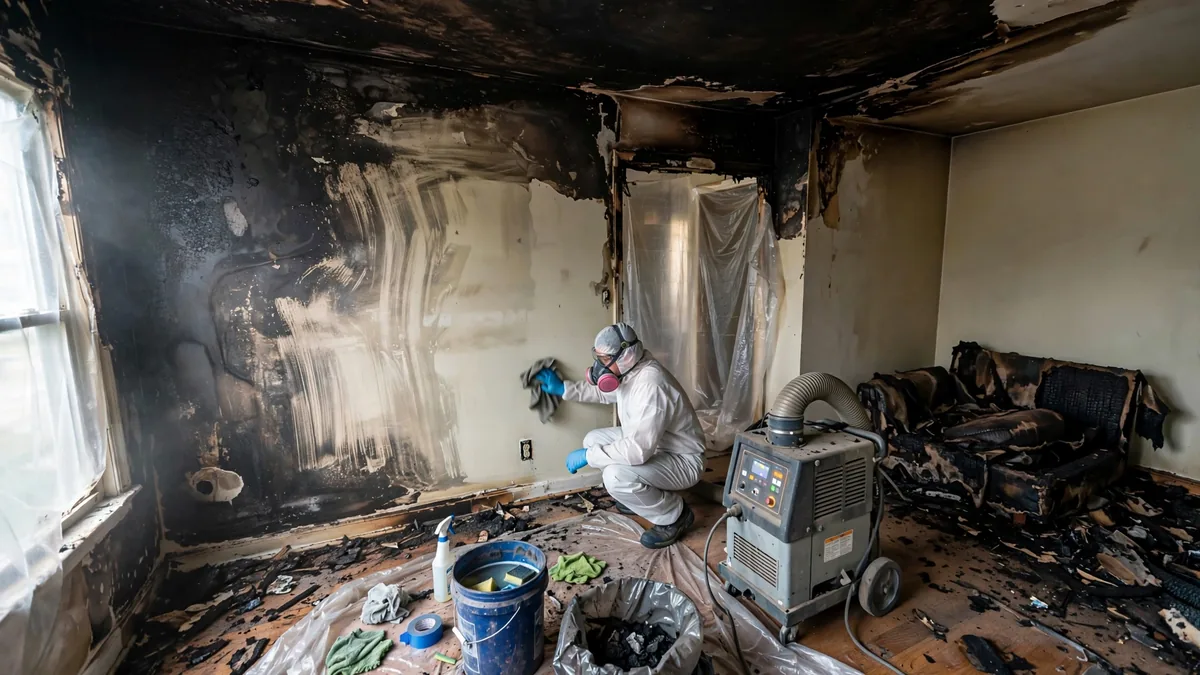
A house fire is over in hours, but the restoration takes weeks or months, and the bill is the second shock. Even a small kitchen fire that never left the stove can fill the whole house with soot and smoke odor, and the cleanup touches nearly every surface you own.
Fire and smoke damage restoration cost typically ranges from $3,000 for a contained room fire to $40,000 or more for a major structural fire. Most homeowners dealing with a moderate fire pay somewhere between $8,000 and $25,000, with the final number driven by how far the smoke traveled, how much soot settled, and whether the structure itself was damaged.
This guide breaks down what each phase of restoration costs, why smoke damage is often worse than the fire damage, and how insurance handles the claim. You will also learn how to vet a restoration contractor, because the company you hire matters as much as the price.
Why the smoke bill often exceeds the fire bill
Homeowners expect the burned area to be the expensive part. In practice, the fire may have been confined to one room while smoke and soot reached everywhere. Soot is acidic and corrosive; left sitting, it etches glass, tarnishes metal, discolors plastics, and embeds permanently into porous materials. The longer it sits, the more damage it does, which is why restoration companies push for fast response.
Then there is the water. Firefighting efforts soak the structure, so most fire jobs are also water damage jobs: saturated drywall, wet insulation, and soaked flooring in areas the fire never touched. If the water is not extracted and dried quickly, mold follows the smoke, and the claim grows a second problem. For a sense of how that side of the bill stacks up, see our full water damage restoration cost breakdown.
National cost ranges by fire severity
Every fire is different, but restoration pricing falls into recognizable bands. These are typical U.S. ranges for professional work; they are not quotes, and your adjuster’s scope will be the final word.
Small contained fire (stovetop, single room): $3,000 to $8,000. Soot cleanup in the affected room, smoke odor treatment for nearby areas, and minor repairs like repainting and replacing a section of drywall or flooring.
Moderate fire (multiple rooms, heavy smoke): $8,000 to $25,000. Whole-house soot cleaning, HVAC duct cleaning, thermal fogging or ozone treatment for odor, content cleaning for salvageable belongings, and repairs to several rooms including drywall, flooring, and paint.
Major structural fire: $25,000 to $40,000 or more. Partial rebuild of burned framing, roof repair, extensive demolition, full content pack-out and restoration, and months of work. Total-loss fires that require a full rebuild go far beyond restoration pricing and into construction costs.
Smoke and soot only (no active fire damage): $2,000 to $6,000. This covers situations like a furnace puff-back or a neighbor’s fire that filled your home with soot. Cleaning and odor removal without structural repair.
What each phase of restoration costs
Emergency board-up and site security
The first invoice is usually the emergency response: board-up of broken windows and doors, roof tarping if needed, and securing the property. Expect $500 to $2,000 depending on the extent of openings. Most restoration companies offer 24-hour emergency response, and this work is almost always covered when the fire itself is a covered loss.
Soot and smoke cleanup
This is the labor heart of the job. Technicians HEPA-vacuum every surface, then clean with specialized dry sponges and cleaning agents matched to the soot type. Protein fires from kitchens leave a greasy residue that needs different chemistry than the dry soot from a fast-burning paper fire. Whole-house soot cleaning typically runs $2,000 to $8,000 depending on home size and soil level.
Odor removal
Smoke odor hides in every porous material: drywall, insulation, carpet pad, upholstery, and the HVAC system. Pros use a layered approach: cleaning first, then thermal fogging, hydroxyl generators, or ozone treatment for what cleaning cannot reach. Serious odor jobs run $1,000 to $4,000. Be skeptical of anyone who promises odor removal with a single spray treatment; embedded smoke odor is a multi-step problem.
Content cleaning and pack-out
Salvageable belongings get inventoried, packed, transported to a cleaning facility, ultrasonically or hand cleaned, stored, and returned. Pack-out services typically cost $1,500 to $5,000 depending on volume. Not everything is worth saving; smoke-damaged food, cosmetics, and medicines should be discarded, not cleaned.
Structural repair and rebuild
This is where costs swing hardest. Replacing charred framing, rebuilding a section of roof, hanging and finishing drywall, and reinstalling flooring and trim can run $5,000 to $30,000 depending on how much of the structure was compromised. Charred wood that looks intact may have lost structural strength, so repairs follow an engineer’s or experienced contractor’s assessment, not appearances.
Four factors that push the price up
1. How long the soot sat before cleanup
Soot damage is time-sensitive. Within hours it discolors plastics; within days it corrodes metals and etches glass permanently. A fast professional response literally saves surfaces that a delayed one has to replace. If your adjuster is slow, document the delay and push for emergency mitigation authorization.
2. The type of fire
Kitchen protein fires produce a nearly invisible but intensely smelly residue that coats everything and resists normal cleaning. Synthetic fires involving plastics and foam produce thick black smoke that stains aggressively. Natural-material fires are comparatively easier to clean. Your contractor should identify the soot type before choosing cleaning methods.
3. HVAC contamination
If the system ran during or after the fire, soot is inside the ductwork and on the coils. Duct cleaning adds $500 to $1,500, and a contaminated system will re-distribute odor throughout the house after everything else is clean if it is skipped. Filter replacement alone is not enough for heavy contamination.
4. Water damage from firefighting
Thousands of gallons of water do their own damage: swollen subfloors, saturated insulation, and wet wall cavities that grow mold within days. The drying phase of a fire job uses the same commercial equipment as any water restoration, and it has to happen before rebuild, not after.
Choosing a fire restoration contractor
This is not the job for the cheapest bid or a general handyman. Fire restoration requires specific training, equipment, and insurance relationships. Look for IICRC certification in fire and smoke restoration, which indicates standardized training rather than on-the-job improvisation. The IICRC’s official site explains what its certifications cover and why they matter for this kind of work.
Get the scope in writing before work starts: which rooms get cleaned, what odor treatment methods will be used, what happens to contents, and what the rebuild includes. Our guide on how to choose a water damage restoration company covers the vetting questions that apply equally to fire jobs, and our explainer on IICRC certification tells you what those acronyms on the truck actually mean.
How homeowners insurance handles fire claims
Standard policies cover the structure, your belongings, and additional living expenses while the home is uninhabitable. The fights, when they happen, are about scope: the insurer’s estimate versus the contractor’s, and whether odor remediation is “necessary” or cosmetic.
Document everything before cleanup begins, keep every receipt from the night of the fire onward, and do not sign over your claim to a contractor without understanding assignment-of-benefits paperwork. For the water damage side of the claim, which adjusters sometimes try to split off, our guide to homeowners insurance and water damage explains how those coverages interact. FEMA also maintains disaster recovery resources if the fire was part of a declared wildfire event.
Never re-enter a fire-damaged home until the fire department declares it safe; structural instability, toxic residues, and compromised electrical systems make early entry genuinely dangerous.
Frequently Asked Questions
How much does smoke damage restoration cost without fire damage?
Soot and odor cleanup without structural repair typically runs $2,000 to $6,000 for an average home. Furnace puff-backs, which coat the house in oily soot, land in the same range and are notoriously labor-intensive to clean.
Can smoke smell ever be fully removed?
Yes, with proper multi-step treatment: thorough cleaning first, then thermal fogging, hydroxyl, or ozone for embedded odor, plus HVAC decontamination. Single-step “odor bombs” and scented sealers usually fail because they mask rather than neutralize the odor source.
How long does fire damage restoration take?
A small contained fire with light smoke damage can be resolved in one to three weeks. Moderate fires with multi-room impact typically take one to three months. Major structural fires with rebuild work can take six months or longer, especially when insurance negotiations slow the process.
Should I try cleaning soot myself?
Light dusting of dry soot with a dry sponge is fine for a tiny area, but improper cleaning makes things worse: wiping soot with water or household cleaners can smear it permanently into surfaces. For anything beyond a single small patch, professional cleaning methods and chemistry get better results with less risk of permanent staining.
Does insurance pay for temporary housing after a fire?
Standard homeowners policies include additional living expenses or loss-of-use coverage that pays for hotels, rentals, and extra food costs while your home is uninhabitable. Keep every receipt and check your policy’s limits and time caps.
What items should be thrown away after a fire?
Discard all food, beverages, medicines, and cosmetics exposed to smoke or heat, even if sealed; heat can compromise seals and smoke penetrates packaging. Porous items like mattresses and pillows with heavy soot are usually not worth restoring. An inventory with photos supports the contents portion of your claim.
The bottom line
Fire and smoke damage restoration runs from about $3,000 for a small contained fire to $40,000 or more for major structural damage, with most moderate fires landing between $8,000 and $25,000. Speed matters more here than in almost any other restoration job, because soot damage compounds with every day it sits.
Your next moves, in order: secure the property, document everything with photos and video before anything is moved, call your insurer to open the claim, and hire an IICRC-certified restoration company for emergency mitigation while the claim is being adjusted.