

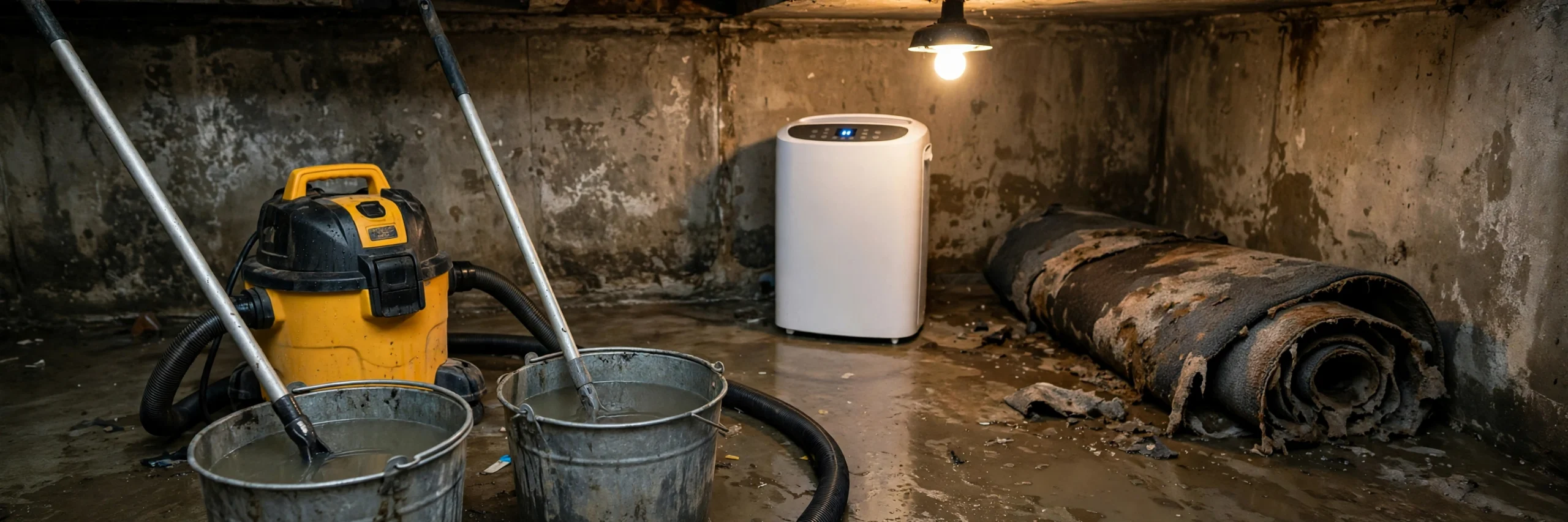
A flooded basement hits the wallet twice: once for getting the water out, and again for everything the water touched. Before you start calling contractors or renting pumps, it helps to know what each path actually costs. A DIY cleanup can run a few hundred dollars. A professional job for the same basement often lands between $1,000 and $5,000, and larger or contaminated floods go higher.
This guide breaks down both options line by line: equipment, labor, materials, and the hidden costs people forget. You will also learn where DIY makes sense, where it does not, and how to avoid paying twice by doing it halfway. For the bigger picture on whole-house jobs, see our full water damage restoration cost breakdown.
What drives the cost of a flooded basement cleanup
Five factors decide your bill more than anything else:
- Water category. Clean water from a supply line is cheapest to handle. Gray water from appliances costs more. Black water (sewage or outdoor floodwater) requires protective protocols and disposal rules that push costs up sharply.
- Depth and square footage. Two inches in a 400 square foot basement is a different job than two feet in a 1,200 square foot finished basement.
- How long it sat. Water extracted within hours causes far less damage than water that sat for days. Every extra day adds drying time and mold risk.
- Finished vs unfinished. Bare concrete is forgiving. Finished basements mean drywall, carpet, trim, and sometimes electrical to replace.
- Contamination. Sewage backup or river flooding brings bacteria and requires disinfection, protective gear, and often disposal of porous materials.
Get these five facts straight before you price anything, because every contractor will ask about them first.
DIY cleanup: the real cost breakdown
DIY makes sense for clean-water floods under a few inches in an unfinished basement, tackled within a day. Here is what the equipment actually costs:
- Submersible utility pump: $80 to $200 to buy, $40 to $75 per day to rent.
- Wet/dry shop vacuum (12+ gallons): $70 to $150 to buy, $25 to $40 per day to rent.
- Dehumidifier rental (commercial grade): $50 to $80 per day. You will need it for 3 to 5 days.
- Air movers (2 to 4 units): $25 to $35 per day each.
- Moisture meter: $30 to $60. Skipping this is how DIY jobs fail, because surfaces feel dry long before they are.
- Cleaning and disinfecting supplies, heavy trash bags, protective gear: $50 to $120.
- Dumpster or disposal fees for ruined materials: $100 to $300.
All in, a DIY cleanup typically runs $200 to $800 for a moderate unfinished basement, assuming you already own basic tools. The catch is your time: expect 15 to 30 hours of active work spread over a week, plus the risk of missing hidden moisture that turns into a mold problem later. If mold does take hold, our room-by-room black mold removal guide covers safe cleanup, though at that point the savings start evaporating.
Professional cleanup: what you are paying for
A professional restoration company brings truck-mounted extraction, commercial dehumidifiers, and technicians who do this daily. Typical price ranges for 2026:
- Emergency water extraction only: $1,000 to $2,500 for an average basement.
- Extraction plus structural drying (3 to 5 days of monitored drying): $2,000 to $4,000.
- Full cleanup with removal of damaged drywall, carpet, and insulation: $3,000 to $6,000+.
- Sewage or black-water jobs: add 50 to 100 percent to the above for protective protocols and disposal.
Reputable companies follow the IICRC S500 standard for water damage restoration, which dictates drying goals and verification with moisture meters rather than guesswork. That monitoring is a big part of what you are paying for, and it is the main thing DIY jobs lack.
Most pros charge an emergency call-out fee of $150 to $300 for after-hours response, then bill extraction by the square foot or by the hour. Always get the scope in writing: exactly what gets removed, what gets dried in place, and how many drying days are included.
What the drying and monitoring phase includes
Extraction gets the liquid out. Drying gets the moisture out of materials, and it is a separate phase with its own costs. After extraction, technicians place commercial dehumidifiers (rated by pints of water removed per day, typically 70 to 130 pints for residential jobs) and air movers (roughly one per 150 to 300 square feet of wet area).
The equipment runs 3 to 5 days. A technician returns daily or every other day to take moisture readings from walls, floors, and framing with pin and pinless meters, repositioning equipment as drying progresses. This monitoring is what separates professional drying from parking a rented dehumidifier in the room and hoping. Daily monitoring visits are usually bundled into the drying charge of $500 to $1,500.
You will know drying is done when readings match the moisture content of unaffected materials elsewhere in the house, not when surfaces feel dry to the touch. Concrete and framing hold moisture invisibly, and “feels dry” is the most expensive assumption in water damage work. Get the final readings in writing, since insurers ask for them if mold appears later.
Side-by-side comparison
For a typical scenario, say 600 square feet of basement with 3 inches of clean water, extracted within 24 hours:
- DIY total: roughly $350 to $600 in rentals and supplies, plus 20+ hours of your labor.
- Professional total: roughly $1,800 to $3,000, done in 3 to 5 days with verified drying.
The price gap narrows fast when complications appear. If drywall needs cutting, if there is any sewage contamination, or if you discover mold, professional costs rise by $1,000 to $3,000 while DIY costs rise too, plus you absorb all the risk. One failed DIY drying job that leads to mold remediation can easily cost more than hiring pros in the first place. Our mold remediation cost guide shows what that second bill looks like.
Hidden costs both options share
Whether you DIY or hire out, budget for these often-forgotten items:
- Replacing the bottom 2 feet of drywall. Wet drywall wicks water upward and rarely dries cleanly. Budget $2 to $4 per square foot installed.
- Carpet and pad. Carpet pad is almost never salvageable after flooding. Replacement runs $4 to $8 per square foot installed.
- Electrical inspection. If water reached outlets or the panel, an electrician visit ($150 to $300) is cheap insurance.
- Dehumidifier purchase. Many homeowners buy a permanent unit after a flood ($200 to $400) to prevent round two.
- Increased insurance deductible. If you file a claim, remember your deductible comes off the top.
- Temporary storage. If the basement held furniture or boxes worth saving, a month of storage unit rental runs $75 to $200.
- Permits. Some municipalities require permits for significant basement rebuilds, typically $50 to $150.
Ceiling damage is common too when water travels upward or the flood came from above. Our ceiling water damage repair cost guide covers that side of the bill.
When DIY is safe and when it is not
DIY is reasonable when all of these are true: the water is clean (supply line, not sewage or floodwater), it is less than a few inches deep, you caught it within a day, the basement is unfinished, and nobody in the house has respiratory issues. The EPA’s mold and moisture guide reinforces the core principle: dry everything within 24 to 48 hours and you prevent most mold problems.
Call professionals when any of these apply: sewage or outdoor floodwater is involved, water sat for more than 48 hours, the basement is finished, water reached electrical systems, or you find mold already growing. Black water jobs are not DIY territory. The health risk and the disposal regulations both argue for pros.
How to keep the next bill smaller
A few hundred dollars of prevention beats thousands in cleanup. Install a sump pump with battery backup if you have one, or add the backup if you already own the pump. Keep gutters clean and extend downspouts at least 6 feet from the foundation. Know where your main water shutoff is and label it. Consider a water leak detector with an automatic shutoff valve near the water heater and washing machine. Each of these costs far less than a single flood.
Frequently Asked Questions
How much does it cost to pump water out of a basement?
Pump-out alone typically costs $500 to $1,500 for a professional emergency visit. Full extraction plus drying runs $1,000 to $2,500. DIY pump rental costs $40 to $75 per day.
Does homeowners insurance cover flooded basement cleanup?
It depends on the water source. Sudden pipe bursts are usually covered, while groundwater seepage and flooding typically require separate flood insurance. Document everything with photos before cleanup begins.
Can I save a flooded finished basement myself?
Partially. You can extract water and run drying equipment, but cutting out wet drywall, replacing insulation, and verifying wall cavities are dry usually needs professional tools and experience. Most finished basements are hybrid jobs at best.
How long does a basement take to dry after flooding?
With commercial equipment, 3 to 5 days for the structure. DIY setups with consumer dehumidifiers often take 7 to 10 days. Concrete floors hold moisture longer than they appear to, so verify with a meter.
What should I throw away after a basement flood?
Discard carpet pad, cardboard, upholstered furniture that stayed wet, mattresses, and any drywall that wicked water. Hard plastics, glass, and metal can be cleaned and disinfected. When in doubt with porous materials, throw it out.
Bottom line
For a small, clean, quickly-caught flood in an unfinished basement, DIY saves real money: a few hundred dollars versus a couple thousand. For anything involving sewage, finished walls, delayed discovery, or mold, professional cleanup is the cheaper option once you count the risk. Either way, speed matters more than method. Get the water out within the first day and you keep every option affordable.