

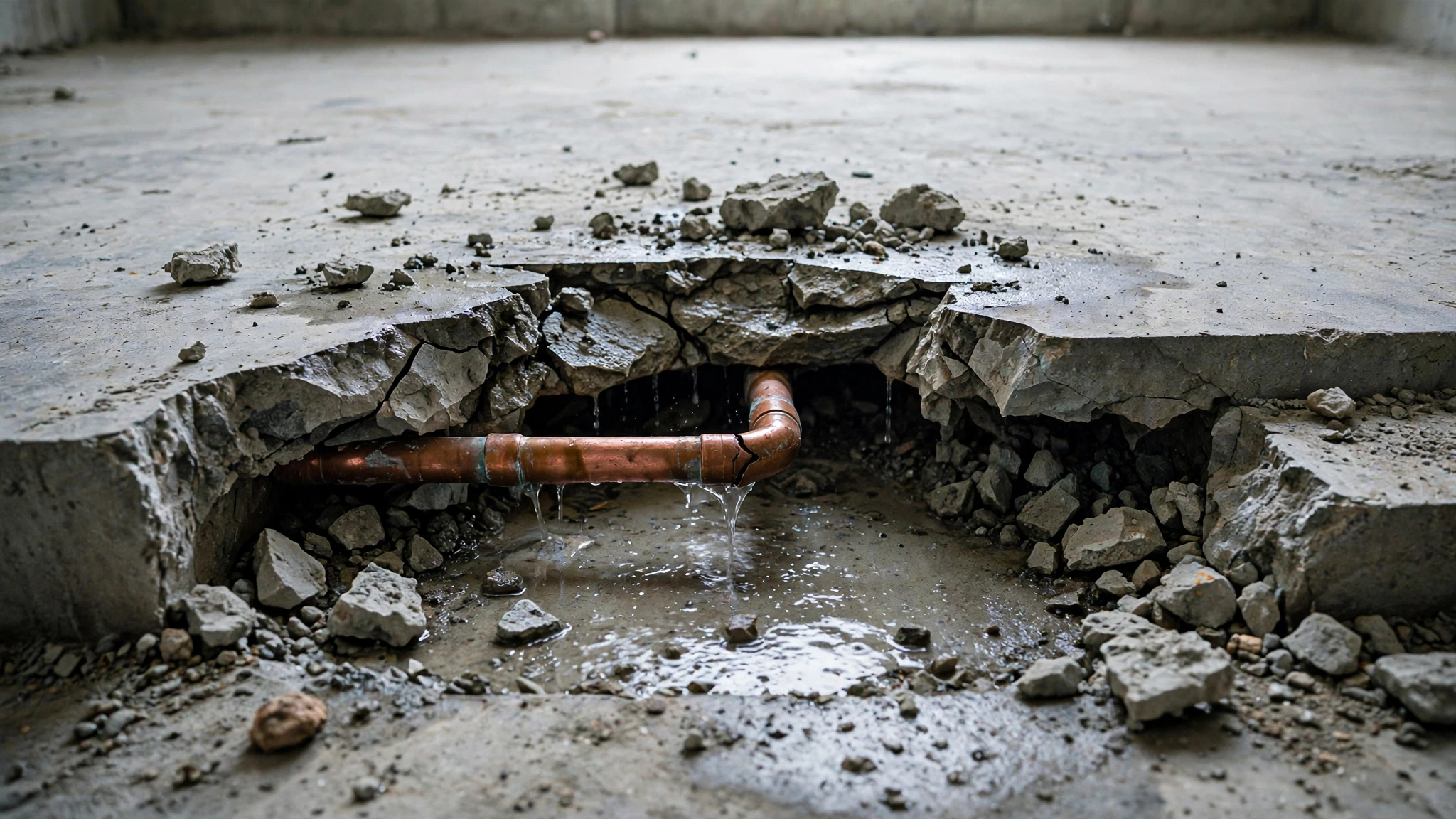
A slab leak is a water leak in the pipes buried in or under your home’s concrete foundation. You cannot see it, and it can run for months before the symptoms are obvious enough to investigate. By then it may have undermined soil, cracked the slab, and soaked flooring across multiple rooms.
Slab leak water damage is one of the more expensive residential plumbing problems because the repair involves the foundation itself, with water damage restoration layered on top. Understanding the warning signs and repair options before you need them can save you thousands, because early detection turns a foundation-scale problem into a contained plumbing fix.
This guide explains what slab leaks are, the signs that point to one, how professionals pinpoint the leak location, the repair options with realistic cost ranges, and how insurance typically treats the damage.
What a slab leak actually is
In homes built on concrete slab foundations, water supply lines are often routed through or beneath the slab. A slab leak is a failure in one of these buried lines.
Leaks happen for predictable reasons. Copper pipes corrode from the outside in when soil chemistry is aggressive or the pipe rubs against concrete as it expands and contracts. Slab movement from soil expansion and contraction stresses joints and fittings. Poor installation can leave pipes in contact with rebar or sharp aggregate, setting up a slow-motion failure from day one.
There are two kinds, and the distinction matters. A leak in a pressurized supply line runs constantly, which is why the water bill is often the first clue. A leak in a drain line only flows when fixtures drain, making it harder to detect, but it introduces contaminated water into the soil and slab.
Warning signs of a slab leak
No single symptom proves a slab leak, but several together make a strong case:
- A water bill that jumps with no change in usage, sometimes doubling or more. This is the single most common first sign of a pressurized line leak.
- Hot spots on the floor: a section of tile or concrete that feels noticeably warm, caused by a leaking hot water line heating the slab from below.
- The sound of running water when no fixtures are in use, especially audible at night when the house is quiet.
- Damp spots, mildew, or unexplained moisture on floors, often at room edges or along buried line paths.
- Foundation movement: new cracks in walls or floors, doors that suddenly stick, or gaps between baseboards and floors. Escaping water erodes the soil supporting the slab.
- Low water pressure throughout the house, as the leak bleeds off pressure from the system.
Foundation symptoms deserve their own investigation. If you are seeing cracks along with moisture, our guide on foundation cracks and water intrusion helps you tell the difference between cosmetic settling cracks and structural movement that needs an engineer.
How professionals detect slab leaks
Finding the leak matters enormously, because the repair involves breaking concrete or rerouting pipe. Pros use a layered detection process rather than guessing.
Acoustic listening
Pressurized water escaping through a pinhole makes a hiss transmitted through the pipe and slab. Technicians use ground microphones and acoustic sensors pressed to the floor to map where the sound is loudest. This works best on pressurized supply lines in quiet conditions, which is why detection is often scheduled when the house is empty.
Thermal imaging
Infrared cameras detect temperature differences in the slab surface. A hot water line leak shows as a warm plume spreading through the concrete, often pointing back toward the break. Thermal imaging is fast, non-invasive, and especially effective for hot-side leaks.
Pressure and isolation testing
When the location is still uncertain, plumbers isolate sections of the plumbing system and pressure-test each one. The section that will not hold pressure contains the leak. Combined with acoustic or thermal work, this pinpoints the break.
Professional leak detection typically costs $150 to $400, and it is money well spent: a precise location can be the difference between a single targeted repair and exploratory concrete work.
Repair options and what they cost
Once the leak is located, there are four main repair approaches. The right one depends on the pipe’s age and condition, the leak’s location, and how much of the system is likely to fail next.
Spot repair: open the slab at the leak
The technician breaks through the concrete at the leak location, cuts out the damaged section, and splices in new pipe. This is the cheapest option when the rest of the system is sound: typically $500 to $1,500 for the plumbing work, plus concrete and flooring repair on top. The risk is that a decades-old copper system springs its next leak a year later in a different spot.
Reroute: abandon the buried line
The leaking line is capped off and left in the slab, and a new line is run overhead through walls and ceilings or around the exterior. Rerouting avoids breaking concrete entirely and replaces the vulnerable buried run with accessible pipe. Typical cost is $1,500 to $4,000 or more depending on distance and how many walls must be opened.
Epoxy lining: coat the pipe from inside
For systems with multiple weak spots, epoxy pipe lining coats the interior of the existing pipes without excavation, sealing pinholes and slowing further corrosion. Cost generally runs $2,000 to $4,000+ for a whole-house application. It is not suitable for pipes that are collapsed or severely corroded, and results depend heavily on the installer.
Tunneling: access from below
For leaks under the middle of a large slab, crews sometimes tunnel underneath from outside the foundation rather than breaking interior floors. This preserves flooring but is labor-intensive: tunneling repairs typically start around $2,000 and climb with distance and soil conditions.
The water damage restoration side of a slab leak
The plumbing repair is only half the bill. Months of water under or in the slab damages flooring, baseboards, drywall, and sometimes cabinetry. Laminate and engineered wood flooring over a wet slab usually cannot be saved, and baseboards wick moisture upward and need replacement. For the restoration phase, hire a contractor whose work follows IICRC restoration standards.
Restoration follows the standard sequence: stop the water, extract what is accessible, dry with professional equipment, verify dryness with meters, then rebuild. The slab itself dries slowly, so dehumidification runs longer than for a typical above-grade leak. For realistic numbers, see our water damage restoration cost breakdown: a slab leak with flooring replacement across several rooms typically lands in the mid four figures for restoration alone, before the plumbing repair.
Mold is the quiet multiplier here. A slab leak that ran for months kept materials damp long enough for mold to establish in wall cavities and under flooring. The EPA’s mold and moisture guidance emphasizes drying affected materials promptly once the water source is fixed.
What insurance usually covers, and what it does not
Most homeowners policies cover the water damage caused by the leak: the ruined flooring, damaged drywall, and mold remediation up to policy limits. But most policies exclude the cost of repairing the pipe itself and accessing it, meaning the concrete breaking and the pipe repair are often on you.
The practical effect: insurance may pay several thousand for restoration while you pay several thousand for the plumbing and slab work. Some policies offer endorsements that add coverage for access and pipe repair, worth asking your agent about if you own a slab home with original plumbing. Document everything from the first suspicion: water bills showing the spike, detection reports, and photos of all damage.
Frequently Asked Questions
How do I know if I have a slab leak or just a high water bill?
Check the water meter: turn off every fixture and appliance, then watch the meter for 15 minutes. If it moves with everything off, water is going somewhere it should not. Combine that with hot spots on the floor or the sound of running water, and you have a strong case for professional detection.
Can a slab leak go away on its own?
No. Mineral buildup can occasionally slow a pinhole leak temporarily, but pressurized pipe failures do not heal. Waiting lets the leak erode more soil and spread moisture to more rooms. Every month of delay trades a contained plumbing fix for a larger restoration project.
Is it safe to stay in the house with a slab leak?
Usually yes in the short term, with exceptions. A supply-line leak is mainly a water waste and property damage issue. A drain-line leak under the slab is a sanitation concern and should be addressed promptly. If the leak is causing visible foundation movement, get a structural assessment.
How long does slab leak repair take?
Detection takes a few hours. A spot repair is typically a one to two day job plus concrete and flooring restoration. Reroutes take two to four days depending on how many walls are opened. The drying and restoration phase after the plumbing fix typically adds another week or more.
Should I repair or reroute if my pipes are old?
If the buried plumbing is decades old and this is the first leak, a reroute is usually the smarter money. Spot-repairing one pinhole in a system full of thin copper often just buys time until the next leak. Get quotes for both and compare the reroute against the likely cost of two spot repairs.
The bottom line
A slab leak rewards early action more than almost any other household plumbing problem. Learn the warning signs, especially the water bill spike and hot spots on the floor, and call for professional detection at the first suspicion rather than waiting for visible damage.
If you are already seeing foundation symptoms alongside moisture, start with our guide on foundation cracks and water intrusion to understand what the cracks are telling you, then get a plumber with proper acoustic and thermal detection equipment. If moisture has spread into walls and floors beyond the slab, our walkthrough on how to find a hidden water leak helps map the full extent before restoration begins. And review your coverage with our guide to homeowners insurance for water damage before the emergency hits.