

You found mold. Maybe it is a dark patch spreading across the bathroom ceiling, or a musty smell that led you behind the drywall. Either way, the next question is the practical one: what will it cost to get rid of it properly?
Mold remediation pricing confuses a lot of homeowners because quotes swing wildly, from a few hundred dollars to well over $6,000. This guide explains what drives those numbers so you can tell a fair quote from an inflated one.
Average mold remediation cost in 2026
Most homeowners pay between $500 and $6,000 for professional mold remediation, with a national average near $2,200. The per-square-foot price typically falls between $10 and $25 for standard remediation, though small contained jobs can cost more per foot and large jobs less.
That wide range exists because “mold remediation” covers very different jobs. Wiping surface mold off a bathroom wall is not the same as tearing out mold-infested drywall across a flooded basement. The size of the affected area, the location, and the type of materials involved matter more than the type of mold.
Cost per square foot by job size
- Small jobs (under 10 sq ft): $500 to $1,500 total, which works out to $50 to $150 per square foot. Minimum service charges dominate here.
- Medium jobs (10 to 100 sq ft): $1,000 to $3,500 total, or roughly $15 to $35 per square foot. A typical bathroom or small bedroom wall falls in this range.
- Large jobs (100+ sq ft): $3,000 to $6,000+, or about $10 to $25 per square foot. Whole basements, attics, and multi-room jobs land here.
- Whole-house remediation: $10,000 to $30,000 in severe cases, usually after major flooding or long-term hidden leaks.
Notice the pattern: the per-foot rate drops as the job gets bigger, but the total climbs. A tiny patch in a tricky spot can cost more per foot than a whole basement wall.
Cost by location in the home
- Bathroom: $500 to $1,500. Usually surface mold on grout, caulk, or drywall. Straightforward access keeps prices down.
- Basement: $1,500 to $4,000. Larger areas, concrete walls that need special treatment, and often an underlying moisture problem to fix.
- Attic: $1,000 to $3,500. Tight access and roof ventilation issues add labor.
- Crawl space: $1,500 to $5,000. Miserable working conditions and often bundled with encapsulation.
- HVAC system: $1,000 to $4,000 for duct cleaning and coil treatment when mold has spread through the system.
- Behind drywall (multiple walls): $2,000 to $6,000, since demolition and reconstruction are part of the job.
For a detailed room-by-room look at the most feared variety, see our black mold removal cost guide.
What a professional remediation actually includes
Understanding the process helps you judge quotes. A proper job follows these steps, roughly in order:
- Inspection and testing: finding all affected areas, sometimes with moisture meters or air sampling ($200 to $600 if standalone).
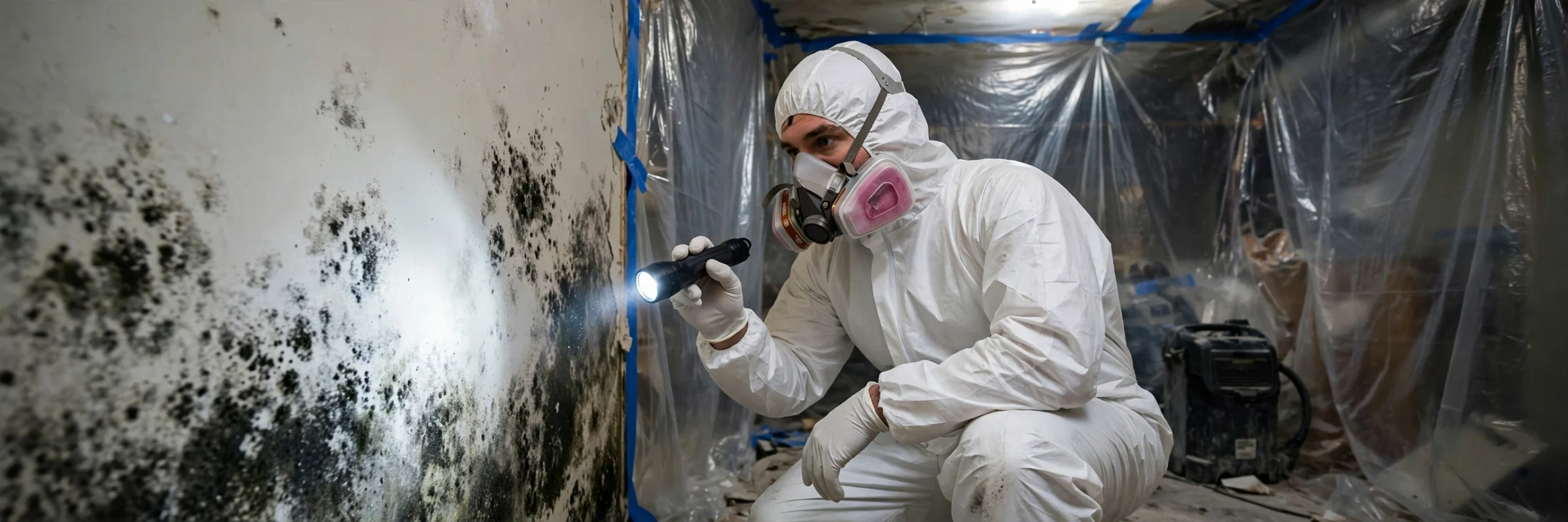
- Containment: sealing off the work area with plastic sheeting and running negative air pressure so spores do not spread.
- Air filtration: HEPA air scrubbers running during and after the work.
- Removal: cutting out porous materials that cannot be saved (drywall, insulation, carpet) and HEPA-vacuuming the rest.
- Cleaning and treatment: antimicrobial and antifungal treatments on remaining surfaces.
- Drying: dehumidifiers and air movers to bring moisture levels down.
- Repairs: replacing what was removed. Some companies include this; others do not.
- Clearance check: verifying the area is clean, sometimes with post-remediation testing.
If a quote skips containment and air filtration, it is not a real remediation. It is a cleanup, and the mold will likely come back. The EPA’s mold and moisture guide emphasizes that fixing the moisture source matters as much as removing the mold itself.
Factors that raise the price
- Hidden mold. Mold inside wall cavities or under flooring requires demolition to reach, which adds labor and reconstruction costs. If you suspect hidden growth, review the signs of water damage in walls before calling for quotes.
- HVAC contamination. Once mold is in the ductwork, the job expands to the whole system.
- Structural materials affected. Mold on framing lumber can be sanded and treated, but severely rotted wood must be replaced.
- Testing. Air quality testing before and after adds $300 to $800 but provides proof the job worked.
- Emergency scheduling. Same-day or weekend service usually carries a surcharge.
DIY vs hiring a professional
The EPA suggests homeowners can handle small mold patches (under about 10 square feet) themselves with proper precautions: N95 respirator, gloves, eye protection, and containment of the area. A DIY cleanup costs $50 to $250 in supplies.
Hire a professional when the affected area is larger than 10 square feet, mold is inside walls or HVAC, anyone in the home has respiratory issues, or the mold came from sewage or floodwater. Also hire out if you have tried DIY and the mold came back, which usually means the moisture source is still active.
Remember that remediation is often only half the bill. If a leak caused the mold, you are also paying for water damage restoration to fix the source and repair materials. Get quotes that address both.
How to avoid overpaying
- Get three quotes and compare line items, especially containment, filtration, and whether reconstruction is included.
- Be skeptical of free “mold inspections” that always find expensive problems. An independent inspection ($200 to $600) is worth it for large jobs.
- Ask whether the company follows IICRC S520 standards for mold remediation. The IICRC sets the industry’s accepted practices.
- Do not pay the full amount upfront. A deposit of 10 to 30 percent is normal; the rest on completion.
- Fix the moisture source first or at the same time. Remediation without moisture control is money thrown away.
Mold remediation vs. mold removal: why the wording matters
Companies use two terms that sound similar but mean different things. “Mold removal” sometimes means wiping visible mold off surfaces, which is cheaper but often incomplete. “Mold remediation” means the full process: containment, removal of contaminated materials, cleaning, drying, and fixing the moisture source.
When comparing quotes, make sure you are comparing the same scope. A $600 “mold removal” quote and a $2,400 “mold remediation” quote might describe the same job done to very different standards. Ask each company to list exactly which steps their price includes. The cheaper option is only a bargain if it actually solves the problem.
Frequently Asked Questions
Is black mold more expensive to remove than other mold?
Not necessarily. Price depends on the size of the affected area and the materials involved, not the mold species. The term “black mold” scares people, and some companies exploit that with inflated quotes. Get multiple bids.
Does homeowners insurance cover mold remediation?
Sometimes. If the mold resulted from a covered peril like a burst pipe, remediation is often covered. Mold from long-term leaks, humidity, or flooding usually is not. Check your policy’s mold cap; many limit coverage to $1,000 to $10,000.
How long does mold remediation take?
Small jobs take one to two days. A typical single-room remediation takes three to five days including drying time. Large or whole-house jobs can run one to two weeks.
Do I need mold testing before remediation?
Not always. If mold is visible, testing just confirms what you can see. Testing is most useful when mold is suspected but hidden, when someone has health concerns, or as a post-remediation clearance check.
Will the mold come back after remediation?
It should not if the job was done right and the moisture source was fixed. Recurrence almost always means water is still getting in. That is why the moisture fix matters as much as the mold removal.
Bottom line
Expect $10 to $25 per square foot for standard professional remediation, with most total bills landing between $500 and $6,000. Small jobs cost more per foot because of minimum charges; big jobs cost more overall because of demolition and reconstruction.
Protect yourself with multiple line-item quotes, IICRC-standard practices, and a plan that fixes the moisture source. And if the mold started with water damage, budget for both sides of the job by checking our water damage restoration cost breakdown alongside this guide.